

The 5.4-mg/kg dose of trastuzumab deruxtecan elicited numerically higher activity in patients with HER2-positive, metastatic colorectal cancer compared with the 6.4-mg/kg dose.

Your AI-Trained Oncology Knowledge Connection!
The 5.4-mg/kg dose of trastuzumab deruxtecan elicited numerically higher activity in patients with HER2-positive, metastatic colorectal cancer compared with the 6.4-mg/kg dose.

Dostarlimab maintained the health-related quality of life in patients with primary advanced or recurrent endometrial cancer.
The BCMA- and CD19-targeted CAR T-cell therapy GC012F continued to demonstrate a favorable safety profile with no new safety signals, and it elicited deep and durable responses in patients with relapsed/refractory multiple myeloma.

Treatment with the IDH1/2 inhibitor vorasidenib reduced the risk of progression or death by 61% compared with placebo for patients with grade 2 IDH-mutant glioma, according to findings from the phase 3, double-blind INDIGO trial.

Treatment with adjuvant osimertinib produced a statistically significant and clinically meaningful improvement in overall survival compared with placebo in patients with resected, EGFR-mutated, stage IB to IIIA non–small cell lung cancer.

Neoadjuvant treatment with fluorouracil, leucovorin, and oxaliplatin proved to be as effective as pelvic chemoradiation with fewer adverse effects in patients with locally advanced rectal cancer who were eligible for sphincter-sparing surgery.
Nivolumab in combination with doxorubicin, vinblastine, and dacarbazine (AVD) resulted in prolonged progression-free survival (PFS) compared with brentuximab vedotin plus AVD in patients with advanced-stage classical Hodgkin lymphoma.
Mirvetuximab soravtansine-gynx demonstrated a 35% reduction in the risk of disease progression or death compared with investigator’s choice of chemotherapy in patients with folate receptor alpha-high, platinum-resistant ovarian cancer.

Treatment with elranatamab monotherapy produced early, deep, and durable responses in patients with relapsed/refractory multiple myeloma who received a prior BCMA-directed therapy, according to a pooled analysis of the MagnetisMM-1, MagnetisMM-2, MagnetisMM-3, and MagnetisMM-9 trials.
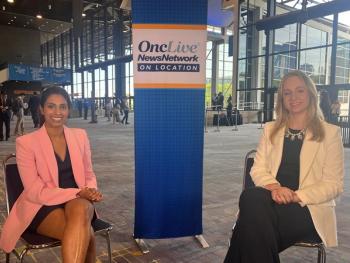
OncLive® will be LIVE with OncLive® News Network: On Location at the 2023 ASCO Annual Meeting. Each day, we will broadcast a series of interviews with top thought leaders, to learn their thoughts and reactions to data presented across oncology during the conference.

When administered at doses of 90 μg/kg or higher, the novel DLL3-targeting T-cell engager, BI 764532, was found to have an acceptable toxicity profile and to elicit encouraging responses in patients with DLL3-positive small cell lung cancer and neuroendocrine carcinoma.

Talquetamab plus daratumumab displayed high response rates regardless of 0.4 mg/kg or 0.8 mg/kg dosing in combination with daratumumab in patients with heavily pretreated relapsed/refractory multiple myeloma, irrespective of prior treatment with CD38-directed therapy and T-cell redirection therapy.

The combination of dostarlimab with standard-of-care carboplatin and paclitaxel elicited a statistically significant and clinically meaningful improvement in progression-free survival vs carboplatin/paclitaxel plus placebo in patients with mismatch repair–deficient/microsatellite instability–high advanced or recurrent endometrial cancer.
Triplet therapy with cabozantinib, nivolumab, and ipilimumab demonstrated clinical meaningful activity in patients with renal cell carcinoma with variant histologies.

Claire Roddie, MD, discusses the patient population and topline efficacy findings from the phase 1/2 FELIX trial, which is investigating the CD19-directed CAR T-cell therapy obecabtagene autoleucel in patients with relapsed/refractory adult B-cell acute lymphoblastic leukemia.

Yael Cohen, MD, discusses primary efficacy findings from the phase 1/2 RedirecTT-1 trial, which is investigating the combination of teclistamab and talquetamab in patients with relapsed/refractory multiple myeloma.

Positive changes in symptoms of anxiety and depression were reported in patients with cancer following the use of a cognitive behavioral stress management app.

The BCMA/CD3 bispecific linvoseltamab elicited an objective response rate of 71% at the recommended dose of 200 mg for patients with relapsed/refractory multiple myeloma.

The CAR T-cell therapy PHE885 produced responses and high minimal residual disease negativity rates with no new safety signals in patients with relapsed/refractory multiple myeloma.
Teclistamab-cqyv in combination with talquetamab showcased early signs of activity with acceptable safety in patients with relapsed/refractory multiple myeloma, according to final results from the phase 1b RedirecTT-1 study.

When manufactured via automated process the CLDN6-directed CAR T-cell therapy, BNT211, demonstrated encouraging signs of activity and a manageable safety profile with or without the addition of CLDN6-encoding mRNA vaccine in patients with CLDN6-positive relapsed/refractory advanced solid tumors.

Radium-223 was safe and did not preclude patients with metastatic castration-resistant prostate cancer from receiving subsequent life-prolonging therapies, including chemotherapy.

Belzutifan plus lenvatinib generated responses and displayed a manageable safety profile in patients with advanced clear cell renal cell carcinoma whose disease progressed following treatment with a PD-1/L1 inhibitor and a VEGF TKI.
The use of talazoparib plus enzalutamide was manageable with dose modifications or standard supportive care treatment in patients with metastatic castration-resistant prostate cancer.
Patients with nonmetastatic castration-resistant prostate cancer who received darolutamide were observed to have a longer time to treatment discontinuation and progression to metastatic castration-resistant disease than those who received enzalutamide or apalutamide.

The addition of pembrolizumab to neoadjuvant platinum-based chemotherapy followed by resection and adjuvant pembrolizumab alone resulted in a significant improvement in event-free survival and pathological response for patients with early-stage non–small cell lung cancer.

Zanidatamab generated responses in patients with HER2-amplified, locally advanced, unresectable or metastatic biliary tract cancer who were previously treated with gemcitabine.

Liposomal irinotecan plus 5-fluorouracil/leucovorin and oxaliplatin generated statistically significant and clinically meaningful overall survival and progression-free survival benefits compared with gemcitabine plus nab-paclitaxel in treatment-naïve patients with metastatic pancreatic ductal adenocarcinoma.

Patients with unresectable hepatocellular carcinoma experienced manageable and low-grade immune-related adverse events with single tremelimumab regular interval durvalumab.

The addition of durvalumab to standard upfront therapy with chemotherapy and bevacizumab followed by maintenance bevacizumab, durvalumab, and olaparib led to a statistically significant improvement in progression-free survival compared with chemotherapy and bevacizumab alone in patients with newly diagnosed, advanced ovarian cancer without a BRCA1/2 mutation.