

The addition of lenalidomide to rituximab maintenance treatment significantly improved progression-free survival compared with rituximab alone following first-line chemoimmunotherapy in patients with mantle cell lymphoma.

Your AI-Trained Oncology Knowledge Connection!
The addition of lenalidomide to rituximab maintenance treatment significantly improved progression-free survival compared with rituximab alone following first-line chemoimmunotherapy in patients with mantle cell lymphoma.

A biologics license application has been submitted to the FDA seeking the approval of a proposed biosimilar for trastuzumab, a monoclonal antibody that is utilized in the treatment of patients with HER2-positive breast cancer and metastatic gastric cancers.

Cardiac angiosarcoma is an exceptionally rare cancer that has become national news because of the recent death of acclaimed fashion designer, Virgil Abloh. He was 41 years old when he died in November 2021, following a 2-year battle with the disease, which is an aggressive subtype of soft-tissue sarcoma.
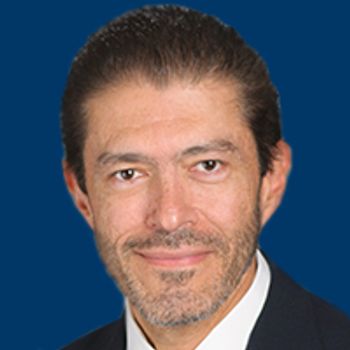
Jorge E. Cortes, MD, has been an investigative leader for nearly 30 years in the development of numerous leukemia treatments.
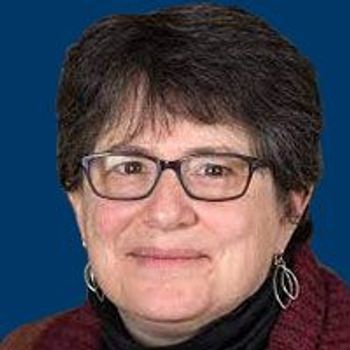
Approval of the drug abatacept opens up bone marrow transplant as an option for many more patients with cancer or blood disorders — especially patients of diverse ethnicities, who have extra difficulty finding a good match

The FDA approvals of several targeted therapies, such as sotorasib, amivantamab-vmjw, and mobocertinib, as well as immunotherapeutic strategies, such as adjuvant atezolizumab, represent significant advances made in 2021 for the treatment of patients with non–small cell lung cancer.

The Board of Directors of the International Association for the Study of Lung Cancer is pleased to announce the appointment of Karen L. Kelly, M.D. to the position of Chief Executive Officer, effective Spring 2022.
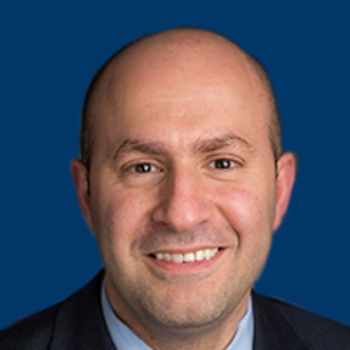
A phase 3 clinical trial will compare the safety and efficacy of a co-formulation of pembrolizumab and quavonlimab plus lenvatinib, and that of pembrolizumab, belzutifan, and lenvatinib, vs pembrolizumab/lenvatinib alone in the frontline treatment of patients with advanced renal cell carcinoma.

The potent, highly selective, next-generation PI3Kδ inhibitor parsaclisib demonstrated activity and an acceptable safety profile in patients with Bruton tyrosine kinase inhibitor-naïve relapsed/refractory mantle cell lymphoma.

Despite their rarity, the management of desmoid tumors has been an area of significant clinical change as the field has shifted away from aggressive surgical interventions to active surveillance and systemic therapies that are less morbid for patients.

The FDA has approved the imaging product TLX591-CDx as a radioactive diagnostic agent for PET of prostate-specific membrane antigen positive lesions in patients with prostate cancer who have suspected metastasis who are candidates for initial definitive therapy, and in those with suspected recurrence based on elevated serum prostate-specific antigen level.
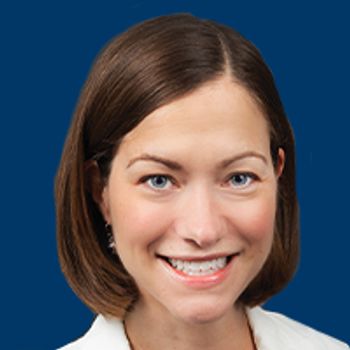
Breast surgeon Suzanne B. Coopey, MD, FACS, has joined Allegheny Health Network Cancer Institute, where she will serve as Director of the Breast Program at the soon-to-open AHN Wexford Hospital.

Early identification of patients with liver-only metastatic colorectal cancer who are eligible for resection is crucial to determining their course of treatment and what role modalities like chemotherapy will play in their treatment strategy.

A panel of breast cancer experts shared their insights on 4 recently approved targeted therapies for patients with relapsed HER2-positive metastatic breast cancer.

Malin Hultcrantz, MD, PhD, discusses the efficacy of belantamab mafodotin, as well as standard management for common adverse effects associated with the treatment.

Steven L. Spitalnik, MD, discusses the evolution of red blood cell storage and the potential impact the Hemanext storage technique could have for patients with hematologic malignancies.

The European Medicines Agency’s Committee for Medicinal Products for Human Use has recommended the approval of single-agent pembrolizumab for use as an adjuvant treatment in adult patients with renal cell carcinoma who are at increased risk of recurrence after nephrectomy, or following nephrectomy and the resection of metastatic lesions.

The European Medicines Agency’s Committee for Medicinal Products for Human Use has adopted a positive opinion in favor of the approval of enfortumab vedotin as a monotherapy in the treatment of adult patients with locally advanced or metastatic urothelial cancer.
Pembrolizumab demonstrated a statistically significant and clinically meaningful improvement in disease-free survival vs placebo as a postnephrectomy adjuvant therapy in patients with renal cell carcinoma at intermediate-high or high risk of recurrence, and in those who are M1 with no evidence of disease.

Real-world data from the PACIFIC-R trial evaluating durvalumab following chemoradiotherapy in patients with stage III, unresectable non–small cell lung cancer provide evidence supporting the agent’s efficacy in this population, solidifying its role as a standard-of-care treatment

Treatment options for patients with Waldeström macroglobulinemia are often derived from those devel-oped for patients with multiple myeloma and other low-grade lymphomas.

The triplet regimen of belantamab mafodotin plus pomalidomide and dexamethasone was revealed to have a manageable safety profile, which is consistent with the known individual safety profiles of belantamab mafodotin or pomalidomide and dexamethasone, in patients with relapsed/refractory multiple myeloma.

Parsaclisib, an investigational highly selective phosphatidylinositol 3-kinase δ inhibitor, demonstrated rapid and durable responses as monotherapy with an acceptable safety profile in patients with relapsed/refractory follicular lymphoma in the phase 2 CITADEL-203 study.

Red blood cells processed and stored in a hypoxic state maintain their integrity, which may reduce the risk of developing vaso-occlusion after red blood cell transfusion.
Itolizumab showed the potential to decrease the response of host T cells to a donor graft, minimize the incidence of acute graft-vs-host disease following hematopoietic stem cell transplantation, and improve outcomes for these patients.

Elise Nassif, MD, discusses the evolving standard of care for patients with soft tissue sarcoma and the benefits of early phase inclusion, as well as histotype testing for this population.

The WEE1 inhibitor adavosertib improved progression-free survival with a tolerable safety profile compared with active monitoring in patients with RAS/TP53-mutated metastatic colorectal cancer.

The first patient with high-risk, early-stage HER2-positive breast cancer has received a dose of neoadjuvant fam-trastuzumab deruxtecan-nxki as part of the global, phase 3 DESTINY-Breast11 trial.

Preliminary research with datopotamab deruxtecan has shown a promising, unprecedented duration of response in heavily pretreated patients with non–small cell lung cancer.

A combination of two targeted cancer drugs showed unprecedented, “clinically meaningful” activity in patients with highly malignant brain tumors that carried a rare genetic mutation, according to a clinical trial report by investigators from Dana-Farber Cancer Institute.