
R. Lor Randall, MD, discusses the data from the population-based registry and provided more insight on prognostic factors and survival outcomes for patients with spinal sarcomas.

Your AI-Trained Oncology Knowledge Connection!
R. Lor Randall, MD, discusses the data from the population-based registry and provided more insight on prognostic factors and survival outcomes for patients with spinal sarcomas.

Dual blockade of the RAF/MEK and FAK pathways presents an opportunity for investigators to enhance and expand the number of patients with recurrent low-grade serous ovarian cancer who can benefit from targeted therapies.
The FDA has granted an orphan drug designation to gunagratinib as a potential therapeutic option for patients with cholangiocarcinoma.

Momelotinib can provide clinically relevant and comparable improvement in overall symptom burden and individual symptom items compared with ruxolitinib in patients with intermediate- and high-risk JAK inhibitor–naïve myelofibrosis.
Researchers show the nucleoside transporter ENT2 may offer an unexpected path to circumventing the blood-brain barrier and enabling targeted treatment of brain tumors with a cell-penetrating anti-DNA autoantibody.
Faith E. Davies, MD, discusses the how to approach patients with high-risk myeloma, as well as how isatuximab and CAR T-cell therapies fit best for that patient population.

The FDA granted a breakthrough therapy designation to 177Lu-PSMA-617 for the treatment of patients with metastatic castration-resistant prostate cancer.
The FDA has granted priority review to the biologics license application for balstilimab for use in the treatment of patients with recurrent or metastatic cervical cancer who experienced disease progression on, or after, chemotherapy.

C. Ola Landgren, MD, PhD, discusses key safety considerations with a novel carfilzomib quadruplet regimen in patients with newly diagnosed multiple myeloma, the clinical implications of the phase 2 MANHATTAN trial, and next steps for this research.
Because hematological cancers are rarer than solid tumors, information on treatment practices is somewhat less available, so hematologists are particularly interested in learning what their peers are doing.
Quadruplet regimens, such as those with daratumumab, are on the rise in the frontline treatment of patients with multiple myeloma, and the FDA approval of the first BCMA-targeted CAR T-cell therapy idecabtagene vicleucel represents the monumental advance made in the relapsed/refractory setting.
The 3-drug combination comprised of eprenetapopt, venetoclax, and azacitidine was found to induce a complete remission rate of 37% in patients with TP53-mutant acute myeloid leukemia.

C. Ola Landgren, MD, PhD, discusses important research efforts that led to the launch of the phase 2 MANHATTAN trial, the results achieved with the weekly carfilzomib quadruplet regimen in patients with newly diagnosed multiple myeloma, and the potential for this approach irrespective of transplant eligibility status.

The FDA has approved avapritinib (Ayvakit) for the treatment of adult patients with advanced systemic mastocytosis, including those with aggressive systemic mastocytosis, systemic mastocytosis with an associated hematological neoplasm, and mast cell leukemia.
Henry Chi Hang Fung, MD, discusses how the durable response of axi-cel fills an unmet need for this patient population and the potentially exciting future of the therapy.
LiPax, a precision-targeted, locally-delivered taxane, was found to induce a recurrence-free survival rate of 83% in patients with non–muscle invasive bladder cancer who had undergone transurethral resection of bladder tumor.
Multiple FDA approvals and an increasing number of clinical trials examining molecular target–based therapeutics, including second- or even third-generation drugs against a well-defined target, present an ever-widening array of drugs for routine cancer care based on the discovery of specific molecular targets within the tumor or within the germline.
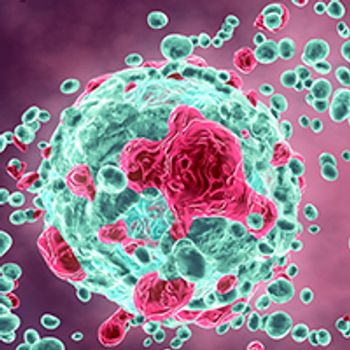
Rates of clinical trial initiation, novel drug development, and collaborative research and development deals were oncology.
Among the pioneering targets for antibody therapy was CD20, the pursuit of which ultimately led to the first FDA-approved mAb for cancer therapy, rituximab, and defined a new era in the management of B-cell malignancies.
Leading cancer biologist Julio Aguirre-Ghiso, PhD, has been named founding director of the Cancer Dormancy and Tumor Microenvironment Institute, director of the Gruss-Lipper Biophotonics Center, and co-leader of the AECC Tumor Microenvironment and Metastasis Program.
The data from the phase 3 ADAURA trial with adjuvant osimertinib are among the most significant to read out in the past year in the realm of non–small cell lung cancer.
Iodoine apamistamab, a radiotherapy that targets CD45-expressing cells, demonstrated a 100% bone marrow transplant and engraftment rate in patients with relapsed/refractory acute myeloid leukemia vs 18% for those who received a physician’s choice of salvage treatment.
The majority of patients with indolent follicular lymphoma do well with observation and after first-line treatment, but approximately 20% experience disease progression within 2 years of their initial treatment, which is associated with a 50% risk of dying within 5 years. Subsequently, this is an area of unmet need but one in which considerable progress is being made.

James A. DeCaprio, MD, discusses the incidence of Merkel cell carcinoma, risk factors for the disease, established treatment options, and investigational regimens on the horizon.

Kaiku Health has announced that they are partnering with the global healthcare company Novartis to develop a digital patient monitoring and management system specifically for patients with melanoma who are receiving BRAF/MEK combination therapies.

The expansion of HER2-directed treatments and formulations, the availability of CDK4/6 inhibitors, and the broad activity of sacituzumab govitecan-hziy is a testament to the successful development of personalized medicine in breast cancer.

Renal cell carcinoma is one of the top 10 most common cancers, although incidence rates have been stable over the past decade. It is more common in men than women and rates are higher among African American, American Indian, and Alaska Native patient populations.
Parameswaran Venugopal, MD, discussed the toxicity profiles of BTK inhibitors regarding treatment selection in CLL.

The safety and efficacy of abemaciclib will be examined in patients with hormone receptor–positive, HER2-positive, node-positive, high-risk early breast cancer who have completed standard adjuvant HER2-targeted treatment as part of the phase 3 eMonarcHER trial.

The rituximab biosimilar CT-P10 produced response and survival rates that were comparable to those previously reported with the reference product, along with acceptable tolerability, in patients with diffuse large B-cell lymphoma.