

I. Alex Bowman, MD, underscores how Kidney Cancer Awareness Month enables earlier disease detection, promotes patient education, and drives vital research.
I. Alex Bowman, MD, underscores how Kidney Cancer Awareness Month enables earlier disease detection, promotes patient education, and drives vital research.

NEO100 was given rare pediatric disease designation by the FDA for the treatment of patients with pediatric-type diffuse high-grade glioma.

Updated interim phase 2 data showed the clinical efficacy and safety of neoadjuvant darovasertib monotherapy in localized uveal melanoma.

Roswell Park-led study takes a significant step toward relief without opioid.
Rachel N. Grisham, MD, discusses the preliminary results of avutometinib plus defactinib in mesonephric and mesonephric-like cancers.

A cross-sectional study reveals insights on factors hematology and oncology fellows weigh when selecting a career path after fellowship.
Tabelecleucel generated high response rates and favorable OS in patients with EBV-positive PTLD who had progressed on prior standard-of-care approaches.

Pacritinib was active and safe in patients with multi-refractory chronic graft-vs-host disease.

Here is your snapshot for all therapeutic options that were approved by the FDA in March 2025 spanning tumor types.

Axi-cel led to higher response rates but increased toxicity vs tisa-cel in older patients with relapsed/refractory DLBCL.

A consistent ORR was shown with axatilimab after second-line therapy, regardless of prior lines of therapy, in patients with steroid-refractory cGVHD.
Infections occur early after CAR T-cell therapy administration in patients with relapsed/refractory NHL.

Brexu-cel demonstrated clinical activity and safety in patients over 70 years of age with relapsed/refractory mantle cell lymphoma.

Orca-T improved moderate-to-severe cGVHD–free survival vs conventional allogenic transplant in advanced hematologic malignancies.

The EMA’s CHMP has issued a positive opinion for the denosumab biosimilars Osvyrti and Jubereq for the same indications as the reference products.

Silmitasertib generated disease control in patients with locally advanced or metastatic basal cell carcinoma.
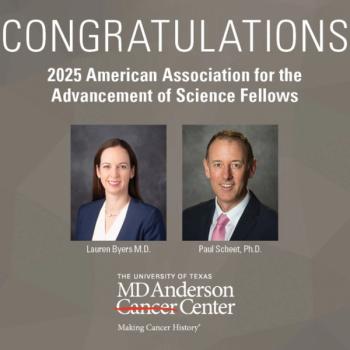
Lung cancer clinician and prevention expert recognized for their achievements in advancing cancer care and research.
Read a recap of the episodes of OncLive On Air that aired in March 2025.

D-VRd with daratumumab/lenalidomide maintenance led to sustained PFS and MRD negativity across high-risk subgroups of newly diagnosed multiple myeloma.

Cilta-cel improved rates of MRD negativity and 30-month PFS vs SOC in patients with lenalidomide-refractory multiple myeloma with MRD negativity.
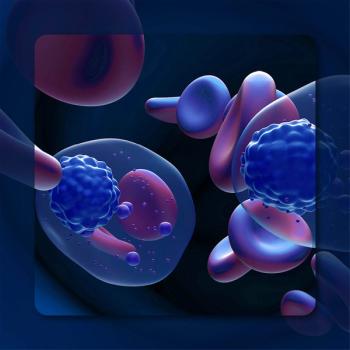
MDC-CAR-BCMA001 may be a suitable construct for the treatment of BCMA-pretreated patients with triple-class refractory multiple myeloma or AL amyloidosis.

Ciltacabtagene autoleucel is the first CAR T-cell therapy to show significant OS benefit in multiple myeloma.

Obe-cel showed higher response rates and longer survival vs non–CAR T therapies in adults with R/R B-ALL.
The addition of inotuzumab ozogamicin to bridging therapy led to high objective response rates and sustained survival in obe-cel recipients with B-cell ALL.

A donor-derived CAR T-cell therapy produced complete remissions, but survival was limited in relapsed/refractory T-cell lymphoma.

Stable disease was common in patients with CD123-positive, relapsed/refractory acute myeloid leukemia who were treated with AFM28.

Tisotumab vedotin was granted approval by the EU for recurrent or metastatic cervical cancer with disease progression on or after chemotherapy.

Tovecimig plus paclitaxel improved overall response rate vs paclitaxel alone in second-line advanced biliary tract cancer.
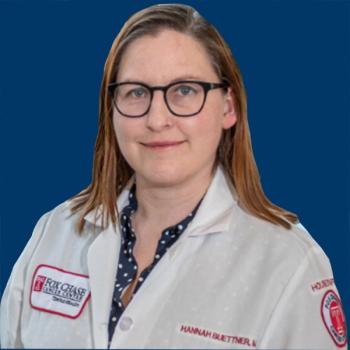
Results from a study presented by Fox Chase Cancer Center suggest that chemotherapy followed by local excision is a promising treatment option for patients with node-negative low rectal cancer.

Updated KEYNOTE-799 data continued to show robust activity with pembrolizumab plus concurrent chemoradiation in unresectable stage III NSCLC.