

Suneel Kamath, MD, took to the OncLive X (Twitter) account during Pancreatic Cancer Awareness Month to share the importance of recognizing this disease.
Suneel Kamath, MD, took to the OncLive X (Twitter) account during Pancreatic Cancer Awareness Month to share the importance of recognizing this disease.

Alan P. Venook, MD, describes challenges implementing NCCN guidelines into practice in rectal, colon, and biliary tract cancers, and advancements from 2024.

Tislelizumab plus chemotherapy has been approved in Europe for first-line advanced ESCC and gastric/GEJ adenocarcinoma.

Adjuvant ribociclib plus endocrine therapy was approved in Europe for HR-positive/HER2-negative early breast cancer at high risk of recurrence.

China’s NMPA has approved sacituzumab tirumotecan for pretreated unresectable locally advanced or metastatic triple-negative breast cancer.

Chelsey Schlechter, MPH, PhD, Huntsman Cancer Institute investigator and assistant professor in the Department of Population Health Sciences at the University of Utah, has been selected as a 2024 Cancer Moonshot Scholar.

Nataliya Uboha, MD, PhD, and Robert Albert Anders, MD, PhD, unpack the unfavorable risk-benefit profile of PD-1 inhibitors in patients with certain PD-L1–negative gastrointestinal cancers and discussions from a recent ODAC meeting.
Abequolixron plus docetaxel generated preliminary efficacy signals in the second- and third-line settings in recurrent advanced nonsquamous NSCLC.
The MAXILUS study will evaluate the maximum approved dose of luspatercept in lower-risk myelodysplastic syndrome.

Alberto Montero, MD, MBA, discusses the importance of PI3Kα pathway inhibition in solid tumors and expands on the unique mechanism of action of STX-478.

China's NMPA has accepted a sNDA for penpulimab plus anlotinib for the first-line treatment of advanced hepatocellular carcinoma.
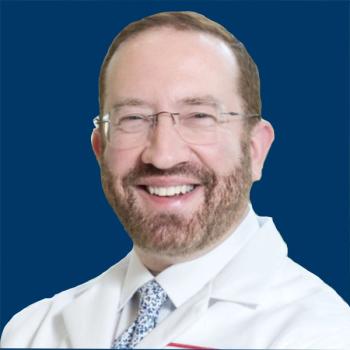
Richard J. Bleicher, MD, FACS, Chief of the Division of Breast Surgery and Clinical Director of the Breast Service Line at Fox Chase Cancer Center.

Health Canada has approved cilta-cel for use in patients with relapsed/lenalidomide-refractory multiple myeloma following 1 to 3 prior lines of therapy.

The addition of tiragolumab to atezolizumab did not significantly improve OS vs atezolizumab alone in PD-L1–high non–small cell lung cancer.
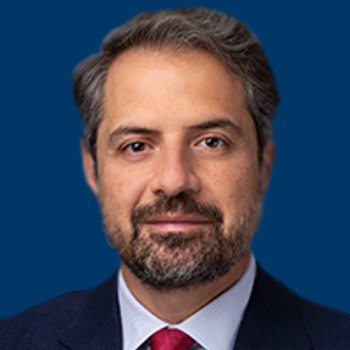
Elias Jabbour, MD, highlights the significance of obecabtagene autoleucel’s approval for patients with B-cell precursor ALL and data from the FELIX trial.

Manali I. Patel, MD, MPH, MS, details several interventions developed to better serve veterans with cancer who are experiencing economic, social, and geographic barriers to care.
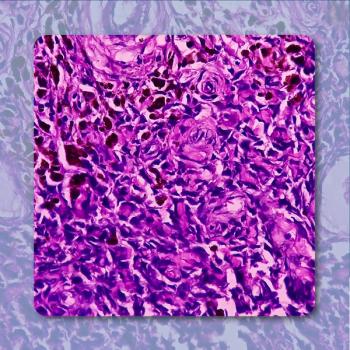
Patients with metastatic myxoid/round cell liposarcoma or synovial sarcoma expressing NY-ESO-1 and HLA achieved an ORR of 42% with lete-cel.
The FDA accepted a BLA for 2 belantamab mafodotin–based combinations in relapsed/refractory multiple myeloma.

Perioperative vorasidenib or ivosidenib demonstrated sustained clinical benefit in patients with predominantly non-enhancing IDH1-mutant diffuse glioma.

Mirdametinib led to sustained, significant, and clinically meaningful improvements in HRQOL in adults and children with NF1-PN.

More than a dozen teams to share advances in blood cancer treatment and research innovations at the 2024 ASH Annual Meeting.
The FDA approved the PATHWAY HER2 (4B5) test to identify patients with HER2-positive biliary tract cancer who are eligible for treatment with zanidatamab.

Capivasertib plus abiraterone and ADT improved rPFS in PTEN-deficient metastatic hormone-sensitive prostate cancer.
The FDA has approved an oral solution of imatinib for the treatment of certain leukemias and other cancers.

One of the prime risk factors for CRC is the consumption of a high-risk, Western-style diet high in processed foods, refined grains, red meat, and sugar.

Alan P. Venook, MD, highlights notable NCCN guideline updates in HCC, considerations for implementing the changes in the clinic, and next steps in HCC.

Larotrectinib produced rapid and durable responses and a high DCR in pediatric patients with TRK fusion–positive primary central nervous system tumors.

Updated INDIGO data reveal that vorasidenib continues to showcase improved efficacy over placebo in patients with IDH1/2-mutated diffuse glioma.

Early safety findings from the phase 2b RESTORE study (NCT03862430) of NanO2 plus radiation and temozolomide in newly diagnosed glioblastoma were shared.
Zanidatamab scores approval for HER2+ biliary tract cancer, Versamune HPV is under exploration in HPV16+ head and neck squamous cell carcinoma, and more.