

Lubna Naaz Chaudhary, MD, MS, highlights the PARSIFAL and Young-PEARL trials and discusses ongoing research in ER-positive/HER2-negative breast cancer.
Lubna Naaz Chaudhary, MD, MS, highlights the PARSIFAL and Young-PEARL trials and discusses ongoing research in ER-positive/HER2-negative breast cancer.

Nurse-executive and partnership manager honored for dedication to local heroes.

Subcutaneous pembrolizumab plus chemotherapy generated noninferior PK outcomes vs IV pembrolizumab plus chemotherapy in metastatic NSCLC.

The FDA granted fast track designation to ALE.P02 for CLDN1-positive squamous solid tumors.
Nogapendekin alfa inbakicept plus BCG continued to generate complete responses in BCG-unresponsive non–muscle-invasive bladder cancer.

Rasha Cosman, BSc, MBBS, FRACP, and Charlotte Lemech, MBBS, discuss the phase 1 MYE Symphony study (NCT05969041) of MT-302 in advanced or metastatic epithelial cancers.
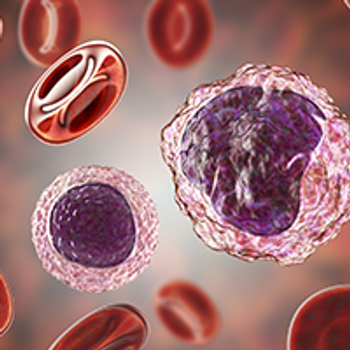
Second-line BTK inhibitors were associated with improved PFS2 and OS2 in late-relapsed mantle cell lymphoma.

Tanios S. Bekaii-Saab, MD, discusses the role of liquid biopsies and ctDNA in gastrointestinal cancers.
Induction therapy with bendamustine plus obinutuzumab resulted in higher CR rates compared with historical rates of CR with BR in treatment-naive MCL.

Lubna Naaz Chaudhary, MD, MS, discusses selecting a CDK4/6 inhibitor in hormone receptor–positive breast cancer.
The UK MHRA approved frontline toripalimab plus chemotherapy for recurrent/metastatic NPC, as well as for advanced, recurrent, or metastatic ESCC.

Investigators are opening a trial to evaluate a novel type of immune cellular therapy in patients with recurrent, platinum-resistant ovarian cancer.

The FDA approved the FoundationOne Liquid CDx to identify patients with mNSCLC with MET exon 14 skipping alterations who may be eligible for tepotinib.

The European Commission has approved mirvetuximab soravtansine for select patients with pretreated FRα-positive, platinum-resistant ovarian cancer.

The EMA’s CHMP has issued a positive opinion regarding the use of amivantamab plus lazertinib in select patients with EGFR+ non–small cell lung cancer.

Experts discuss the ongoing investigation of Versamune HPV plus pembrolizumab and its potential effect on outcomes in first-line HPV16-driven HNSCC.

Cindy M. Pabon, MD, discusses efforts to improve patient outcomes in gastric/GEJ cancer through the development of effective biomarker–targeted therapies.
Tanios S. Bekaii-Saab, MD, discusses the evolution of frontline treatment in advanced pancreatic cancer.

New datopotamab deruxtecan BLA in NSCLC filed to FDA, radiopharmaceutical meets rPFS end point in PSMA+ prostate cancer, and more.
David H. Aggen, MD, PhD, details the evolving landscape of treating patients with urothelial carcinoma.

The FDA has approved revumenib (Revuforj) for the treatment of adult and pediatric patients aged 1 year and older with relapsed or refractory acute leukemia and a KMT2A translocation.

Brandon G. Smaglo, MD, FACP, discusses ongoing research with novel RAS inhibitors in pancreatic cancer.
The CHMP has recommended repotrectinib for ROS1-positive non–small cell lung cancer and NTRK-positive solid tumors.

The CHMP has recommended the approval of pembrolizumab plus chemotherapy for first-line unresectable non-epithelioid malignant pleural mesothelioma.

The CHMP has recommended the EU approval of isatuximab plus VRd for newly diagnosed, transplant-ineligible multiple myeloma.
The EMA’s CHMP agency recommended approval for nivolumab plus ipilimumab in patients with MSI-H/dMMR unresectable or metastatic colorectal cancer.

The EMA’s CHMP has issued a positive opinion for the denosumab biosimilars SB16 for all indications referencing Prolia and Xgeva.

Researchers from Fox Chase Cancer will present a new study on the use of aspirin as a form of chemoprevention in patients with Lynch syndrome at the 2024 CGA-IGC Meeting.

Venetoclax plus 10-day decitabine was safe and produced responses in AML and high-risk MDS.

GRANITE-based maintenance therapy improved PFS in first-line MSS colorectal cancer.