

Press Release
It is often said that one person can make a difference, but it is also evident that when we band together, we can achieve greatness.
Press Release
It is often said that one person can make a difference, but it is also evident that when we band together, we can achieve greatness.

Tinengotinib has been awarded orphan drug designation from the European Medicines Agency for use in select patients with biliary tract cancer.

The FDA has lifted a partial clinical hold on a phase 1 trial evaluating NX-2127 in relapsed/refractory B-cell malignancies
Jill Gilbert, MD, explains how publications must evolve to utilize modern educational platforms to reach readers.

Neel P. Chudgar, MD, discusses the nuances of defining resectability in patients with non–small cell lung cancer.
Neal Shore, MD, FACS, discusses findings from clinical trials in patients with prostate cancer who experience biochemical recurrence.
Maha Hussain, MD, FACP, FASCO, discusses clinical trials evaluating therapeutics for patients with metastatic castrate-resistant prostate cancer.
Heather McArthur, MD, MPH, discusses the prognostic benefits of circulating tumor DNA and limitations that prevent these results from being predictive.
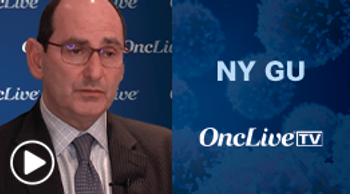
Bernard H. Bochner, MD, FACS, discusses considerations for community oncologists when treating patients with muscle-invasive bladder cancer.

Wenxin (Vincent) Xu, MD, discusses the factors he takes into account when sequencing treatment options for patients with metastatic renal cell carcinoma.
Debu Tripathy, MD, provides insights on the management of HER2-positive breast cancer, including the evolving role of trastuzumab in this population.

Peter A. Humphrey, MD, PhD, presents on the standing of artificial intelligence in prostate cancer pathology.
Erica Stringer-Reasor, MD, highlights the evolution of therapies for patients with hormone receptor–positive, HER2-negative metastatic breast cancer.
The FDA's Medical Imaging Drugs Advisory Committee voted 16 to 2 in support of the benefit-risk profile of Lumisight.
The inter-tumoral complexity of metastatic castration-resistant prostate cancer poses a treatment challenge that may be tackled by examining clonal evolution.
Scott T. Tagawa, MD, MS, FACP, FASCO, discusses the standing of PARP inhibitors in the treatment paradigm of metastatic castration-resistant prostate cancer.

Robert Dreicer, MD, discusses the shortcomings of current clinical trials in prostate cancer and what he sees as the biggest area of improvement.
Terry P. Mamounas, MD, MPH, FACS, discusses treatment options after neoadjuvant chemotherapy and how neoadjuvant chemotherapy influences axillary surgery.
PRMT5 inhibitors with antiestrogens represents a therapeutic strategy that may overcome resistance to CDK4/6 inhibitors in ER+/RB-deficient breast cancer.

Hope S. Rugo, MD, FASCO, shares progress made with ADCs and the interest in moving these agents up in the HR-positive/HER2-negative breast cancer paradigm.

Racial and ethnic disparities for mortality are present in breast cancer, especially as it relates to radiation therapy toxicity and cardiac dose.

Eirwen M. Miller, MD, discusses her experience in the oncology field and the importance of ensuring gender is not a defining quality for oncologists.
Press Release
Although immune checkpoint inhibitors can yield dramatic results and give some patients many years of life, some patients do not yield benefit.
Cambritaxestat has received orphan drug designation from the FDA for the treatment of patients with pancreatic cancer.

Trastuzumab deruxtecan has significant intracranial activity in patients with HER2-positive breast cancer brain metastases, regardless of subgroup.
The addition of UV1 to nivolumab/ipilimumab failed to improve PFS in the frontline treatment of unresectable or metastatic melanoma.
The FDA granted accelerated approval to zanubrutinib in combination with obinutuzumab for select patients with relapsed/refractory follicular lymphoma.
ABSK061 was well tolerated and elicited responses in patients with advanced solid tumors harboring FGFR2/3 alterations.

Eftilagimod alpha in combination with chemotherapy displayed a manageable safety profile in HR+/HER2-low breast cancer.
The FDA has approved nivolumab plus cisplatin and gemcitabine for first-line use in adult patients with unresectable or metastatic urothelial carcinoma.