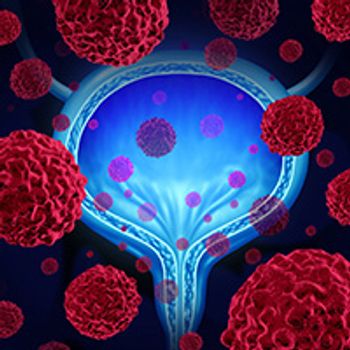
The FDA has accepted for review a biologics license application for the IL-15 superagonist N-803 for the treatment of patients with Bacillus Calmette-Guérin–unresponsive non–muscle invasive bladder cancer carcinoma in situ.

Your AI-Trained Oncology Knowledge Connection!


The FDA has accepted for review a biologics license application for the IL-15 superagonist N-803 for the treatment of patients with Bacillus Calmette-Guérin–unresponsive non–muscle invasive bladder cancer carcinoma in situ.

The combination of nivolumab and ipilimumab failed to elicit a statistically significant improvement in disease-free survival compared with placebo as adjuvant treatment in patients with localized renal cell carcinoma who had undergone a full or partial removal of the kidney and were at moderate or high risk of relapse, failing to meet the primary end point of part A of the phase 3 CheckMate-914 trial.

Press Release
Coral Omene, MD, PhD, medical oncologist in the Stacy Goldstein Breast Cancer Center at Rutgers Cancer Institute of New Jersey, the state’s only National Cancer Institute-designated Comprehensive Cancer Center together with RWJBarnabas Health, has been awarded a $50,000 grant from the V Foundation for Cancer Research in partnership with ESPN to increase clinical trial awareness and enrollment of Black women with breast cancer.

In the opinion of this commentator, one of the more exciting developments in clinical investigation over the past several years is the increasing recognition of the importance of real-world data and its role for physicians, regulators, policy makers, patients, and society.

As ongoing research efforts are shifting further into personalized care, Hope S. Rugo, MD, FASCO discusses how pathologic complete response and the predictive value of residual cancer burden scoring are becoming a pivotal end point for the changing triple-negative breast cancer landscape.

Erika P. Hamilton, MD, shares how multidisciplinary collaboration between pathologist and breast oncologists is key to staying abreast of not only the classification-actionable HER2 mutations in metastatic breast cancer but also the evolving definition of expression.

Roy S. Herbst, MD, PhD, discusses the importance of evaluating ways of altering tumor host factors to improve response to immunotherapy in patients with lung cancer.

Daniel Morgensztern, MD, discusses updates on the investigation of bispecific antibodies and bispecific T-cell engagers in non–small cell lung cancer and small cell lung cancer.

Jonathan Wesley Riess, MD, MS, discusses a phase 1 trial examining the combination of sapanisertib and telaglenastat, and explains why glutaminase inhibition is being investigated as a novel way to treat select patients with non–small cell lung cancer.

Nicholas P. McAndrew, MD, MSCE, discusses considerations to take when examining the relationship between chemotherapy, ovarian function suppression, and treatment benefits experienced by patients with hormone receptor–positive, HER2-negative breast cancer.

Sara A. Hurvitz, MD, explains when de-escalation therapy can play a role in patients with HER2-positive breast cancer.

Leveraging EGFR TKIs as a backbone for combination therapies will be pivotal for expanding treatment options and delivering more personalized therapies in the first-line setting for patients with non–small cell lung cancer harboring EGFR mutations.

With two highly selective and active RET inhibitors approved for use in patients with metastatic RET alteration–positive non–small cell lung cancer, the dilemma is not determining which agent to select but ensuring that next-generation sequencing is done up front and in the presence of acquired resistance.

Aditya Bardia, MD, MPH, discusses recent and ongoing trials evaluating oral SERDs in estrogen receptor–positive breast cancer, the effect of ESR1 mutations on treatment efficacy, and how the use of ctDNA continues to evolve across the breast cancer space.

Antibody-drug conjugates have demonstrated substantial activity in patients with HER2-mutated non–small cell lung cancer, with fam-trastuzumab deruxtecan-nxki showcasing the strongest response rate and progression-free survival benefit to date.

Press Release
Colin Champ, MD, to lead AHN exercise oncology program at AGH Suburban Campus in Bellevue.

Othman Al-Sawaf, MD, discusses the 5-year follow-up data of the phase 3 CLL14 trial and emphasized the importance of fixed-duration treatments in high-risk patients with chronic lymphocytic leukemia.

Narjust Florez (Duma), MD, discusses the alarming regularity of disparities in lung cancer care, the elements that perpetuate them, and ways to address them on an individual and institutional level.

Traditional predictive biomarkers for the efficacy of peri-operative immunotherapy for patients with advanced non–small cell lung cancer, such as PD-L1 expression, still hold value but newer biomarker candidates such as minimal residual disease are starting to make an impact.

Ignacio I. Wistuba, MD, explains how major pathological response and pathological complete response should be interpreted and their role as clinical end points.

Thought minimal residual disease can serve as an indicator for poor outcomes for patients with non–small cell lung cancer, it is not necessarily a predictor of response to immunotherapy.

A pre–new drug application meeting was held with representatives from Turning Point Therapeutics, Inc. and the FDA to discuss repotrectinib as a potential therapeutic option for patients with ROS1-positive advanced non–small cell lung cancer.

The first-in-class p53 reactivator, PC14586, induced a response in approximately 1 of 4 patients with advanced solid tumors harboring p53 Y220C mutations and showcased an acceptable safety profile consisting primarily of grade 1 and 2 events.

Press Release
Cancer experts at the Sylvester Comprehensive Cancer Center: Annual Oncology Update shared important progress across a wide range of cancers — prostate cancer, breast cancer, colon cancer, and more — that was presented at the American Society of Clinical Oncology 2022 Annual Meeting, the largest gathering of cancer clinicians and scientists in the United States.

Dan Pollyea, MD, MS, discussed the difficulties in developing new agents for the treatment of high-risk MDS, the objective of the ENHANCE trial, and the potential for other therapies to emerge in the treatment paradigm.

Nirogacestat plus belantamab mafodotin induced promising responses with manageable safety for patients with relapsed/refractory multiple myeloma.

Neoadjuvant mFOLFIRINOX induced favorable overall survival results for patients with borderline resectable pancreatic ductal adenocarcinoma when administered prior to pancreatectomy, though neoadjuvant mFOLFIRINOX followed by hypofractionated radiation therapy did not prove to be similarly effective.

Christine Ryan, MD, discussed the evaluation of safety and efficacy of ibrutinib plus obinutuzumab in patients with relapsed/refractory CLL in the trial and how the results could result in another treatment option for patients with relapsed/refractory CLL.

The addition of SHR3680 to androgen deprivation therapy significantly improved radiographic progression-free survival and overall survival compared with bicalutamide plus ADT in patients with high-volume, metastatic hormone-sensitive prostate cancer, according to data from the phase 3 CHART trial.

IRX-2 failed to demonstrate a statistically significant improvement in event-free survival as neoadjuvant therapy compared with standard of care in patients with newly diagnosed, stage II, III, or IVA squamous cell carcinoma of the oral cavity.