
Sylvester Comprehensive Cancer Center will provide a leading role in the collaborative effort to eliminate the preventable disease that kills thousands of women around the world.
Sylvester Comprehensive Cancer Center will provide a leading role in the collaborative effort to eliminate the preventable disease that kills thousands of women around the world.
Positive data readouts from studies such as the phase 2/3 RELATIVITY-047 trial with relatlimab and nivolumab, and the phase 3 KEYNOTE-716 trial with pembrolizumab, cemented 2021 as a banner year for the treatment of patients with melanoma, across various stages and subtypes.
David Sallman, MD, discusses incorporating mutational testing of patients with myelodysplastic syndrome into clinical practice, and strategies that can be utilized to treat this population.
The COVID-19 pandemic spurred the launching or expansion of in-home cancer therapy infusion programs at several oncology centers around the United States, drawing a surge of interest throughout the field as well as opposition from oncologists who are concerned about the implications for patient safety and the potential impact on community practices that provide in-house infusion services.
The targeted small molecule inhibitor of the E26 transformation-specific family of oncoproteins, ONCT-216, produced notable response and disease control rates when delivered at the recommended phase 2 dose to heavily pretreated patients with Ewing sarcoma.
he FDA has granted a Regenerative Medicine Advanced Therapy designation to the allogeneic CAR T-cell therapy CTX110 for the treatment of patients with relapsed or refractory, CD19-positive B-cell malignancies.
The combination of enasidenib plus azacitidine was well tolerated and induced significantly improved response rates compared with azacitidine alone in patients with newly diagnosed, IDH2-mutant acute myeloid leukemia.
AGEN1181, a next-generation CTLA-4 inhibitor, exhibited clinical activity both as a monotherapy and in combination with balstilimab in heavily pretreated patients with advanced solid tumors.
Practices using Oncology Care Model improved patient care while saving Medicare $197 million.
The European Commission granted marketing authorization for sacituzumab govitecan-hziy for use as a monotherapy in the treatment of adult patients with unresectable or metastatic triple-negative breast cancer who have previously received 2 or more systemic therapies, at least 1 of them for advanced disease.
Nathaniel Ivanick, MD, FCCP, discusses the evolution of interventional pulmonology, the benefits of robotic navigational bronchoscopy and other novel technologies in the field, and ongoing research that could further push the paradigm forward.
In a recent OncLive Peer Exchange® program, an expert panel of oncologic hematologists discussed the latest developments and future of BCMA in multiple myeloma.
The FDA has approved sirolimus albumin-bound particles for injectable suspension for the treatment of adult patients with locally advanced unresectable or metastatic malignant perivascular epithelioid cell tumor.

Utilizing a multidisciplinary approach to care is critical in the field of ovarian cancer with the substantial advancements that have been made with systemic chemotherapeutic regimens, PARP inhibitors, maintenance therapy, and surgical interventions.
The addition of sintilimab to a bevacizumab biosimilar and pemetrexed/cisplatin resulted in a statistically significant and clinically meaningful improvement in progression-free survival vs chemotherapy alone in patients with EGFR-mutated, nonsquamous non–small cell lung cancer who progressed after an EGFR TKI.
Neil Vasan, MD, PhD, discussed the emergence of de-escalated treatment strategies for patients with HER2-positive breast cancer, pivotal trials that have shifted standards in clinical practice, and next steps for research.
Dana-Farber Cancer Institute is proud to announce that 35 of its researchers have been named to the Highly Cited Researchers list of 2021 released today by the Institute for Scientific Information at Clarivate.
Muhammad Bilal Abid, MD, discusses immune-compromising factors that are indigenous to CAR T-cell recipients, the immunogenic potential of different COVID-19 vaccines, determinants of response, and the potential need for booster strategies.
The FDA has granted a priority review designation to a biologics license application for betibeglogene autotemcel for the treatment of adult, adolescent, and pediatric patients with β-thalassemia across all genotypes who require regular red blood cell transfusions.
Novel approaches with highly active, minimally toxic agents are needed to improve upon traditional chemotherapy and possibly eliminate chemotherapy altogether in the treatment of patients with acute lymphoblastic leukemia.
Joyce L. Neumann, PhD, APRN, AOCN, BMTCN, FAAN, discusses the variability in cGVHD presentation, key symptoms of the disease in patients with cancer, and how the field is navigating between available therapies.

Matthew L. Meyerson, MD, PhD, is constantly curious, both about the world and the people around him and as one of the top cancer researchers on the planet, he has a talent for elevating younger scientists, turning obstacles into discoveries, and sensing future research opportunities.

Joel Neal, MD, PhD, discusses the evolving treatment landscape for patients with EGFR exon 20–mutant non–small cell lung cancer.
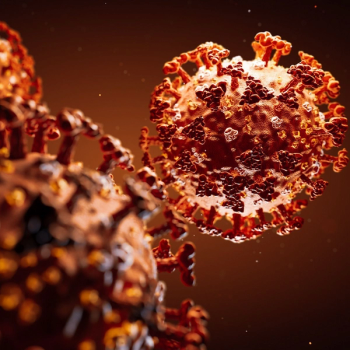
Three doses of the SARS-CoV2 vaccine were shown to be safe and effective in patients with lung cancer, particularly in those with minimal serologic response after receiving only 2 doses.
Sylvie Bonvalot, MD, PhD, HDR, discusses the long-term safety results from the phase 2/3 Act.In.Sarc trial with NBTXR3 and radiotherapy in patients with soft tissue sarcoma.

The European Commission has granted a conditional marketing authorization to pralsetinib for use as a single agent in adult patient with RET fusion–positive advanced non–small cell lung cancer who did not previously receive a RET inhibitor.
Patients with lymphoid malignancies, especially those who have received recent anti-CD20 antibody therapy, have reduced humoral responses to the mRNA COVID-19 vaccines, and as such, should continue to take precautionary measures against COVID-19 infection irrespective of vaccination status.
The addition of quizartinib to chemotherapy resulted in a statistically significant and clinically meaningful improvement in overall survival vs standard chemotherapy alone in patients with newly diagnosed, FLT3-ITD–positive acute myeloid leukemia.

The trial is the first in the world offering this City of Hope-developed investigational therapy to patients with the hope of one day improving survival for people with triple-negative breast cancer.
Diane Reidy-Lagunes, MD, unpacked recent updates in neuroendocrine tumors.