

Real-world data of children and young adults with relapsed/refractory B-cell acute lymphoblastic leukemia treated with tisagenlecleucel demonstrated similar efficacy outcomes and a more favorable safety profile compared with the ELIANA trial.
Real-world data of children and young adults with relapsed/refractory B-cell acute lymphoblastic leukemia treated with tisagenlecleucel demonstrated similar efficacy outcomes and a more favorable safety profile compared with the ELIANA trial.
Selinexor in combination with daratumumab, bortezomib and dexamethasone demonstrated a manageable safety profile and encouraging efficacy in patients with late- and early-relapsed multiple myeloma.
Ponatinib demonstrated high response rates in patients with TKI-resistant, chronic-phase chronic myeloid leukemia, irrespective of T315I mutation status at baseline, according to findings from the phase 2 OPTIC trial.

Depression and anxiety can play a significant role in how patients with cancer view cancer clinical trials, ultimately leading to low enrollment
Mortality rates in patients with acute myeloid leukemia, acute lymphoblastic leukemia, and myelodysplastic syndrome who were diagnosed with COVID-19 were higher compared with non-cancer populations who were infected with the virus.

The combination of tafasitamab and lenalidomide prolonged median overall survival compared with other standard options for autologous stem cell transplant-ineligible patients with relapsed/refractory diffuse large B-cell lymphoma.

Treatment with ibrutinib plus loncastuximab tesirine-lpyl resulted in high objective and complete response rates and an acceptable safety profile in patients with relapsed/refractory diffuse large B-cell lymphoma, according to findings from an interim analysis of the phase 1/2 LOTIS-3 trial (NCT03684694) that were presented at the 2021 ASH Annual Meeting and Exposition.

Sattva S. Neelapu, MD, discusses the long-term follow-up analysis of the phase 2 ZUMA-5 trial with axicabtagene ciloleucel in patients with relapsed/refractory indolent non-Hodgkin lymphoma.

An observational single-center study suggests that mRNA-1273 SARS CoV-2 vaccination induces a strong antibody response in patients with acute myeloid leukemia and myelodysplastic syndrome, according to observational results presented during the 2021 ASH Annual Meeting.

Minimal residual disease–negativity rates were significantly higher after utilizing daratumumab plus bortezomib, thalidomide, and dexamethasone (VTd) vs VTd alone in patients with newly diagnosed, transplant-eligible multiple myeloma, according to findings from the phase 3 CASSIOPEIA study that were presented at the 2021 ASH Annual Meeting and Exposition.
The addition of subcutaneous daratumumab to standard-of-care bortezomib, cyclophosphamide, and dexamethasone (D-VCd) continued to elicit stronger hematologic and organ responses vs VCd alone in patients with newly diagnosed light chain amyloidosis.

The addition of isatuximab to lenalidomide, bortezomib, and dexamethasone (RVd) demonstrated superior minimal residual disease rates vs RVd alone when used as induction treatment in patients with transplant-eligible newly diagnosed multiple myeloma.
Tisagenlecleucel produced a high overall response rate and complete response rate in adult patients with relapsed/refractory follicular lymphoma who had received 2 or more prior lines of therapy, according to results from an extended follow-up analysis of patients with at least 12 months of follow-up of the phase 2 ELARA trial.

Axicabtagene ciloleucel induced high response rates and improved survival in patients with relapsed/refractory follicular lymphoma or marginal zone lymphoma, according to updated data from the phase 2 ZUMA-5 trial.

Daratumumab plus talquetamab demonstrated a tolerable safety profile and induced responses in more than 75% of patients with relapsed/refractory multiple myeloma across dose levels.
Parsaclisib demonstrated early and long-lasting responses in patients with BTK-naïve, relapsed/refractory marginal zone lymphoma, according to findings from the phase 2 CITADEL-204 trial.

The use of ibrutinib plus venetoclax in the first-line setting for patients with previously untreated chronic lymphocytic leukemia continues to provide deep, durable responses, according to updated results from the MRD cohort of the phase 2 CAPTIVATE trial.
The combination of obinutuzumab and venetoclax (GVe), as well as GVe plus ibrutinib demonstrated superior rates of undetectable minimal residual disease compared with chemoimmunotherapy in fit patients with chronic lymphocytic leukemia, according to findings from the phase 3 GAIA (CLL13) trial.

Frontline fixed-duration treatment with ibrutinib plus venetoclax led to deeper and prolonged rates of undetectable minimal residual disease in the bone marrow and peripheral blood, leading to fewer relapses in the first year post-treatment vs chlorambucil plus obinutuzumab in elderly and unfit patients with chronic lymphocytic leukemia.
The minimal residual disease–guided combination of ibrutinib plus venetoclax was found to be a feasible treatment regimen for patients with relapsed/refractory chronic lymphocytic leukemia.
Orca-T significantly improved graft-vs-host disease–free relapse-free survival and time to engraftment, significantly reduced acute and chronic GVHD, and showed a trend toward improved overall survival vs standard of care in patients with serious hematologic malignancies
Daratumumab, lenalidomide, and dexamethasone demonstrated an overall survival advantage in the first-line setting compared with the same agents in the second-line setting in patients with transplant-ineligible multiple myeloma.

Fixed-duration treatment with the bispecific antibody mosunetuzumab induced deep and durable responses with favorable tolerability in heavily pretreated patients with relapsed or refractory follicular lymphoma, meeting the primary end point of the ongoing phase 1/2b GO29781 trial.
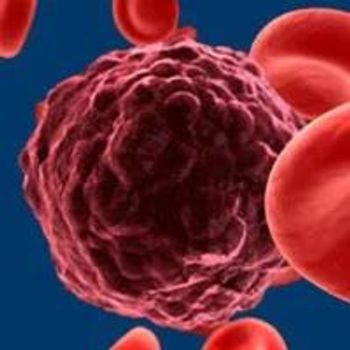
The combination of daratumumab plus ixazomib, without dexamethasone, was found to have a favorable safety profile in very elderly frail patients with relapsed or refractory multiple myeloma and high cytogenetic risk.

Lisocabtagene maraleucel demonstrated statistically and clinically meaningful improvement in event-free survival compared with the standard of care as a second-line therapy in patients with relapsed or refractory large B-cell lymphoma.

The combination of ixazomib, daratumumab, and low-dose dexamethasone elicited an objective response rate of 71% in non-transplant eligible, intermediate-fit patients with newly diagnosed multiple myeloma.

Sagar Lonial, MD, FACP, discusses strategies for managing belantamab mafodotin–associated keratopathy in patients with multiple myeloma.

Paul M. Ness, MD, discusses the goal of the Hemanext ONE® blood storage system and the potential benefit of this approach for those with myelodysplastic syndrome and other conditions that require transfusions.

Neratinib (Nerlynx) induced positive overall response rates in patients with heavily pretreated hormone receptor–positive/HER2-negative, HER2-mutant metastatic breast cancer when combined with fulvestrant and trastuzumab, and also in patients with metastatic HER2-mutant triple-negative breast cancer when combined with trastuzumab.

Two new studies by Yale Cancer Center reveal the structure of the molecule known as anaplastic lymphoma kinase, which is a driver of several cancers, including pediatric neuroblastoma, B-cell lymphomas, and myofibroblast tumors.