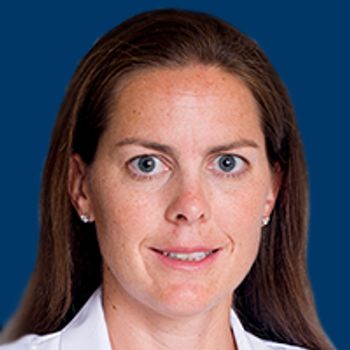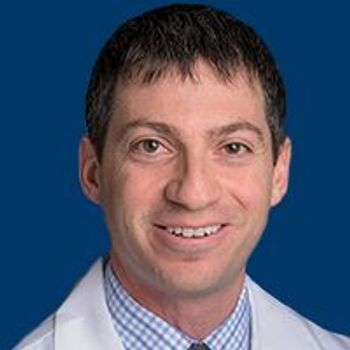
Alison J. Moskowitz, MD, discusses recent developments made in the Hodgkin lymphoma paradigm, shared advice for optimal stratification, and spotlighted potential emerging prognostic markers that might further help to guide treatment decisions.

Your AI-Trained Oncology Knowledge Connection!


Alison J. Moskowitz, MD, discusses recent developments made in the Hodgkin lymphoma paradigm, shared advice for optimal stratification, and spotlighted potential emerging prognostic markers that might further help to guide treatment decisions.

CAR T-cell therapy has proven to be an effective treatment option in non-Hodgkin lymphoma subtypes, such as diffuse large B-cell lymphoma, and mantle cell lymphoma.

Antiandrogen agents, PARP inhibitors, and prostate-specific membrane antigen-directed therapy have broadened the armamentarium in prostate cancer.

The first participants from the United States have been dosed with LUT014, a novel, topical BRAF inhibitor in a phase 2 trial that is evaluating the agent in patients with metastatic colorectal cancer who have developed dose-limiting acneiform lesions following treatment with an EGFR inhibitor.

The subcutaneously administered peptide cancer vaccine maveropepimut-S was found to produce promising activity in heavily pretreated patients with recurrent ovarian cancer.

The Icahn School of Medicine at Mount Sinai has been awarded a grant of more than $4 million by the National Cancer Institute for a large-scale study to evaluate anal cancer screening in high-risk women who have been previously diagnosed with human papillomavirus infection.

The FDA has accepted a new supplemental biologics license application that is seeking the approval of pembrolizumab for use as a monotherapy in patients with advanced endometrial carcinoma that is microsatellite instability–high or mismatch repair deficient, who have progressed after systemic therapy in any setting and are not eligible for curative surgery or radiation.

A fixed duration of ibrutinib plus venetoclax has demonstrated durable efficacy when used in the frontline treatment of patients with chronic lymphocytic leukemia and small lymphocytic lymphoma (SLL).

After a dramatic decrease during the first peak of the COVID-19 pandemic, a substantial increase in cancer screening procedures during more recent time periods has been reported.

The FDA has granted priority review to a new supplemental biologics license application for pembrolizumab as an adjuvant treatment in patients with renal cell carcinoma.

The FDA has finalized guidance on the use of metastasis-free survival as an end point in clinical trials for nonmetastatic castration-resistant prostate cancer.

Su H. Wang, MD, MPH, discusses the rationale for the integration of viral hepatitis screening and care in a hospital system as the first steps for preventing liver cancers like hepatocellular carcinoma.

Five-year survival rates in renal cell carcinoma are drastically improving due to recent regulatory approvals of combination therapies involving checkpoint blockade and VEGF TKIs.

Dr. Moreau discusses the FDA approval of isatuximab-irfc plus carfilzomib and dexamethasone in relapsed/refractory multiple myeloma, key findings from the pivotal IKEMA trial, and future directions with the combination.

With more oral cancer therapies available, the importance of medication adherence and education must be recognized.

Polatuzumab vedotin-piiq in combination with rituximab, cyclophosphamide, doxorubicin, and prednisone resulted in a statistically significant and clinically meaningful improvement in progression-free survival vs rituximab, cyclophosphamide, doxorubicin, vincristine, and prednisone in previously untreated patients with diffuse large B-cell lymphoma.

Understanding the functionality and naming convention of biosimilars vs their biologic counterparts are important concepts to utilizing these agents in oncology, according to a presentation given by Teresa Knoop, MSN, RN, AOCN, during the 5th Annual School of Nursing Oncology Meeting.

City of Hope, a world-renowned cancer research and treatment center, today announced that acclaimed Pacific Shores Medical Group has joined City of Hope.

Fam-trastuzumab deruxtecan-nxki significantly improved progression-free survival over ado-trastuzumab emtansine in patients with HER2-positive, unresectable and/or metastatic breast cancer previously treated with trastuzumab and a taxane, meeting the primary end point of the phase 3 DESTINY-Breast03 trial.

Data that were presented during the 2021 ASCO Annual Meeting shed light on new therapeutic strategies, and treatment considerations that are expanding the paradigms of gastrointestinal malignancies.

The addition of GEN-1 to standard-of-care neoadjuvant chemotherapy has shown preliminary safety and clinical activity and appears to have an impact on the tumor microenvironment in patients with advanced epithelial ovarian cancer.

The COVID-19 pandemic had a relatively limited effect on immuno-oncology research, according to results from the Association of Community Cancer Centers fourth annual analysis of the IO landscape.

The FDA has placed a partial clinical hold on clinical trials examining the combination of eprenetapopt and azacitidine in patients with myeloid malignancies.

Noa Biran, MD, discusses her predictions for where the field of multiple myeloma is headed as well as some of these agents that have generated excitement for patient populations that are currently an unmet need.

Refining treatment is not only a key aim of research in breast cancer but a greater possibility in the clinic with neoadjuvant and adjuvant PARP inhibitors, HER2 monoclonal antibodies, and greater stratification of genomic risk.

The FDA has issued a complete response letter to Spectrum Pharmaceuticals regarding the biologics license application for eflapegrastimas a potential option for the management of chemotherapy-induced neutropenia.

TheraSphere Y-90 glass microspheres offer a precision medicine technique aimed at delivering high-dose radiation directly to tumors.

Marina Kremyanskaya, MD, PhD, discussed the results of the phase 2 PTG-300-04 trial, which were presented at the European Hematology Association 2021 Virtual Congress, and the potential for rusfertide as a treatment option for patients with polycythemia vera.

An association has been found in Latin American patients with lung adenocarcinoma between Native American ancestry and somatic landscape, including EGFR, KRAS, and STK11 mutations, as well as tumor mutational burden.

Avapritinib did not improve progression-free survival vs regorafenib in patients with unresectable or metastatic gastrointestinal stromal tumors, but the agent continues to be the most active available option for a subset of patients with PDGFRA D842V–mutant disease.