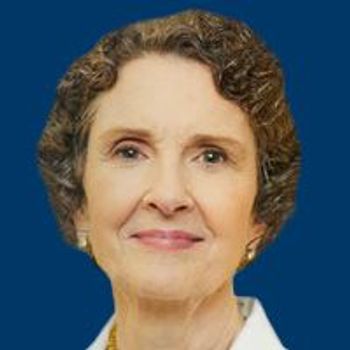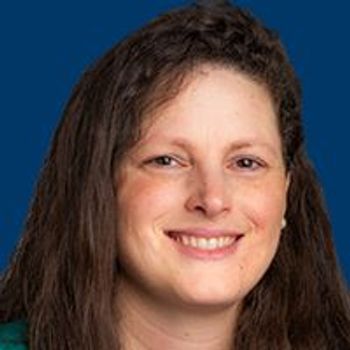
Rachel Wuerstlein, MD, discusses the safety and the efficacy observed with ado-trastuzumab emtansine in patients with HER2-positive breast cancer and the next steps for research with the agent.

Your AI-Trained Oncology Knowledge Connection!


Rachel Wuerstlein, MD, discusses the safety and the efficacy observed with ado-trastuzumab emtansine in patients with HER2-positive breast cancer and the next steps for research with the agent.

Novel combinations with agents, such as pevonedistat, eprenetapopt, venetoclax or magrolimab, plus hypomethylating agents like azacitidine are being evaluated to determine whether they can improve upon the lackluster median survival for patients with higher-risk myelodysplastic syndrome.

The method used to calculate how obesity is measured may impact whether it should be considered as a risk factor for non–small cell lung cancer.

Doublet and triplet chemotherapy-based therapies are standard treatment options for patients with BRAF V600–mutant metastatic colorectal cancer.

It is difficult to dispute that these are troubling times for government officials and public health agencies.

Joseph W. Kim, MD, Associate Professor of Medicine at Yale Cancer Center, has received a 2021 Cancer Clinical Investigator Team Leadership Award from the National Cancer Institute.

Leslie L. Montgomery, MD, and Tara M. Balija, MD, discuss the benefits of a novel reflector device in patients with breast cancer, its efficacy in identifying clipped axillary lymph nodes, and the potential future use of this device in other cancer types.

Ardaman Shergill, MD, discussed the use of EGFR inhibitors in metastatic colorectal cancer and advantages of expanded dosing indications.

Hossein Borghaei, DO, MS, discusses the clinical implications of the FDA approval of sotorasib in patients with KRAS G12C–mutant NSCLC.

Advances in the diagnosis and treatment of early-stage breast cancer highlight the need for clinicians to adapt to paradigm shifts that will have notable effects on patient care.

As the State’s only NCI-designated Comprehensive Cancer Center, Rutgers Cancer Institute of New Jersey will lead this effort.

Richard Kim, MD, discusses the utility of EGFR inhibitors in patients with RAS wild-type colorectal cancer, the convenience of biweekly dosing with cetuximab, recommendations for managing EGFR inhibitor–related treatment-related adverse effects, and novel combinations on the horizon.

Insights generated from several trials presented during the 2021 ASCO Annual Meeting in renal cell carcinoma illustrate the importance of evaluating checkpoint inhibitors in earlier stages of disease, quality of life, and long-term outcomes, and other data that point to 2 potential new standards of care in prostate cancer.

The net effect of the Oncotype DX Genomic Prostate Score in patients with favorable-risk prostate cancer was to move away from active surveillance, altering the understanding of how prognostic molecular assays that generate probabilities of poor outcome can impact treatment decisions in diverse populations.

Racial minorities with limited-stage small cell lung cancer, including African American and Asian patients, were found to have more favorable survival outcomes compared with White patients, which suggests that race is associated with survival in this disease.

The addition of pembrolizumab to chemotherapy resulted in a statistically significant and clinically meaningful improvement in overall survival vs chemotherapy alone in patients with metastatic triple-negative breast cancer whose tumors had a PD-L1 expression of a combined positive score of 10 or higher, meeting the primary end point of the phase 3 KEYNOTE-355 trial.

The FDA has approved pembrolizumab for the treatment of patients with high-risk, early-stage triple-negative breast cancer in combination with chemotherapy as neoadjuvant treatment and then continued as a single agent as adjuvant treatment after surgery.

Health Canada has approved the BTK inhibitor zanubrutinib for use in the treatment of adult patients with mantle cell lymphoma who have previously received at least 1 therapy.

More than 50 health care professional organizations, including the American Society of Hematology, the American Society of Clinical Oncology, the American Society for Radiation Oncology, the Society for Gynecologic Oncology, and the American Medical Association issued a joint statement Monday calling for all health care employers to require COVID-19 vaccinations for all their employees.

Roche Registration GmbH has withdrawn its application to extend the use of atezolizumab to the treatment of patients with early or locally advanced triple-negative breast cancer in Europe.

The FDA has granted priority review to a new drug application for the nanoparticle albumin-bound mTOR inhibitor nab-sirolimus for the treatment of patients with malignant perivascular epithelioid cell neoplasm.

The FDA has issued a complete response letter to Incyte Corporation stating that it cannot approve the biologics license application for retifanlimab for use in adult patients with locally advanced or metastatic squamous cell carcinoma of the anal canal who have progressed on, or who are intolerant of, platinum-based chemotherapy, in its present form.

The use of oncology biosimilars has expanded rapidly in the United States during the past 2 years as providers embraced a growing armamentarium of new products, according to findings from real-world data reported at the 2021 American Society of Clinical Oncology Annual Meeting.

Surgical resection demonstrated a notable survival benefit, particularly in combination with neoadjuvant therapy, in patients with aggressive margin-positive pancreatic cancer.

A multimodality approach to treatment, which included sequential chemotherapy and radiation therapy followed by surgery, resulted in successful resection for most patients with marginally inoperable soft tissue sarcomas.

The combination of brentuximab vedotin plus doxorubicin, vinblastine, and dacarbazine with and without consolidative radiotherapy was found to have strong efficacy and favorable tolerability in patients with early-stage, unfavorable-risk, Hodgkin lymphoma.

Bristol Myers Squibb has decided to voluntarily withdraw the indication for nivolumab as a monotherapy for patients with hepatocellular carcinoma who were previously treated with sorafenib from the US market.

Multicancer early detection tests yielded high specificity and accuracy in predicting cancer signal origin and identified cancer signals in multiple tumor types.

The CAR T-cell product tisagenlecleucel has been shown to elicit durable responses in adult patients with relapsed/refractory follicular lymphoma with a safety profile that compares favorably with other available products.

Brain imaging should be considered for patients with advanced or metastatic renal cell carcinoma who have a high metastatic burden and who have progressed after treatment with first-line therapies.