
All Oncology News

NBTXR3, a novel radioenhancer, is showing intriguing response rates in adult patient with soft tissue sarcoma, paving a path for the innovative therapy not just in sarcomas, but other tumor types, as well.
Advertisement

Fam-trastuzumab deruxtecan-nxki is under study alone and in combination for the treatment of patients with HER2-overexpressing locally advanced, unresectable or metastatic gastric or gastroesophageal junction adenocarcinoma in the ongoing phase 1b/2 DESTINY-Gastric03 trial.

Robert L. Coleman, MD, discusses key data for these therapies and touched on emerging developments concerning new therapies in ovarian and endometrial cancers.

Randy Stevens, MD, discusses the growing role for radiation in lung cancer, delivery techniques, and adverse effect management strategies.

February 13, 2021 - Cabozantinib resulted in a statistically significant and clinically meaningful prolongation of progression-free survival compared with sunitinib in patients with metastatic papillary renal cell carcinoma.
Advertisement

February 13, 2021 - Lenvatinib in combination with pembrolizumab resulted in improved overall survival, progression-free survival, and objective response rate over sunitinib in the frontline treatment of patients with advanced renal cell carcinoma.

February 13, 2021 - Belzutifan used in combination with cabozantinib shrank tumors for 88% of patients and the disease control rate was 90% for patients with previously treated advanced clear cell renal cell carcinoma.

February 13, 2021 - Certain molecular signatures at baseline were found to be independently linked with long-term response to apalutamide in patients with nonmetastatic castration-resistant prostate cancer.

February 13, 2021 - Bacillus calmette-guérin plus N-803 demonstrated promising responses with a tolerable safety profile when used in patients with BCG-unresponsive, non–muscle-invasive bladder cancer carcinoma in situ

February 13, 2021 - Reductions in prostate-specific antigen screening are likely responsible for the recent increase in metastatic prostate cancer cases in the United States.

February 13, 2021 - 18F-DCFPyL, an investigational prostate-specific membrane antigen PET imaging agent, was found to detect and localize metastatic lesions with a high correct localization rate and positive predictive value.

Patrick Pilie, MD, discusses the impact of adiposity on response to androgen signaling inhibition in patients with metastatic castration-resistant prostate cancer.

Tanya Dorff, MD, discusses the effects of bright white light therapy on obese frailty in older men with prostate cancer.

February 13, 2021 - Enfortumab vedotin was found to have superior efficacy over chemotherapy when used in patients with advanced urothelial carcinoma who had received prior platinum-based chemotherapy and PD-1/L1 inhibition.

February 13, 2021 - Treatment with apalutamide plus androgen-deprivation therapy reduced the risk of death by 35% versus ADT alone in patients with metastatic castration-sensitive prostate cancer.

February 13, 2021 - Nivolumab following surgery extended disease-free survival compared with placebo for patients with muscle-invasive urothelial carcinoma.

February 12, 2021 - Enfortumab vedotin elicited the highest response rates observed for any regimen examined in cisplatin-ineligible patients with locally advanced or metastatic urothelial cancer who received prior PD-1/PD-L1 inhibitors.
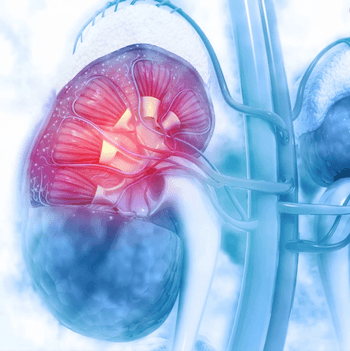
February 12, 2021 - Cabozantinib demonstrated significant intracranial and extracranial responses in patients with metastatic renal cell carcinoma who have brain metastases.

Cristiane Bergerot PhD, MS, BS, discusses how a higher starting dose of lenvatinib, to be combined with everolimus, can improve health-related quality of life in patients with renal cell carcinoma, as demonstrated in a phase 2 open-label trial.

February 12, 2021 - The combination of nivolumab and cabozantinib continued to showcase a superior survival benefit over single-agent sunitinib when used as first-line treatment in patients with advanced renal cell carcinoma.

Eleni Efstathiou, MD, discusses the key findings of the placebo-controlled, double-blind phase 3 ACIS study of apalutamide and abiraterone acetate plus prednisone versus prednisone alone in patients with chemotherapy-naïve metastatic castration-resistant prostate cancer.
February 12, 2021 - The FDA has approved trilaciclib to reduce the frequency of chemotherapy-induced bone marrow suppression in adults receiving certain types of chemotherapy for extensive-stage small cell lung cancer.
February 12, 2021 - Tivozanib led to a significantly greater quality-adjusted time without symptoms of disease and toxicity as third- or fourth-line therapy versus sorafenib in patients with metastatic renal cell carcinoma.

February 12, 2021 - Crossover from placebo to darolutamide appeared to have minimal impact on the overall survival benefit experienced by patients with nonmetastatic castration-resistant prostate cancer who were enrolled to the pivotal phase 3 ARAMIS trial.

February 12, 2021 - Atezolizumab monotherapy showed favorable outcomes compared with chemotherapy alone as frontline treatment for patients with cisplatin-ineligible IC2/3 advanced or metastatic urothelial carcinoma.

February 12, 2021 - The European Commission has granted marketing authorization to tucatinib for use in combination with trastuzumab and capecitabine in the treatment of adult patients with HER2-positive, locally advanced or metastatic breast cancer who have previously received at least 2 HER2-targeted regimens

February 12, 2021 - The androgen receptor inhibitor darolutamide continues to show favorable tolerability in patients with nonmetastatic castration-resistant prostate cancer, even when given for a prolonged period of time.
February 12, 2021 - Patients with advanced renal cell carcinoma reported improved health-related quality of life when treated with nivolumab plus cabozantinib compared with sunitinib
Advertisement
Advertisement
Trending on OncLive
1
FDA Approves Subcutaneous Isatuximab Delivered Via On-Body Delivery System for Multiple Myeloma
2
FDA Approves Pembrolizumab Plus Enfortumab Vedotin in MIBC
3
Risvutatug Rezetecan Shows OS Benefit Over Topotecan in Relapsed SCLC
4
OncLive Weekly News Quiz (7/10/2026): Test Your Knowledge on Key Updates in Myeloma, MIBC, and More
5