

Ivonescimab plus chemotherapy has received breakthrough therapy designation as first-line therapy in patients with triple-negative breast cancer.
Ivonescimab plus chemotherapy has received breakthrough therapy designation as first-line therapy in patients with triple-negative breast cancer.
Yuan Yuan, MD, PhD, discusses the use of sacituzumab govitecan in TNBC and remaining questions about the use of CDK4/6 inhibitors in ER-positive disease.
Sara A. Hurvitz, MD, FACP, unpacks data with adjuvant ribociclib plus endocrine therapy from the 5-year prespecified analysis of the NATALEE trial.
CB-011 elicited responses in patients with relapsed/refractory multiple myeloma.
Findings from a meta analysis showed that JAK inhibitors were associated with improved outcomes vs best available therapy in myelofibrosis.
Jaume Capdevila, MD, PhD, discusses the potential for 177Lu-edotreotide for the treatment of patients with neuroendocrine tumors.

Roswell Park's National Cancer Institute-designated comprehensive cancer center will bring its expertise to the Capital Region.

Long-term follow-up results show vorasidenib prolongs PFS and reduces tumor progression vs placebo in IDH-mutant grade 2 glioma.

Lifileucel was deemed safe and active in patients with previously treated, advanced nonsquamous NSCLC without certain actionable genetic mutations.
Here is your snapshot of all oncologic therapeutic options that were approved by the EMA in October 2025.
Wendy Stock, MD, discusses how TKI-based, chemotherapy-free regimens are advancing Ph-positive ALL care toward durable, treatment-free remission.

Martin Dietrich, MD, PhD, discusses how zongertinib offers a new targeted option for HER2-mutant NSCLC, yielding durable responses and strong CNS activity.

The top 5 OncLive TV videos of the week cover insights in myeloproliferative neoplasms, lung cancer, ovarian cancer, and prostate cancer.
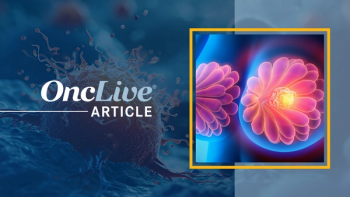
In a recent Peer Exchange, breast cancer experts discussed updates from ESMO 2025, including practice-informing data with antibody-drug conjugates.

Belzutifan-based combinations meet end points in RCC, imaging agent under review for SSTR-positive neuroendocrine tumors, and more.
In case you missed any, below is a recap of every OncLive On Air episode that aired in October 2025.
Primo Nery Lara, Jr, MD, and Suneel Kamath, MD, discuss the effects of federal cuts to cancer research despite public support for funding this research.

Seven provinces have agreed to reimburse cemiplimab for the treatment of patients with advanced non–small cell lung cancer and basal cell carcinoma.

Mirvetuximab soravtansine has received a positive reimbursement recommendation in Canada under the Target Zero initiative for platinum-resistant ovarian cancer.
Efrat Dotan, MD, discusses patient factors to consider during treatment planning for metastatic pancreatic cancer.

Komal Jhaveri, MD, FACP, discusses management strategies for ocular toxicities and other ADC-related adverse effects in breast cancer.
Mayo Clinic discovery of breast cancer treatment resistance can lead to new hope for some patients.
Here is your guide to all therapeutic options that were approved by the FDA in October 2025 spanning tumor types.
OncLive® and the Ruesch Center at Georgetown Lombardi announce the 2025 Luminary Award winners in gastrointestinal cancers.
Rebecca Dent, MD, MSc, discusses data from the TROPION-Breast02 trial evaluating first-line Dato-Dxd in immunotherapy-ineligible triple-negative breast cancer
Harry P. Erba, MD, PhD; and Jayastu Senapati, MBBS, discuss the effects of drug shortages in hematologic oncology and how to adapt practice when they arise.
The James P. Allison Institute at The University of Texas MD Anderson Cancer Center hosted its third annual scientific symposium on October 24.
The FDA set a March 29, 2026, PDUFA date for LNTH-2501, a PET imaging agent targeting SSTR-positive neuroendocrine tumors.
The FDA granted orphan drug designation to DPTX3186 in gastric cancer.