
Komal Jhaveri, MD, FACP, discusses lessons learned from the negative phase 3 ASCENT-07 trial in hormone receptor–positive, HER2-negative breast cancer.
Komal Jhaveri, MD, FACP, discusses lessons learned from the negative phase 3 ASCENT-07 trial in hormone receptor–positive, HER2-negative breast cancer.
Shaji Kumar, MD, shares phase 1 data from the CAMMA 1 trial evaluating cevostamab alone or in different combinations in relapsed/refractory myeloma.
Maxwell Lloyd, MD, discusses phase 3 data from DESTINY-Breast11 and DESTINY-Breast05 evaluating T-DXd in neoadjuvant and adjuvant HER2-positive breast cancer.
Yue Wei, PhD, discusses the correlation between TET2 mutations and platelet recovery in patients with MDS receiving hypomethylating agents.
Kanwal P.S. Raghav, MBBS, MD, discusses the mechanism of action of telisotuzumab adizutecan in post-adjuvant ctDNA-positive CRC.
Peter Voorhees, MD, discussed significance of the FDA approval of daratumumab and hyaluronidase for adult patients with high-risk smoldering multiple myeloma.
Xiuning Le, MD, PhD, discusses the significance of the FDA’s approval of sevabertinib for locally advanced/metastatic, nonsquamous HER2-positive NSCLC.

Rocío García-Carbonero, MD, discusses the rationale of the FRESCO-2 trial of fruquintinib in mCRC.
Eric K. Singhi, MD, discuses the emerging role of TROP2-directed antibody–drug conjugates in the evolving treatment algorithm for NSCLC.
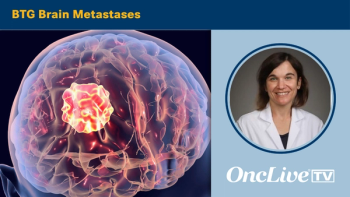
Laura Alder, MD, discusses clinical decision-making around prioritizing local vs systemic therapy for patients with lung cancer who present with CNS-only metastatic disease.
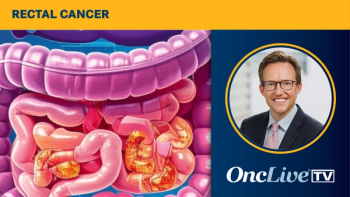
William A. Hall, MD, discusses remaining clinical questions in the field of rectal cancer.
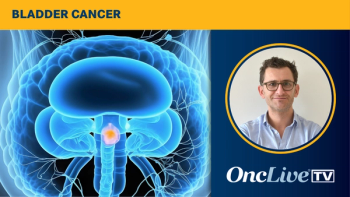
Christof Vulsteke, MD, PhD, discusses the clinical rationale for evaluating perioperative enfortumab vedotinplus pembrolizumab in patients with cisplatin-ineligible MIBC.
Kanwal P.S. Raghav, MBBS, MD, discusses the rationale for examining telisotuzumab adizutecan in post-adjuvant ctDNA-positive CRC.
Yue Wei, PhD, discusses how TET2 mutations influence platelet response and prognosis in patients with MDS receiving hypomethylating agents.
Hans Lee, MD, discusses the role of the CoMMit consortium as a collaborative forum shaping the future of multiple myeloma research.
Jason Aboudi Mouabbi, MD, discussed the importance of using ctDNA testing to inform treatment decision-making across breast cancer populations.
Hope S. Rugo, MD, highlights emerging research with targeted therapies and oral SERDs that may influence the HR-positive breast cancer treatment paradigm.
Lindsay AM Rein, MD, discusses the TSS assessment from the SUMMIT trial investigating bezuclastinib in adult patients with non-advanced SM.
Rahul Banerjee, MD, FACP, discusses key considerations and unanswered questions regarding the selection between KRd and VRd in newly diagnosed myeloma.

Kevin Kalinsky, MD, MS, FASCO, discusses clinical data potentially supporting the use of TROP2-directed ADCs in frontline metastatic TNBC.
Lorenzo Falchi, MD, discusses the significance of the FDA approval of epcoritamab plus rituximab and lenalidomide for relapsed/ refractory follicular lymphoma.
David A. Russler-Germain, MD, PhD, discusses how data with MRD and ctDNA testing in solid tumors inform their potential application in hematologic malignancies.
Luciano Costa, MD, discusses teclistamab plus daratumumab vs investigator’s choice of DPd/DVd in patients with relapsed or refractory multiple myeloma.
Tsewang Tashi, MD, shares data from the PIONEER trial showing that avapritinib increases bone marrow density in patients with indolent systemic mastocytosis.
Jonathan Strosberg, MD, expands on subgroup analyses of outcomes with 177Lu-edotreotide in the COMPETE trial by tumor origin and prior lines of therapy.
Marcel Verheij, MD, PhD, discusses the use of chemotherapy vs CRT-containing strategies as a preferred preoperative regimen for resectable gastric cancer.
Stephen Lam Chan, MBBS, MD (CUHK), FRCP, discusses the lack of benefit with adjuvant pembrolizumab in HCC following a complete radiologic response.
Elena Elimova, MD, discusses efficacy data for zanidatamab in HER2-positive gastroesophageal adenocarcinoma from HERIZON-GEA-01.
Shuqiang Yuan, MD, PhD, outlines the most important data after 3 years of follow-up from the NEOSUMMIT-01 trial in locally advanced gastric/GEJ cancer.