
Tara C. Mitchell, MD, assistant professor of Medicine at the Hospital of the University of Pennsylvania, Perelman School of Medicine, discusses atypical responses with immunotherapies in melanoma.

Your AI-Trained Oncology Knowledge Connection!
Tara C. Mitchell, MD, assistant professor of Medicine at the Hospital of the University of Pennsylvania, Perelman School of Medicine, discusses atypical responses with immunotherapies in melanoma.
Ismail Baris Turkbey, MD, staff clinician in the Molecular Imaging Program, Center for Cancer Research, National Cancer Institute, discusses sodium fluoride PET imaging for patients with prostate cancer.
Sundar Jagannath, MD, director of the Multiple Myeloma Program, professor of Medicine (Hematology and Medical Oncology), Tisch Cancer Institute at Mount Sinai School of Medicine, discusses sequencing challenges with therapies for patients with multiple myeloma.
Tanios Bekaii-Saab, MD, associate professor, Department of Internal Medicine, The Ohio State University Comprehensive Cancer Center, discusses the benefits patients receive with regorafenib for the treatment of colorectal cancer.
Erika P. Hamilton, MD, Director, Breast Cancer and Gynecologic Cancer Research Program; Principal Investigator, Sarah Cannon Research Institute, discusses ONT-380, a novel HER2-specific inhibitor. Most oral HER2-inhibitors block not only HER2, but other proteins such as EGFR.
In The Death of Cancer, written by Vincent T. DeVita Jr, MD, a pioneering oncologist reveals, after 50 years on the front lines of medicine, why the war on cancer is winnable, and how to get there. In an interview with OncLive hosted by Maurie Markman, MD, he speaks with DeVita on his book and his thoughts on how the field has evolved.
Georgia L. Wiesner, MD, MS, director, Clinical and Translational Hereditary Cancer Program, Ingram Professor of Cancer Research, professor of Medicine, cancer geneticist, Vanderbilt-Ingram Cancer Center, explains the benefits of genetic testing for colorectal cancer (CRC) and how oncologists can discuss it with their patients.
Farrukh Awan, MBBS, assistant professor of internal medicine, Ohio State University, discusses the role for spleen tyrosine kinase (Syk) inhibitor for the treatment of chronic lymphocytic leukemia (CLL).
Ramaprasad Srinivasan, MD, PhD, staff clinician, Urologic Oncology Branch, National Cancer Institute, discusses the need for targeted therapies for patients with non-clear cell renal cell carcinoma (RCC) and the types of agents these patients are likely benefit to from.
Mark Emberton, MD, professor of Interventional Oncology, Division of Surgery and Interventional Science, University College London Hospitals, clinical director, Clinical Effectiveness Unit, Royal College of Surgeons of England, discusses techniques of focal therapy in patients with prostate cancer.
Fred Saad, MD, FRCSC, principal scientist, full professor, Department of Surgery, chair in Prostate Cancer Research, Université de Montréal, medical director, Interdisciplinary Urologic Oncology Group, head, Urologic Oncology, CHUM, discusses the expanded access program (EAP) of radium-223 for the treatment of patients with metastatic castration-resistant prostate cancer (mCRPC).
Benjamin D. Smith, MD, associate professor and research director of breast radiation oncology, The University of Texas MD Anderson Cancer Center, Houston, discusses complications with mastectomy versus lumpectomy for early breast cancer.
Tony Philip, MD, medical oncologist, Monter Cancer Center of the North Shore-LIJ Cancer Institute, assistant professor of Medicine, Hofstra-North Shore LIJ School of Medicine and NYIT College of Osteopathic Medicine, discusses the challenges of treating soft tissue sarcomas.

Christopher A. Yasenchak, MD, associate chair of Hematology Research, Willamette Valley Cancer Institute and Research Center/US Oncology Research, discusses results of a study examining the addition of brentuximab vedotin to R-CHOP for the treatment of patients with diffuse large B-cell lymphoma.
Pier Luigi Filosso, MD, associate professor of Thoracic Surgery, University of Torino, Italy, discusses future approaches to treating patients with neuroendocrine tumors of lung origin.

Renato G. Martins, MD, MPH, medical director, Outpatient General Oncology/Hematology, Thoracic/Head and Neck Oncology, Seattle Cancer Care Alliance, professor, University of Washington School of Medicine, discusses patient selection for nivolumab (Opdivo) as a treatment for patients with non–small cell lung cancer (NSCLC).
Graham Dixon, PhD, chief scientific officer, Onxeo, director, R&D, Onxeo, discusses a phase I study investigating the combination of belinostat (Beleodaq) plus CHOP in patients with peripheral T-cell lymphoma.

Padmanee Sharma, MD, PhD, professor of Immunology, Department of Genitourinary Medical Oncology, Division of Cancer Medicine, The University of Texas MD Anderson Cancer Center, discusses PD-L1 as a predictive biomarker for immunotherapy in patients with bladder cancer.
David M. Gershenson, MD, professor, Obstetrics, Gynecology and Reproductive Sciences, The University of Texas MD Anderson Cancer Center, discusses the evolution of targeted therapies for patients with rare gynecologic malignancies.
Suresh Ramalingam, MD, professor, Emory School of Medicine, and chief, Medical Oncology, Department of Hematology and Medical Oncology, Emory University, discusses combinations with immunotherapy agents and chemotherapy being investigated as potential treatments for patients with non–small cell lung cancer.

Robert Andtbacka, MD, associate professor, Division of Surgical Oncology, Department of Surgery, University of Utah School of Medicine, discusses ongoing clinical trials investigating oncolytic immunotherapies as a treatment for melanoma.
Cathy Eng, MD, FACP, professor, director, Department of Gastrointestinal Medical Oncology, Division of Cancer Medicine, Network Clinical Research, associate medical director, Colorectal Center, University of Texas MD Anderson Cancer Center, discusses emerging agents for the treatment of patients with anal cancer.
Marie Huong Nguyen, MD, assistant professor, Hematology and Oncology, University of Michigan Health System, discusses the safety and efficacy of ABL001 as a potential treatment for patients with chronic myeloid leukemia.
Alok A. Khorana, MD, professor of Medicine, Department of Hematology and Oncology, Cleveland Clinic, discusses a study that examined practice patterns and patient persistence on anticoagulant treatments for cancer-associated thrombosis.
Ingrid A. Mayer, MD, co-leader and Clinical Director, Breast Cancer Research Program Chair, Data and Safety Monitoring Committee, Associate Professor of Medicine (Hematology/Oncology), medical oncologist, Vanderbilt-Ingram Cancer Center, discusses the use of targeted therapies in estrogen-receptor (ER)-positive breast cancer.
Peter Voorhees, MD, associate professor, School of Medicine, University of North Carolina (UNC)-Chapel Hill, Clinical Research, Leukemia, Lymphoma, and Myeloma Program, UNC Lineberger Comprehensive Cancer Center, discusses the triplet regimen of pomalidomide, dexamethasone, and ixazomib in patients with double refractory multiple myeloma.
John M. Kirkwood, MD, Usher Professor of Medicine, Dermatology & Translational Science, director, Melanoma and Skin Cancer Program, Division of Hematology/Oncology, University of Pittsburgh, discusses a recent study that trained general practitioners and nurses to conduct annual skin examinations.
Jaroslaw P. Maciejewski, MD, PhD, chair, Department of Translational Hematology and Oncology Research, Cleveland Clinic, discusses the impact of eltrombopag on an expansion of clones with somatic mutations in patients with refractory aplastic anemia.
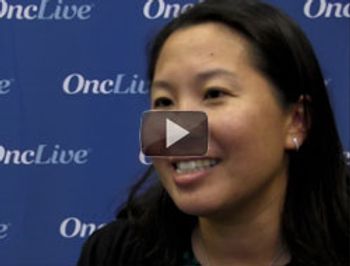
Betty Hamilton, MD, associate staff physician, Department of Hematologic Oncology and Blood Disorders and Blood and Marrow Transplant Program, discusses the prognostic impact of molecular mutations in acute myeloid leukemia and myelodysplastic syndromes on allogeneic hematopoietic cell transplant outcomes and the adverse impact of TET2 mutations.
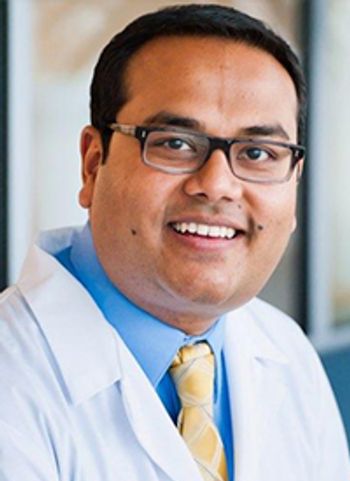
Aditya Bardia, MD, MPH, assistant professor of Medicine, Harvard Medical School, attending physician, Medical Oncology, Massachusetts General Hospital, discusses RAD1901, a selective estrogen receptor degrader (SERD) for potential use in ER-positive metastatic breast cancer.