

Dr Terris discusses disparities in treatment and outcomes for women with bladder cancer and summarized reasons for this poor prognosis.
Dr Terris discusses disparities in treatment and outcomes for women with bladder cancer and summarized reasons for this poor prognosis.
Dr Kalinsky discusses the treatment paradigm for HR-positive breast cancer post-CDK4/6 inhibition and the need for therapeutic advances in this setting.
Dr Liu discusses the potential role for zidesamtinib for the treatment of patients with advanced non–small cell lung cancer harboring ROS1 rearrangements.

Ailawadhi and Faiman discuss the rationale for efforts to bring isatuximab on-body injectors into the clinic for patients with multiple myeloma.
Dr Shore discusses the use of ADT in patients with prostate cancer, as well as toxicities and quality-of-life complications associated with these agents.

Drs Hanhan, Bauer, and NeMoyer discuss the ins and outs of lung cancer diagnosis, surgical management, and evolving treatment paradigms.

Amit Mehta, MD, discusses practice-changing urothelial carcinoma data that have been presented throughout 2024 and 2025.
Dr Wang discusses the prevalence of secondary AML, unmet needs for patients with this disease, and how CPX-351 has generated improved outcomes vs 7+3.
Dr Raghav discusses the role of fruquintinib in the treatment of adult patients with pretreated, metastatic colorectal cancer.
Dr Liu discusses the 2 VISION trial of tepotinib for NSCLC harboring MET exon 14 skipping alterations, as well as the importance of biomarker testing.
Andrew Kuykendall, MD, provides an overview of the myelofibrosis treatment paradigm.
Kohei Shitara, MD, discusses optimizing treatment strategies and addressing unmet needs in resectable gastric and gastroesophageal junction cancers.
Dean discusses the role of BTK inhibitors in the management of CLL and the importance of molecular profiling for treatment rechallenge decisions.
Dana M. Chase, MD, discusses the management of recurrent endometrial cancer, emphasizing the importance of biomarker profiles and previous therapies.
Dr Wong discusses the growing challenge of early-onset colorectal cancer and the insights from a recent cohort analysis conducted in Singapore.

Allan and Rubianes discuss factors that influence treatment decision-making for patients with chronic lymphocytic leukemia.
Dr Halmos discusses the VISION trial, the significance of MET exon 14 skipping mutations in NSCLC, and the clinical utility of tepotinib in this disease.
Dr Dorff discusses the role of ADT in prostate cancer management, how this class has evolved, and the use of relugolix across treatment settings.
Drs Logan and Shah discussed where obe-cel currently fits into the B-ALL treatment paradigm and how the use of this agent might expand going forward.
Dr Luke discusses the rationale for evaluating IMA203 in cutaneous melanoma and what the PRAME trial findings may mean for the future of TCR therapy.
Masatoshi Kudo, MD, discusses the evolving treatment landscape in HCC and how recent comparative analyses are helping refine the use of first-line immunotherapy-based regimens.

Drs Kelly and Shiller discuss the importance of performing IHC testing for HER2 in NSCLC and recommendations for IHC testing implementation in practice.
Neal S. Akhave, MD, discusses the addition of toripalimab to the NCCN guidelines for nasopharyngeal carcinoma.
Rocío García-Carbonero, MD, PhD, discusses trends in colorectal cancer and other gastrointestinal malignancies, presented at the 2025 ESMO GI Cancers Congress.
Ignacio Blanco, MD, PhD, discusses the EU marketing authorization of mirdametinib for patients with symptomatic, inoperable plexiform neurofibromas.
Elena Élez, MD, PhD, discusses the evolving role of immunotherapy for patients with microsatellite instability–high metastatic colorectal cancer.
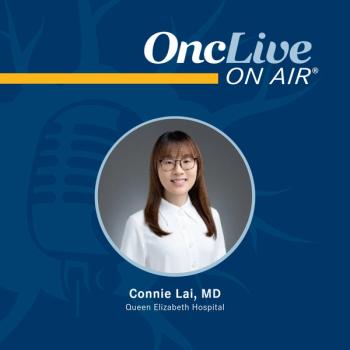
Connie Lai, MD, discusses a retrospective, dual-center study examining post-induction treatment strategies in metastatic colorectal cancer.
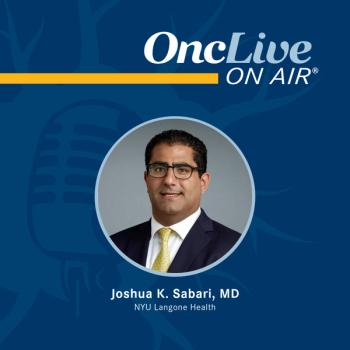
Dr Sabari highlights key research investigating telisotuzumab vedotin in patients with c-Met–overexpressing non–small cell lung cancer.

Xavier Leleu, MD, PhD, and Beth Faiman, PhD, MSN, APN-BC, BMTCN, AOCN, FAAN, FAPO, discuss key data from the phase 3 IRAKLIA study.
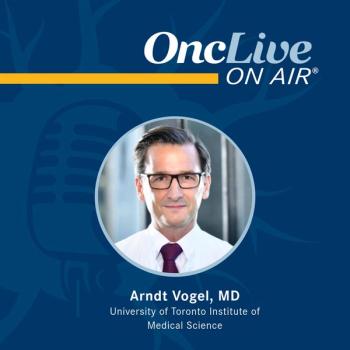
Dr Vogel highlights the importance of the European Commission’s approval of zanidatamab for previously treated, metastatic HER2+ biliary tract cancer.