
Amrita Krishnan, MD, shares the significance of the FDA approval of daratumumab plus teclistamab in relapsed/refractory multiple myeloma.
Amrita Krishnan, MD, shares the significance of the FDA approval of daratumumab plus teclistamab in relapsed/refractory multiple myeloma.
Here is your cheat sheet to all therapeutic options that were cleared by the FDA in March 2026 spanning tumor types.

David Morris, MD, FACS, and Alan H. Bryce, MD, discuss the FDA’s full approval of rucaparib for BRCA mutation–associated mCRPC.

Amrita Krishnan, MD, discusses risk stratification in smoldering myeloma and factors that inform the classification of high-risk disease.

Marwan G. Fakih, MD, discusses the shift in SCAC management after the approval of retifanlimab and the resulting need for better second-line strategies.

The top 5 OncLive TV videos of the week cover insights in colorectal cancer, breast cancer, bladder cancer, and more
A drug withdrawal in follicular lymphoma and epithelioid sarcoma, a CRL in lung cancer, and priority review in breast cancer highlight this week's top oncology news.

Tycel Phillips, MD, discusses how CAR T-cell therapies and bispecific antibodies could further affect mantle cell lymphoma management.
The top 5 OncLive TV videos of the week cover insights in mantle cell lymphoma, breast cancer, bladder cancer, head and neck cancer, and pancreatic cancer.
The FDA approved a teclistamab combination in relapsed/refractory myeloma, Pylarify TruVu for PSMA-PET imaging in prostate cancer, and more.

Find out which of this year’s Miami Breast presentations are anticipated to be “heard on Friday and used on Monday.”
Tycel Phillips, MD, discusses key questions on optimal BTK inhibitor strategies in mantle cell lymphoma.
Tycel Phillips, MD, discusses ongoing clinical trials in mantle cell lymphoma and how their data may influence the field.
The top 5 OncLive TV videos of the week cover insights in lung cancer, renal cell carcinoma, prostate cancer, head and neck cancer, and multiple myeloma.
Alan H. Bryce, MD, discusses the implications of the FDA’s full approval of rucaparib for BRCA mutation–associated mCRPC.
Tycel Phillips, MD, discusses the next steps mantle cell lymphoma research needs to take and makes suggestions for future clinical trial designs.
The FDA approved a frontline acalabrutinib regimen in CLL/SLL and a simplified dosing schedule for Rybrevant Faspro in EGFR+ NSCLC and will review NDAs in PCNSL and breast cancer.

Maurie Markman, MD, discusses the role of the individual vs the multidisciplinary team in cancer care.
Ahead of the 2026 Transplantation & Cellular Therapy Meetings, experts preview data on CAR T-cell therapy efficacy, donor access, and toxicity mitigation.

Dr Phillips discusses updated data from the EPCORE NHL-1 trial investigating epcoritamab monotherapy in patients with relapsed/refractory LBCL.
The top 5 OncLive TV videos of the week cover insights in multiple myeloma, breast cancer, and colorectal cancer.
Hope S. Rugo, MD, highlights emerging research with targeted therapies and oral SERDs that may influence the HR-positive breast cancer treatment paradigm.

Drs Kim and Malhotra discuss factors that make IB6 unique vs other NSCLC biomarkers and the study of sigvotatug vedotin in previously treated NSCLC.
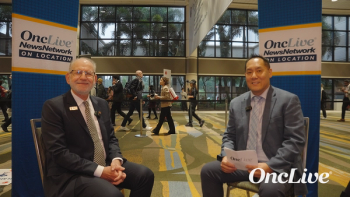
Amandeep Salhotra, MD, and Robert Negrin, MD, sit down with Chandler Park, MD, FACP, to discuss the latest abstracts in graft-vs-host disease presented during the 2025 ASH Annual Meeting & Exposition.
Rucaparib delivers consistent rPFS benefits across all age groups in BRCA-mutated mCRPC, reinforcing its role as an effective treatment option.

HER2-directed CAR T-cell therapy was safe in patients with brain/leptomeningeal metastases from HER2-positive breast cancer.
Pule Wang, MD, discusses safety data with CNS bridging radiotherapy before CAR T in B-cell lymphoma.
Percy Lee, MD, discusses the critical nature of multidisciplinary collaboration and notes lingering questions about the optimal use of SABR in NSCLC.
The top 5 OncLive TV videos of the week cover insights in myeloproliferative neoplasms, lung cancer, ovarian cancer, and prostate cancer.