
Adjuvant osimertinib and other targeted therapies, such as KRAS G12C inhibitors, could continue to change the perioperative treatment landscape in non–small cell lung cancer.
Adjuvant osimertinib and other targeted therapies, such as KRAS G12C inhibitors, could continue to change the perioperative treatment landscape in non–small cell lung cancer.
Craig Sauter, MD, discusses where BTK inhibitors could fit into the frontline treatment landscape for patients with central nervous system lymphoma and research aiming to address other unmet needs for this patient population.
The advent of effective first-generation TKIs has allowed for improvements among patients with Philadelphia chromosome–positive disease, which is traditionally associated with a poor prognosis, as it generally does not respond to conventional chemotherapy options.
Khaled Hassan, MD, discusses the importance of performing precise molecular profiling in patients with lung cancer and the need to identify individually tailored treatment approaches.
press release
To increase access to emerging cancer therapeutics and improve convenience for patients and researchers, Taussig Cancer Institute opened a dedicated Novel Therapeutics Clinic.

Pradnya D. Patil, MD, FACP, discusses unmet needs that remain to be addressed with the use of immunotherapy in patients with non–small cell lung cancer.

Shared insight on recently updated data in acute myeloid leukemia following the ASH 2022 annual meeting.

Experts in hematologic oncology review and analyze updated data in chronic myeloid leukemia from ASH 2022.
Following the ASH 2022 Annual Meeting, hematologic oncology experts discuss updated data in acute lymphocytic leukemia.
Julie Lang, MD, discusses potential applications for the Parsortix® PC1 system in metastatic breast cancer.
Despite American Society of Clinical Oncology guidelines calling for introduction of palliative care early in the course of disease, these services remain underused.
Daniel Rotroff, PhD, discusses the investigation of biomarkers that could help identify patients with breast cancer who are at risk for developing chemotherapy-induced peripheral neuropathy.
Craig Sauter, MD, discusses the rationale for investigating maintenance pembrolizumab following autologous stem cell transplant in patients with T-cell NHL and explained some of the potential challenges of investigating this regimen in a larger prospective trial in this patient population.

Megan Kruse, MD, discusses how socioeconomic disparities and access to health insurance can contribute to poorer overall survival (OS) outcomes in adolescent patients with invasive breast cancer.
Craig Sauter, MD, discusses important considerations regarding the use of pembrolizumab after autologous stem cell transplant in T-cell non-Hodgkin lymphoma.
Craig Sauter, MD, discusses the investigation of pembrolizumab given after stem cell transplant in T-cell non-Hodgkin lymphoma.

Omar Mian, MD, PhD, discusses the ongoing investigation into the synchronous up-front setting of metastatic prostate cancer.
Momelotinib elicited durable symptom, transfusion independence, and splenic responses through 48 weeks of treatment in patients with myelofibrosis who have anemia and previously received a JAK inhibitor.
Suneel Kamath, MD, discusses the current challenges of treating patients with cholangiocarcinoma, the need for more tolerable therapies in this population, and how the significant ORRs and impressive safety profile seen so far with RLY-4008 in the ReFocus trial are indicative of this agent’s efficacy and durability in FGFR2-rearranged cholangiocarcinoma.

Shilpa Gupta, MD, discusses the investigation of enfortumab vedotin with or without additional therapy in cisplatin-ineligible metastatic urothelial carcinoma.
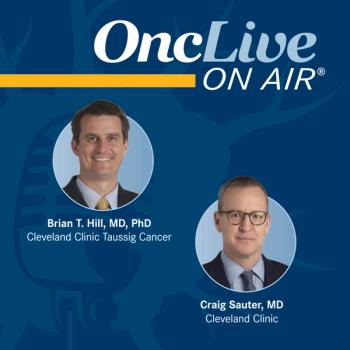
Drs Sauter and Hill discuss the use of CAR T-cell therapy in patients with lymphomas, the potential for allogeneic CAR T cells, and ways to expand access and address financial toxicity.

Shilpa Gupta, MD, discusses the unmet needs of patients with cisplatin-ineligible metastatic urothelial carcinoma.

When assessing monoclonal gammopathy it is important to rule out clinically significant associations requiring treatment.

Christopher Wee, MD discusses the current treatment landscape for nonmetastatic castration-resistant prostate cancer, and how the success of new diagnostic tools decreases the need for this classification.
Megan Kruse, MD, discusses the evolving treatment landscape in HR-positive, HER2-negative breast cancer, how the approval of fam-trastuzumab deruxtecan-nxki has affected sequencing choices in HER2-positive disease, and the importance of addressing racial disparities in breast cancer care.
Shilpa Gupta, MD, discusses the addition of cabozantinib to avelumab in locally advanced or metastatic urothelial cancer.

Shilpa Gupta, MD, discussed potential therapies for patients with cisplatin-ineligible metastatic urothelial carcinoma, the benefits of sacituzumab govitecan and erdafitinib in later-line urothelial carcinoma, and treatment options for nonmetastatic castration-resistant prostate cancer.

Megan Kruse, MD, discusses the real-world effects of the phase 2 MAINTAIN trial on treatment in advanced hormone receptor–positive, HER2-negative breast cancer.
Patients with polycythemia vera, a myeloproliferative neoplasm associated with JAK2 mutations and overproduction of red blood cells, often require regular therapeutic phlebotomies to avoid thrombosis.
Moshe Ornstein, MD, MA, discusses the use of the antibody-drug conjugate enfortumab vedotin in patients with advanced urothelial carcinoma that is refractory to chemotherapy and immunotherapy.