
Gabriella Smith, MD, discusses the predictive value of KELIM for survival outcomes with HIPEC at the time of surgery in epithelial ovarian cancer.
Gabriella Smith, MD, discusses the predictive value of KELIM for survival outcomes with HIPEC at the time of surgery in epithelial ovarian cancer.

Nivolumab plus talazoparib did not produce RECIST-based tumor responses in heavily pretreated patients with unresectable or metastatic melanoma.

Danai Dima, MD, discusses real-world responses with teclistamab in relapsed/refractory multiple myeloma.
Ruben Olivares, MD, discusses the integration of focal therapy in the treatment of patients with intermediate prostate cancer.
Ruben Olivares, MD, discusses the evolving role for focal radiation therapy in the management of prostate cancer.
Vijayakrishna Gadi, MD, PhD, and Megan Kruse, MD, discuss the clinical benefits reported with neratinib for the treatment of patients with HER2-positive early breast cancer.
Vijayakrishna Gadi, MD, PhD, and Megan Kruse, MD, discuss ongoing research efforts in HER2-positive early breast cancer.
Vijayakrishna Gadi, MD, PhD, and Megan Kruse, MD, discuss optimal management for adverse effects related to neratinib for patients with HER2-positive early breast cancer.
Vijayakrishna Gadi, MD, PhD, and Megan Kruse, MD, discuss unmet needs in the treatment of patients with HER2-positive early breast cancer.
Vijayakrishna Gadi, MD, PhD, and Megan Kruse, MD, discuss how standard-of-care treatment has evolved for patients with HER2-positive early breast cancer.
Vijayakrishna Gadi, MD, PhD, and Megan Kruse, MD, discuss clinical updates to the management of patients with HER2-positive early breast cancer.

Robert DeBernardo, MD, discusses the use of maintenance therapy in the second- and later-line settings for patients with ovarian cancer.
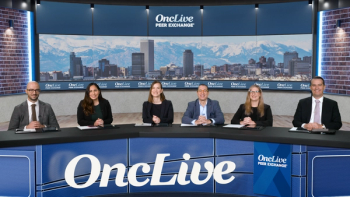
A panel of expert oncologists offer closing thoughts on the future treatment landscape and unmet needs in CLL.
Expert oncologists explore emerging therapies being investigated in CLL, including BTKi degraders, CAR-T therapy, and bispecific antibodies, and discussed their potential impact in shaping the future of CLL treatment.
Danai Dima, MD, discusses the mechanism of action of teclistamab and why real-world outcomes with the agent were evaluated in a retrospective study.
The expert panel discusses recent data regarding the mechanisms of resistance to non-covalent BTK inhibitors in CLL.
Jacqueline Barrientos, MD, MS, discusses the role of non-covalent BTK inhibitors in R/R CLL and provided concise comments on the latest data, including insights from the ongoing BRUIN and Bellwave trials.

Akriti Jain, MD, discusses the outcomes of the phase 3 COMMANDS trial in transfusion-dependent lower-risk myelodysplastic syndromes.
Javier Pinilla, MD, PhD explores evidence on molecular mechanisms leading to resistance in second-generation BTK inhibitors for CLL, providing insights from recently presented data at ASH 2023.
A panel of expert oncologists explore the influence of hypertension risk and other cardiovascular AEs in guiding treatment selection with BTKis, sharing insights from ASH 2023.

Robert DeBernardo, MD, discusses the current role of PARP inhibitors in the frontline treatment landscape in ovarian cancer.
Press Release
The study, published in Briefings in Bioinformatics, highlights how artificial intelligence can be designed to develop better immunotherapy treatments.

Amanda Nizam, MD, discusses findings from the UNITE study of enfortumab vedotin after maintenance avelumab in patients with advanced urothelial carcinoma.
Faculty provide insights into the selection of BTK inhibitors, emphasizing the role of efficacy, toxicity, and quality of life data in treatment decisions, and exploring the impact of MAIC data.
Panel experts examine considerations for BTKi-based strategies in R/R CLL, highlighting pivotal findings from head-to-head trials, including acalabrutinib vs ibrutinib in ELEVATE-RR and zanubrutinib vs ibrutinib in ALPINE, covering safety, quality of life, and extended follow-up data.
Danai Dima, MD, discusses the implications of real-world data derived from the MajesTEC-1 trial in pretreated patients with multiple myeloma.
Faculty share insights into the overall strategy for managing relapsed/refractory CLL following first-line therapy with venetoclax-based regimens and BTK inhibitors, discussing strategy variations based on prior first-line treatments.
Experts explore the role of BTKi-based combination therapy in the front-line treatment of CLL, focusing on patient considerations and referencing key data from CAPTIVATE, FLAIR, MAJIC, and SEQUOIA (Arm D).
Javier Pinilla, MD, PhD, provides a brief overview of the changing CLL treatment landscape, discussing the influence of off-target adverse events and the development of treatment resistance on the evolution of BTK inhibitor therapy.
Joanna Rhodes, MD, MSCE, explores the general approach to treatment-naïve CLL patients with high-risk factors such as del17p and TP53 mutations.