
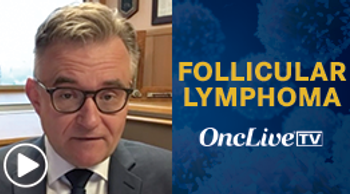
Grzegorz S. Nowakowski, MD, discusses the clinical implications of the FDA approval of third-line epcoritamab for relapsed/refractory follicular lymphoma.
Grzegorz S. Nowakowski, MD, discusses the clinical implications of the FDA approval of third-line epcoritamab for relapsed/refractory follicular lymphoma.

Grzegorz S. Nowakowski, MD, discusses the methods and objectives of the part B expansion portion of the TakeAim Lymphoma study in patients with PCNSL.
Grzegorz S. Nowakowski, MD, discusses the unique mechanism of action of emavusertib and highlights the phase 1/2 TakeAim Lymphoma trial in PCNSL.
Press Release
Mayo Clinic will enhance and expand access to cancer care and clinical trials for patients and communities, thanks to a philanthropic commitment.
Mayo Clinic researchers mined the molecular foundations of cancer and uncovered a new reason CAR-T cell therapy fails in some patients.
Press Release
Treatment for blood cancers is advancing, giving more options to people living with the disease.
Richard Vile, PhD, explains how CAR-T cell therapy works, including the benefits, risks and realities of treatment.
Grzegorz S. Nowakowski, MD, discusses unmet needs that remain to be addressed in patients with relapsed/refractory follicular lymphoma.
About 8 to 10 million Americans over 40 have excess white blood cells, which may increase their risk of melanoma.
Grzegorz S. Nowakowski, MD, discusses toxicity monitoring strategies for epcoritamab treatment in relapsed/refractory follicular lymphoma.
Grzegorz S. Nowakowski, MD, discusses how epcoritamab may fill an unmet need for patients with relapsed/refractory follicular lymphoma.
Radhika Bansal, MBBS, discusses data showing the safety and feasibility of outpatient CAR T-cell infusion in relapsed/refractory non-Hodgkin lymphoma.
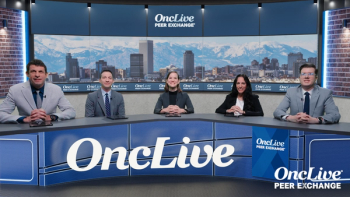
The panel concludes by offering final thoughts and insights on recent advancements from EHA 2024.
Grzegorz S. Nowakowski, MD, discusses results from the EPCORE NHL-1 trial of third-line epcoritamab in relapsed/refractory follicular lymphoma.
Key opinion leaders provide concise insights on the potential of bispecific antibodies as emerging novel therapeutic agents for relapsed/refractory chronic lymphocytic leukemia.
Nicole Lamanna, MD, offers expert insights on the emerging data for second-generation BCL2 inhibitors in relapsed/refractory chronic lymphocytic leukemia, highlighting recent advancements in the field.
Key opinion leaders analyze the potential significance of preliminary data on BGB-16673, a BTK inhibitor degrader, in anticipation of its presentation at EHA 2024.
The panel explores potential applications and impact of BTK inhibitor degraders as an emerging class of novel agents for treating relapsed/refractory chronic lymphocytic leukemia.
Key opinion leaders analyze the implications of the FDA's accelerated approval for lisocabtagene maraleucel (liso-cel) in chronic lymphocytic leukemia, based on promising results from the TRANSCEND CLL 004 trial.
A medical expert offers commentary on the recent FDA accelerated approval of pirtobrutinib, discussing the implications of the BRUIN trial findings that supported this decision for chronic lymphocytic leukemia treatment.

ASCO has released a research statement outlining 4 recommendations to decentralize clinical trials and improve patient access to these studies.
Tanios Bekaii-Saab, MD, FACP, discusses final results from the MOUNTAINEER trial in HER2+ metastatic colorectal cancer.
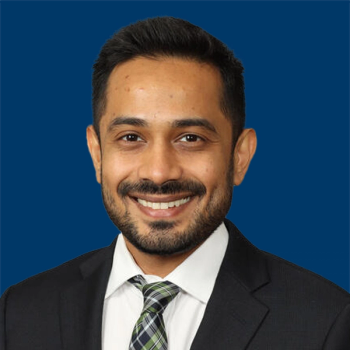
Kashul Parikh, MBBS, discusses research efforts dedicated to leveraging antibody-drug conjugates with varying targets in lung cancer.
Tanios Bekaii-Saab, MD, FACP, discusses the benefits of multidisciplinary conferences within the gastrointestinal cancer treatment field.
Kaushal Parikh, MBBS, highlights how PD-L1 expression affects treatment decision-making in the absence of other targetable mutations or prognostic indicators in non–small cell lung cancer.
Kaushal Parikh, MBBS, discusses treatment advances in early-stage NSCLC including for patients with actionable mutations, and details considerations with adjuvant approaches.
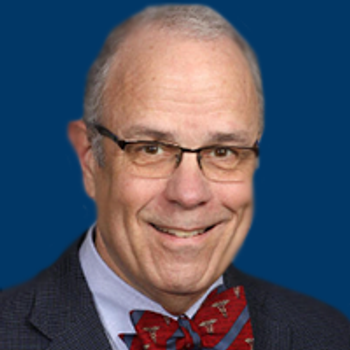
Researchers at the Mayo Clinic found that patients with BCP-ALL who lacked the Philadelphia chromosome and were in remission showed higher survival rates with blinatumomab plus chemotherapy.
Eileen M. O’Reilly, MD, and Tanios S. Bekaii-Saab, MD, FACP, discuss key topics in gastrointestinal cancer to be presented during the 2024 ISGIO Meeting.
Current screening protocols fail to catch a number of people carrying genetic mutations associated with hereditary breast and ovarian cancer syndrome.
Tanios Bekaii-Saab, MD, FACP, discusses next-generation sequencing and the development of RAS-targeted therapies in gastrointestinal cancers.