
Expert panelists consider the broader evolution of therapy in resectable stage II-IV cutaneous squamous cell carcinoma.
Expert panelists consider the broader evolution of therapy in resectable stage II-IV cutaneous squamous cell carcinoma.
A panel of skin cancer experts give an overview of cutaneous squamous cell carcinoma and melanoma.
Expert perspectives on real-world, in-practice identification and management of patients with resectable CSCC.
Panelists round out their review of staging and risk stratification in CSCC by considering how each affects the selection of optimal surgical strategies.
Frontline treatments that achieve transfusion independence are of paramount importance for patients with lower-risk myelodysplastic syndrome.
Following their discussions on staging and risk stratification in CSCC, key opinion leaders work to define resectability in cutaneous squamous cell carcinoma.
Expert panelists share their perspectives on best strategies to risk stratify patients diagnosed with cutaneous squamous cell carcinoma.
A review of current staging systems used to categorize CSCC, particularly those from the American Joint Committee on Cancer and Brigham and Women's Hospital.
Opening their discussion on resectable cutaneous squamous cell carcinoma (CSCC), expert panelists elucidate its current incidence and known risk factors.
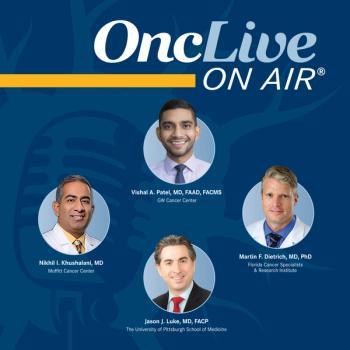
Drs Khushalani, Dietrich, Luke, and Patel discuss the nuances of defining resectability in cutaneous squamous cell carcinoma, the evolving treatment paradigm of resectable disease, and how to translate updated data with cemiplimab into clinical practice.
Experts in hematologic malignancies conclude their discussion by discussing BTK degraders and other targets in the treatment of mantle cell lymphoma.
Expert hematologic oncologists discuss updates from the ASH 2022 Annual Meeting on emerging therapies for lower-risk MDS.
Following the ASH 2022 Annual Meeting, experts in hematologic oncology review updated data for luspatercept in lower-risk MDS.
Hematologic oncology experts give an overview of first- and second-line treatment options for lower-risk myelodysplastic syndromes.
Closing out their discussion on TIL therapy, Drs Sarnaik and Komanduri identify existing barriers to TIL use in clinical practice and how the field might optimize patient access to these regimens.
Experts Amod Sarnaik, MD, and Krishna Komanduri, MD, consider lessons learned about TILs and CAR T-cell therapy in hematologic cancers, and how they anticipate TILs fitting into treatment paradigms for solid tumors.
A comprehensive look at the role of bispecific antibodies, including glofitamab, in the treatment of mantle cell lymphoma.
Bijal D. Shah, MD, and Matthew J. Matasar, MD, discuss how they approach treating patients with MCL who rapidly progress on BTK inhibitors.
Shared insight from Amod Sarnaik, MD, and Krishna Komanduri, MD, on the halted DELTA-1 clinical trial of ITIL-168 in melanoma, followed by a focused discussion of SITC 2022 data on emerging TIL design and manufacturing strategies.
Expert perspectives on results from C-144-01, which utilized the TIL therapy lifileucel in the setting of metastatic melanoma, and situations in which the regimen might be used in clinical practice.
Andrew Kuykendall, MD, discusses the investigation of navitoclax plus ruxolitinib in myelofibrosis.
Ricardo Costa, MD, MSC, discusses the implications of the phase 3 KEYNOTE-522 trial trial in patients with high-risk, early-stage triple-negative breast cancer.
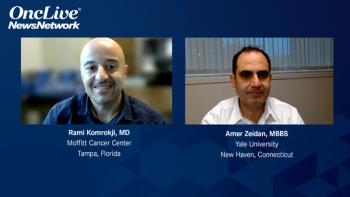
Amer Zeidan, MBBS, and Rami Komrokji, MD, offer closing remarks on recent advances in MF and MDS, and look towards the future of treatment.
A panel of experts in hematologic malignancies analyze clinical studies and real-world data of brexucabtagene autoleucel in mantle cell lymphoma.
Alexey V. Danilov, MD, PhD, presents a second patient profile of a 60-year-old patient with MCL, and the panel discusses using CAR T-cell therapy to treat MCL.
Rutika Mehta, MD, MPH, discusses which patients with esophageal squamous cell carcinoma may benefit most from the different frontline treatment options available and highlights key treatment developments with adjuvant immunotherapy plus chemotherapy.
A focused discussion on clinical trial data presented at SITC 2022 elucidating the biologic activity of tumor-infiltrating lymphocyte therapies.
Dr Komrokji summarizes the remaining unmet needs in the treatment of MF, including suboptimal responses to JAK2 inhibitors, and comments on data from ongoing trials that may address these needs.
A comprehensive review of the treatment landscape for myelofibrosis (MF) and recent ASCO and ASH data updates on JAK2 inhibitors.
A comprehensive discussion on ways to approach treating patients with high-risk mantle cell lymphoma.