
Andrew S. Brohl, MD, discusses the safety and immunologic responses with intratumoral administration of Idx-Hu2.0 in patients with advanced Merkel cell carcinoma and cutaneous squamous cell carcinoma.
Andrew S. Brohl, MD, discusses the safety and immunologic responses with intratumoral administration of Idx-Hu2.0 in patients with advanced Merkel cell carcinoma and cutaneous squamous cell carcinoma.

Danielle K. DePalo, MD, discusses findings from a study comparing first-line isolated limb infusion/perfusion vs immune checkpoint inhibitors and intratumoral therapy in patients with surgically unresectable melanoma in-transit metastases.
A treatment regimen consisting of pepinemab plus trastuzumab and a dendritic cell vaccine, followed by autologous CD4-positive T cells, is under investigation in a phase 1 trial in patients with metastatic HER2-positive breast cancer.

A brief review of data behind lisocabtagene maraleucel and its role as CAR T-cell therapy in patients with relapsed/refractory diffuse large B-cell lymphoma.
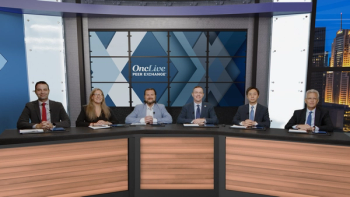
Shared insight on the role of CAR T-cell therapy in relapsed/refractory diffuse large B-cell lymphoma, with a focus on axicabtagene ciloleucel.
Andreas Saltos, MD, discusses final results from a phase 2 trial of first-line pembrolizumab plus vorinostat in patients with metastatic non–small cell lung cancer.
Bruna Pellini, MD, discusses the use of circulating tumor DNA monitoring to inform maintenance outcomes in patients with advanced non–small cell lung cancer treated with induction therapy with atezolizumab, carboplatin, and nab-paclitaxel.
Damon R. Reed, MD, discusses a phase 2 study of fam-trastuzumab deruxtecan-nxki in adolescent and young adult patients with recurrent HER2-positive osteosarcoma.
Rami Komrokji, MD, discusses key findings from an expanded analysis of the classification of patients with myelodysplastic syndromes.
Panelists review data behind the combination of tafasitamab and lenalidomide in relapsed/refractory diffuse large B-cell lymphoma.

Focused discussion on specific patient or disease factors that aid in the selection of therapy for patients with relapsed/refractory diffuse large B-cell lymphoma.
Rami Komrokji, MD, discusses ongoing clinical trials in patients with higher- and lower-risk myelodysplastic syndromes.
Key opinion leaders share a broad perspective on relapsed/refractory diffuse large B-cell lymphoma and the current treatment landscape.
Expert panelists open their discussion on diffuse large B-cell lymphoma by reflecting on diagnostic strategies and the frontline treatment armamentarium.
Timothy I Shaw, PhD, discusses the genetic heterogeneity between paired primary and metastatic solid tumors, as well as the implications for neoantigen-based personalized vaccines in cancer care.
The combination of dabrafenib and trametinib plus navitoclax generated responses and met the co-primary end point for complete response rate vs historical controls in patients with BRAF V600–mutant metastatic melanoma.
Andrew T. Kuykendall, MD, expands on the rationale for exploring BET inhibition in the treatment of patients with myelofibrosis, details the implications of data from the MANIFEST trial, and discusses other potential targets for novel therapies for myelofibrosis.
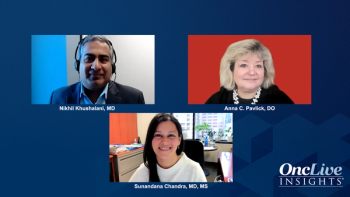
A panel of skin cancer experts offer closing thoughts on intralesional therapy for treating melanoma and CSCC.
Amanda Bloomer, PhD, highlights the growing need for more research for this growing patient population and the age-specific findings that were seen in the ColoCare trial.
Marilena Tauro, PhD, discusses next steps planned for the development of novel autophagy inhibitory strategies to combat chemotherapy resistance in relapsed/refractory multiple myeloma.

Shahrzad A. Zamani discusses the research on cancer disparities in patients within the LGBTQI+ population, and how these findings could inform further research and decisions in clinical practice.
Roger Li, MD, discusses how the synergistic mechanism of pembrolizumab plus CG0070 could address unmet needs in BCG-unresponsive NMIBC, safety and efficacy data for the combination from the CORE-001 trial, and how those data support planned research efforts for CG0070 in this space.
Sunandana Chandra, MD, MS, Anna C. Pavlick, DO, MSc, MBA, BSN, and Nikhil Khushalani, MD, discuss the importance of multidisciplinary care in CSCC and patient counseling regarding available therapies.
An expert panel discusses the use of tumor-directed oncolytic therapies for melanoma and cutaneous squamous cell carcinoma.
A comprehensive overview of treatment approaches for patients with high-risk melanoma.
John Michael "JM" Bryant, MD, expands on the results of the interim analysis of the single-center, single-arm phase 2 trial for patients with grade group 5 prostate cancer treated with the combination of nivolumab and standard of care.
Experts on skin cancer discuss valuable end points for determining successful treatments for patients with metastatic melanoma.
A panel of skin cancer experts share their thoughts on treatment selection for patients with melanoma.
The combination of gedatolisib and fulvestrant with or without palbociclib is under evaluation in the phase 3 VIKTORIA-1 trial for the treatment of patients with PIK3CA-mutated or wild-type hormone receptor–positive/HER2-negative breast cancer who have previously progressed on first-line therapy.
Sathya Neelature Sriramareddy, MD, PhD, discusses how the interaction between uveal melanoma cells and the liver microenvironment could influence metastasis growth and therapeutic response.