
Data from a retrospective analysis demonstrated that mitomycin gel was safe and effective when administered using an antegrade approach in real-world populations of patients with low-grade upper tract urothelial cancer.
Data from a retrospective analysis demonstrated that mitomycin gel was safe and effective when administered using an antegrade approach in real-world populations of patients with low-grade upper tract urothelial cancer.
Philippe E. Spiess, MD, MS, FACS, shares key updates in the management of patients with penile cancer.
Bijal Shah, MD, MS, discusses the results of a phase 2 pilot study investigating CPX-351 in adults with high-risk relapsed/refractory acute lymphoblastic leukemia, as well as next steps for research in this patient population.
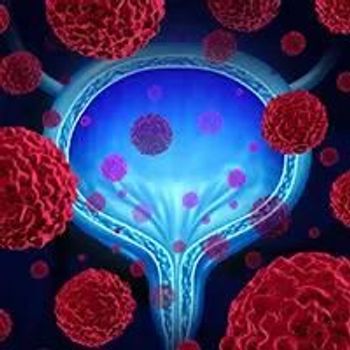
The safety and efficacy of the combination of the oncolytic immunotherapy CG0070 and nivolumab is under exploration as a potential therapeutic option in patients with muscle-invasive bladder cancer who are ineligible for cisplatin-based chemotherapy, as part of the phase 1b CORE-002 trial.
An investigative follicle-stimulating hormone receptor–mediated CAR T-cell technology is under exploration in patients with recurrent ovarian cancer.

Oncolytic immunotherapy with talimogene laherparepvec and vusolimogene oderparepvec has the potential to provide unique clinical benefits in patients with melanoma through direct intratumoral administration.

Nikhil Khushalani, MD, discusses the mechanism of action vusolimogene oderparepvec in cancer care.
David Sallman, MD, discusses the examination of magrolimab in acute myeloid leukemia.
In acute myeloid leukemia, investigators are exploring novel agents engineered to target adhesion factors, which can mobilize persistent leukemic stem cells from the bone marrow niche.
David Sallman, MD, provides perspective on the novel agent uproleselan, its efficacy in a phase 1/2 trial, and its investigation in phase 3 trials in acute myeloid leukemia.
Philippe E. Spiess, MD, MS, FACS, discusses the rationale for investigating the MTAP pathway in genitourinary cancers.
Frederick Locke, MD, discusses the phase 3 ZUMA-7 trial examining axicabtagene ciloleucel in the second-line treatment of patients with relapsed/refractory large B-cell lymphoma, safety and efficacy findings with the therapy, and the significance of the data that have been reported to date.
David Sallman, MD, discusses the role of uproleselan (GMI-1271) when utilized in acute myeloid leukemia.
Zeynep Eroglu, MD, discusses the potential of ctDNA as a noninvasive biomarker in melanoma, outlines different assays under development, and details potential opportunities to leverage ctDNA in treatment decision making.
David Sallman, MD, discusses responses achieved a first-in-human dose escalation/dose expansion phase 1/1b clinical trial of an UltraCAR-T agent, PRGN-3006, in patients with acute myeloid leukemia and higher-risk myelodysplastic syndrome with hypomethylating agent failure.
Axicabtagene ciloleucel demonstrated favorable efficacy in elderly patients and those with other comorbidities with large B-cell lymphoma; however, adverse events were more common in some of these populations and ECOG performance status ≥2 was associated with worse outcomes and more adverse events, according to a large real-world study presented at the 2021 ASH Annual Meeting.
Dr. Shah and Dr. Wang discuss the management of cytokine release syndrome and neurotoxicity, the referral process, and the need for academic and community collaboration for CAR T-cell therapy in hematologic malignancies.
Axicabtagene ciloleucel led to a 60% improvement in event-free survival compared with standard-of-care chemotherapy as second-line treatment for patients with relapsed/refractory large B-cell lymphoma.
Frederick Locke, MD, discusses the results of the phase 3 ZUMA-7 trial in patients with large B-cell lymphoma that were presented at the 2021 ASH Annual Meeting & Exposition.

An observational single-center study suggests that mRNA-1273 SARS CoV-2 vaccination induces a strong antibody response in patients with acute myeloid leukemia and myelodysplastic syndrome, according to observational results presented during the 2021 ASH Annual Meeting.
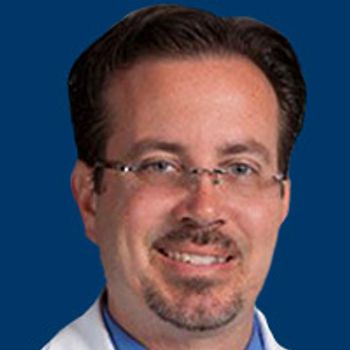
Although BCMA-directed CAR T-cell therapy has shown early and deep responses in patients with relapsed/refractory multiple myeloma, there is much more to learn about optimal cytokine release syndrome and neurotoxicity management and treatment sequencing, particularly as off-the-shelf T-cell therapies, bispecific antibodies, and non–BCMA-directed therapies become available.
Andrew T. Kuykendall, MD, discusses the potential for momelotinib in the treatment of patients with myelofibrosis.
Dr. Shah discusses the FDA approval of brexucabtagene autoleucel in relapsed/refractory B-cell acute lymphoblastic leukemia, key findings from the pivotal ZUMA-3 trial, and next steps with CAR T-cell therapy in the field.
Bijal Shah, MD, MS, discusses the evolving role of BTK inhibitors in MCL, how to choose among the variety of agents, and the safety concerns that affect treatment decisions.
Jason Brayer, MD, PhD, discusses the promise of bispecific T-cell engagers in multiple myeloma.

George Simon, MD, FACP, FCCP, discusses the importance of next-generation sequencing in patients with non–small cell lung cancer.
Brandon Blue, MD, discusses the importance of early intervention in relapsed/refractory multiple myeloma.

Doris Hansen, MD, discusses the utilization of BCMA-directed therapy in multiple myeloma.

Jason Brayer, MD, PhD, discusses the emergence of bispecific T-cell engagers and bispecific antibodies in multiple myeloma.

An upgraded model of the clonoSEQ® B-cell Clonality diagnostic tool has been released, which will now include IGHV mutation status for patients with chronic lymphocytic leukemia.