
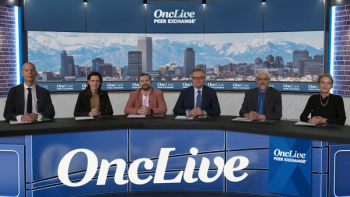
Matthew Lunning, DO, discusses recent data on bispecific T-cell engagers as third-line and beyond therapy for FL.
Matthew Lunning, DO, discusses recent data on bispecific T-cell engagers as third-line and beyond therapy for FL.
Rachid Baz, MD, discusses the use of idecabtagene vicleucel vs standard regimens in triple-class–exposed, relapsed/refractory multiple myeloma.

Andrew Kuykendall, MD, discusses the efficacy of pelabresib plus ruxolitinib in patients with JAK inhibitor–naive myelofibrosis.
David A. Sallman, MD, discusses the rationale for conducting a phase 2, multi-institutional, investigator-initiated clinical trial on the use of fedratinib in patients with myelodysplastic syndromes/myeloproliferative neoplasm overlap syndromes and chronic neutrophilic leukemia.

Richard Kim, MD, discusses a case study of a patient who presented with hepatocellular carcinoma, detailing the steps that were taken upon diagnosis.
Bijal Shah, MD, discusses recent data on CAR T-cell therapy as third-line and beyond treatment for FL.
Experts on follicular lymphoma discuss second-line treatment options available for patients.
A panel of experts review latest data from ASH 2023 on approved and emerging therapies in frontline FL.

Catherine Coombs, MD discusses the present CLL front-line treatment landscape, addressing considerations like choosing fixed-duration or continuous therapy and variations in first-line approaches based on age and ECOG status.
Experts on follicular lymphoma discuss first-line treatment options available for patients.

Experts discuss what role allogeneic transplants play in hematologic malignancies, specifically in AML and ALL.
Andrew Kuykendall, MD, discusses the current role of JAK inhibitors in myelofibrosis, the importance of chronic graft-vs-host disease awareness in patients with myeloid malignancies receiving transplant, and unmet needs for patients with chronic myelomonocytic leukemia.

Arnold Etame, MD, PhD, discusses the effects of a patient’s socioeconomic status on the cancer treatment options they receive.
Andrew T. Kuykendall, MD, discusses the importance of the approval of momelotinib in the treatment of patients with anemic symptomatic myelofibrosis, key efficacy and safety data from the MOMENTUM trial that supported the decision, and unanswered questions regarding the agent’s potential role in other subsets within this population.
Danielle K. DePalo, MD, explains the lack of research directly comparing first-line treatment options for patients with unresectable melanoma in-transit metastases, expands on the safety and efficacy of 3 treatment modalities for these patients, and underscores the need for more data to inform the management of these patients.
Andrew Kuykendall, MD, discusses frontline cytoreductive treatment options for patients with polycythemia vera.

Dr Kuykendall discusses the FDA approval of momelotinib in myelofibrosis with anemia, key data from the MOMENTUM trial, and how momelotinib alters the myelofibrosis treatment paradigm.
Rami Komrokji, MD, provides clinical insights on treatment decision-making, sequencing, and combinations for patients with myelodysplastic syndrome. Please note: Since the filming of this program, luspatercept has been approved by the FDA for the treatment of lower-risk MDS in the first-line setting.
Valeria Santini, MD, reviews data from real-world outcomes in clinical trials investigating luspatercept in patients with lower-risk MDS.

Expert perspectives on the clinical implications of recent clinical trial data on new therapies in lower-risk myelodysplastic syndrome.
The panel of experts review recent data updates for new agents being investigated in the second line in patients with lower-risk MDS.

Uwe Platzbecker, MD, reviews data updates from the MEDALIST trial investigating luspatercept in patients with lower-risk myelodysplastic syndrome.
Comprehensive insights on the differences and similarities in treatment algorithms for physicians treating patients with MDS in and outside the United States. Please note: Since the filming of this program, luspatercept has been approved by the FDA for the treatment of lower-risk MDS in the first-line setting.

Tiago Biachi, MD, PhD, discusses the growing treatment landscape for patients with hepatocellular carcinoma.
Key opinion leaders Sameh Gaballa, MD, and Matthew Lunning, DO, FACP, consider the evolving treatment landscape of follicular lymphoma and look toward future evolutions in the field.
Centering discussion on a second patient scenario of follicular lymphoma, key opinion leaders consider best therapy for patients with early or aggressive relapse.
The expert panel reviews updated data from the COMMANDS trial on luspatercept in patients with lower-risk MDS and discusses their effect on clinical practice. Please note: Since the filming of this program, luspatercept has been approved by the FDA for the treatment of lower-risk MDS in the first-line setting.
A panel of expert hematologists give an overview of myelodysplastic syndrome, focusing on diagnosis, classification, and treatment practices.
Andrew Kuykendall, MD, discusses the significance of the FDA approval of momelotinib in patients with myelofibrosis.
A brief discussion on the respective roles of EZH2- and PI3K-targeted therapies in patients with relapsed/refractory follicular lymphoma.