
Oncology experts share topline insights from 19 of the most exciting abstracts from the 2025 ASCO Annual Meeting.
Oncology experts share topline insights from 19 of the most exciting abstracts from the 2025 ASCO Annual Meeting.

Ou Deng, PhD, discussed findings from a study investigating MSH6-modulated PARP inhibitor sensitivity in BRCA-proficient, high-grade serous ovarian cancer.

Bijal Shah, MD, MS, and Jae Park, MD, discuss quality-of-life data for obe-cel in acute lymphoblastic leukemia.
Bijal Shah, MD, MS, and Jae Park, MD, discuss other key data in acute lymphoblastic leukemia from EHA 2025.
Bijal Shah, MD, MS, and Jae Park, MD, discuss how inotuzumab exposure may influence response to obe-cel in ALL.
Bijal Shah, MD, MS, and Jae Park, MD, predictors of sustained remission with obe-cel in acute lymphoblastic leukemia.
Bijal Shah, MD, MS, and Jae Park, MD, discuss an age-based analysis of outcomes with obe-cel in acute lymphoblastic leukemia.
Bijal Shah, MD, MS, and Jae Park, MD, discuss how the integration of obe-cel has affected the acute lymphoblastic treatment paradigm.

Rami Komrokji, MD, shares results from a pooled analysis of outcomes with imetelstat based on prior therapy in transfusion-dependent lower-risk MDS.

In the VERIFY study, rusfertide significantly improved clinical responses vs placebo in polycythemia vera, offering a potential new therapy.

Andrew Kuykendall, MD, discusses responses with rusfertide for patients with phlebotomy-dependent polycythemia vera.
Rami Komrokji, MD, discusses the evolution of lower-risk MDS treatments that reflect novel classification systems and trials exploring novel therapies.
Rami Komrokji, MD, discusses several trials that supported the FDA approval of luspatercept for the treatment of patients with MDS with anemia.

The DLL3- and CD3-targeted BiTE obrixtamig is being evaluated in patients with SCLC and other neuroendocrine cancers in the phase 2 DAREON-5 study.
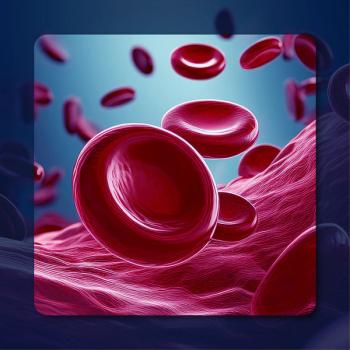
A multicenter review comparing ide-cel and cilta-cel in relapsed/refractory multiple myeloma showed better survival with cilta-cel but increased toxicity.
Here is your snapshot for all therapeutic options that were approved by the FDA in March 2025 spanning tumor types.

Moffitt Cancer Center researchers found a way to boost cancer immunotherapy by targeting a protein called macrophage receptor with collagenous structure.
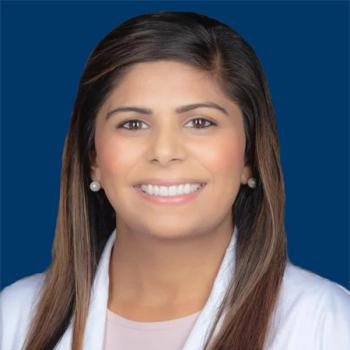
Monica Chatwal, MD, details new research shedding light on PARP/ARPI combinations in mCRPC, especially in BRCA-mutated and HRR gene–altered populations.

Alberto Chiappori, MD, discusses the selection between frontline treatment options, including ensartinib, in ALK-positive non–small cell lung cancer.

A new Moffitt Cancer Center study has identified a specific immune response that may prevent the spread of breast cancer cells within the body.

Alberto Chiappori, MD, details how to select between ensartinib and approved ALK TKIs for NSCLC, as well as considerations with ensartinib’s FDA approval.
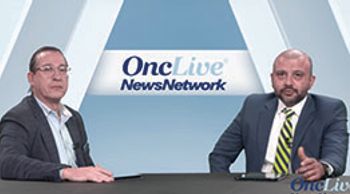
Javier Pinilla, MD, PhD, and Talha Badar, MBBS, MD, highlight key data in CML and ALL presented at the 2024 ASH Annual Meeting.
Javier Pinilla, MD, PhD, and Talha Badar, MBBS, MD, detail factors for selecting a TKI in later lines of therapy in chronic myeloid leukemia.
Javier Pinilla, MD, PhD, and Talha Badar, MBBS, MD, discuss data for ponatinib plus chemotherapy in Ph-positive ALL.
Javier Pinilla, MD, PhD, and Talha Badar, MBBS, MD, discuss dosing strategies for ponatinib in CML and ALL.
Javier Pinilla, MD, PhD, and Talha Badar, MBBS, MD, on the implications of the mutational analysis for ponatinib in the OPTIC trial in CP-CML.
Javier Pinilla, MD, PhD, and Talha Badar, MBBS, MD, discuss 5-year data for ponatinib in pretreated CP-CML.
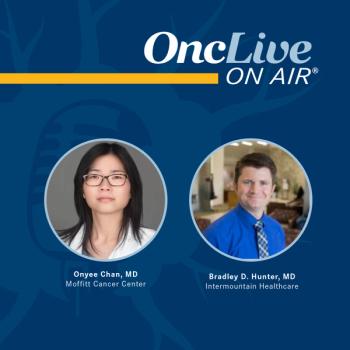
Drs Chan and Hunter discuss asciminib in first-line CML, OPTIC trial data on ponatinib dosing, mutational testing, and stem cell transplant strategies.
Javier Pinilla, MD, PhD, and Talha Badar, MBBS, MD, discuss factors that influence later-line treatment choices in chronic myeloid leukemia.
Javier Pinilla, MD, PhD, and Talha Badar, MBBS, MD, on the implications of the FDA approval of asciminib in newly diagnosed CP-CML.