

Andrew Kuykendall, MD, discusses the advantages of treatment with momelotinib vs older-generation JAK inhibitors in myelofibrosis.
Andrew Kuykendall, MD, discusses the advantages of treatment with momelotinib vs older-generation JAK inhibitors in myelofibrosis.
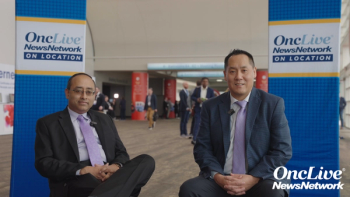
Prithviraj Bose, MD, of The University of Texas MD Anderson Cancer Center, and Javier Pinilla Ibarz, MD, PhD, of Moffitt Cancer Center, sit down with Chandler Park, MD, FACP, to discuss the latest in myeloproliferative neoplasms and chronic lymphocytic leukemia, respectively, from the 2024 ASH Annual Meeting.
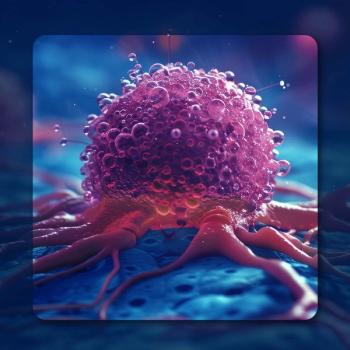
Researchers at Moffitt Cancer Center published an article in Cancer Cell showing that necroptosis-mediated immune suppression occurs through release of IL-1α.

Peter Forsyth, MD, discusses the design of a first-in-human phase 1 trial evaluating HER2/HER3–targeted intrathecal dendritic cells in leptomeningeal disease.

Richard Kim, MD, discusses the phase 3 CARES-310 trial evaluating rivoceranib plus camrelizumab in first-line hepatocellular carcinoma.

Tiago Biachi, MD, PhD, discusses the evolving role for surgery in colorectal cancer.

Yair Lotan, MD, discusses factors informing treatment selection for patients with BCG-unresponsive non-muscle invasive bladder cancer.

Joshua Linscott, MD, PhD, discusses the use of urinary cell-free tumor DNA for MRD detection prior to repeat resection in high-risk NMIBC.

Richard Kim, MD, discusses the safety of NT-17 and next steps for its evaluation in pretreated microsatellite stable CRC and PDAC.

Joshua Linscott, MD, PhD, discusses the use of utDNA to predict MRD prior to repeat TURBT in patients with high-risk non-muscle invasive bladder cancer.

Zanubrutinib was associated with lower treatment switching rates vs acalabrutinib and ibrutinib in real-world chronic lymphocytic leukemia.

Roger Li, MD, discusses safety data from the final analysis of the CORE-001 trial in BCG-unresponsive non–muscle-invasive bladder cancer.

Roger Li, MD, discusses the final analysis of the CORE-001 trial of cretostimogene grenadenorepvec plus pembrolizumab in BCG-unresponsive NMIBC with CIS.
Peter Forsyth, MD, discusses the evaluation of intrathecal dendritic cells for patients with TNBC/HER2-positive leptomeningeal disease.

Joshua Linscott, MD, PhD, discusses a study evaluating a utDNA assay for minimal residual disease detection in patients with high-risk NMIBC.

Roger Li, MD, discusses the implications of a post hoc analysis of the KEYNOTE-057 trial in BCG-unresponsive, high-risk non–muscle-invasive bladder cancer.

Ahmad Tarhini, MD, PhD, discusses the hypothesis for investigating high-dose bolus IL-2 plus an anti–CTLA-4 agent in patients with advanced melanoma.

Ahmad Tarhini, MD, PhD, discusses the use of high-dose bolus IL-2 with ipilimumab followed by nivolumab in advanced melanoma following prior progression.
Richard Kim, MD, discusses the current treatment paradigm for patients with resectable CRC, as well as unmet needs in this population.

Roger Li, MD, details a post hoc analysis of patients with BCG-unresponsive non–muscle-invasive bladder cancer who did not respond to pembrolizumab.
Joshua Linscott, MD, PhD, discusses a study investigating the use of utDNA to predict MRD prior to rTURBT in NMIBC.

Roger Li, MD, discusses the efficacy of bladder-sparing therapy after progression on pembrolizumab in patients with BCG-unresponsive, high-risk NMIBC.
Richard Kim, MD, discusses the standard treatment approaches and unmet needs for patients with resectable colorectal cancer.

A phase 1b trial is evaluating the TIL therapy TBio-4101 plus pembrolizumab in PD-(L)1 inhibitor–resistant head and neck squamous cell carcinoma.

Kedar Kirtane, MD, discusses the design of a phase 1b trial evaluating the TIL Tbio-4101 plus pembrolizumab in patients with advanced HNSCC.

Nikhil Khushalani, MD, discusses the benefits and limitations of fixed-dose treatment regimens in patients with unresectable or metastatic melanoma.

Ahmad Tarhini, MD, PhD, discusses a prognostic model evaluating patients with advanced melanoma treated with immune checkpoint inhibitors.

Roger Li, MD, discusses patient outcomes from the KEYNOTE-057 trial in BCG–unresponsive, high-risk non–muscle-invasive bladder cancer.

Kedar Kirtane, MD, discusses a phase 1b study of TBio-4101 plus pembrolizumab in patients with PD-1 inhibitor–resistant, advanced HNSCC.
Peter Forsyth, MD, discusses the importance of evaluating leptomeningeal disease caused by TNBC and HER2+ breast cancer.