
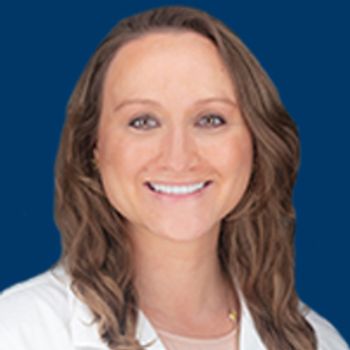
Bruna Pellini, MD, highlights the multiple immunotherapies currently available for patients with NSCLC in the perioperative setting and elucidates ctDNA’s role in the treatment paradigm.
Bruna Pellini, MD, highlights the multiple immunotherapies currently available for patients with NSCLC in the perioperative setting and elucidates ctDNA’s role in the treatment paradigm.
Hannah Walker-Mimms, MS, discusses a study revealing that Ewing and clear cell sarcomas have increased sensitivity to filanesib over other cancer types.

Hye Sook Chon, MD, discusses the DUO-E trial of frontline durvalumab plus chemotherapy followed by durvalumab and olaparib in endometrial cancer.
Roger Li, MD, discusses the rationale of the phase 3 MoonRISe-1 trial (NCT06319820).

Zeynep Eroglu, MD, discusses a phase 1/2 trial that evaluated ceritinib alone and in combination with trametinib in patients with mutant melanoma.
Francesco Di Meo, PhD, discusses the rationale for targeting LILRB4 through CAR T-cell therapy in multiple myeloma.
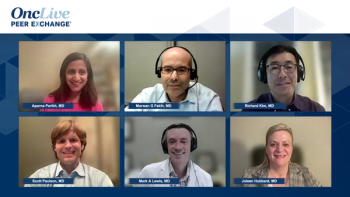
The experts provide their final thoughts surrounding the impact of prospective trials and therapy regimens for treating patients with refractory mCRC.
Key opportunities to improve the mCRC treatment landscape are illustrated by the expert panelists.
Ariel Grajales-Cruz, MD, discusses the rationale for a real-world study of teclistamab in patients with myeloma who had received BCMA-directed therapy.
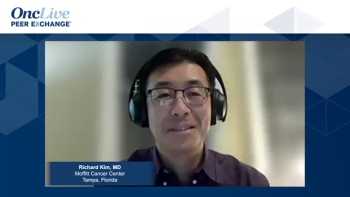
Dr Kim offers key perspective for MSI-high patients based on data presented at ASCO 2024.
Multiple abstracts from ESMO 2023, including a focus on tumor location, are highlighted.

Ben Creelan, MD, discusses survival outcomes with cemiplimab in patients with squamous non–small cell lung cancer.
Rachid Baz, MD, discusses the importance of educating patients about potential adverse effects associated with multiple myeloma treatments.
Data presented at ESMO 2023 and ASCO GI 2024 highlight the impact of prior therapy, including VEGF inhibitors or fluoropyrimidine, on mCRC treatment approach.
Key factors, particularly neuropathy, drive the discussion for platinum-based therapy for patients with non-refractory mCRC.
Ariel Grajales-Cruz, MD, discusses research elucidating the role of teclistamab monotherapy for patients with relapsed/refractory multiple myeloma.
Considerations for patients to receive aggressive mCRC therapy regimens are navigated by the panelists.
Side effect profiles driven by fruquintinib use are discussed.
Mark A Lewis, MD, and Scott Paulson, MD, share their experiences utilizing fruquintinib.
Richard Kim, MD, discusses the significance of real-world evidence when selecting treatment sequencing strategy.

Bruna Pellini, MD, discusses the utility of circulating tumor DNA assays in non–small cell lung cancer.
Ariel F. Grajales-Cruz, MD, discusses the real-world efficacy of teclistamab in relapsed/refractory multiple myeloma.
Managing dose adjustments and tolerability in metastatic colorectal cancer (mCRC) treatment regimens for optimal efficacy is underscored.
Medical experts provide key takeaways and impacts from the FRESCO-2 study.
The expert panel recaps and synthesizes key points and conclusions from each presentation and discussion over the course of the program.
Marwan G Fakih, MD, drives a discussion highlighting a significant combination therapy in mCRC treatment.
Key safety considerations for the use of fruquintinib are explored.

Jobelle Baldonado, MD, discusses the evolution of personalized approaches to treatment in non–small cell lung cancer.
The National Comprehensive Cancer Network recommends ropeginterferon alfa-2b as first-line cytoreductive therapy for polycythemia vera.
Ariel Grajales-Cruz, MD, discusses factors associated with benefit from teclistamab in heavily pretreated relapsed/refractory multiple myeloma.