Moffitt Cancer Center | Strategic Alliance Partners
Latest from Moffitt Cancer Center
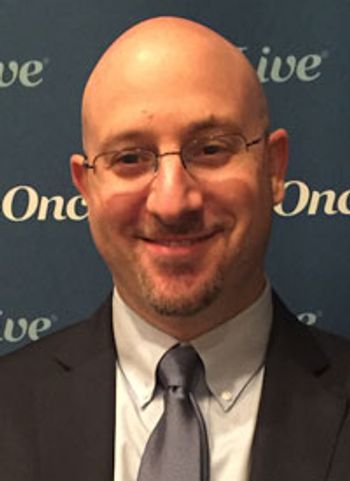
Jonathan Strosberg, MD, medical oncologist, Department of Gastrointestinal Oncology, section head, Neuroendocrine Division, chair, Gastrointestinal Department Research Program, Moffitt Cancer Center, discusses quality of life in patients with midgut neuroendocrine tumors (NETs).
Jonathan R. Strosberg, MD, associate professor, Moffitt Cancer Center, discusses the future of using 177Lu-dotatate therapy to treat patients with neuroendocrine tumors.
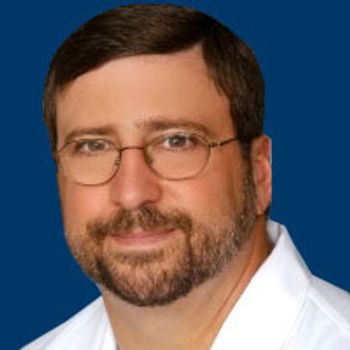
Anti-HER2 DC1 vaccination was demonstrated to be a safe and immunogenic treatment to induce tumor-specific T-cell responses in patients with HER2-positive breast cancer.
Hatem Soliman, MD, associate member of The Center for Women’s Oncology at the Moffitt Cancer Center discusses the prospective registry IMPACt study, which measured the impact of the MammaPrint 70-gene Breast Cancer Recurrence Assay in the routine management of women with early-stage breast cancer.
Significant progress has been made in recent years in understanding the biology and treatment of neuroendocrine tumors.
Researchers are exploring VEGF and EGFR inhibitors in combination with other therapies for patients with non–small cell lung cancer in hopes of maximizing clinical outcomes while keeping toxicity levels low.

Scott J. Antonia, MD, PhD, chair of the Department of Thoracic Oncology at Moffit Cancer Center, discusses immunotherapies that are emerging in the field of lung cancer.
Kosj Yamoah, MD, a radiation oncologist at Moffit Cancer Center, discusses reasons for understanding the racial disparities in patients with prostate cancer. Yamoah shared this insight during an interview at the 2016 OncLive State of the Science Summit on Genitourinary Cancers.
Jingsong Zhang, MD, PhD, discusses the advancements for patients with metastatic castration-resistant prostate cancer (mCRPC) that have occurred over the last decade.
Conor Lynch, PhD, an associate professor of Tumor Biology at Moffitt Cancer Center, discusses the biology of bone metastases in patients with castration-resistant prostate cancer.
Richard M. Levine, MD, medical director, Moffitt International Plaza, Moffitt Cancer Center, discusses the available agents and their benefits for patients with metastatic castration-resistant prostate cancer.
Peter A. Johnstone, MD, vice chair, Department of Radiation Oncology, Moffitt Cancer Center, discusses immediate salvage therapy for patients with prostate cancer and the most common physician questions surrounding the treatment.
Michael A. Poch, MD, urologist and assistant member at Moffitt Cancer Center, discusses the potential of nivolumab (Opdivo) as a treatment for patients with metastatic bladder cancer.
Richard Levine, MD, discusses the selection of therapies available for patients with metastatic castration-resistant prostate cancer and the next steps in the field.
Kosj Yamoah, MD, discusses health disparities in prostate cancer and unanswered questions researchers still need to tackle.
Julio Pow-Sang, MD, discusses the significance of assessing risk status, options for patients with prostate cancer whose risk status falls in a "grey-zone," and how technology is helping oncologists more accurately characterize risk.
Jingsong Zhang, MD, PhD, discusses his vision for treating patients with metastatic castration-resistant prostate cancer.
Michael Poch, MD, provides deeper insight into how immunotherapy has propelled the field of bladder cancer forward, as well as the research that still needs to be done.
Mayer Fishman, MD, discusses the therapeutic landscape in renal cell carcinoma and the next steps needed to further advance the field.
Conor Lynch, PhD, sheds light on the biology of bone metastases as well as the mechanism of action for bone-directed therapies for patients with metastatic castration-resistant prostate cancer.
Heather Jim, MD, describes the psychological impacts of testosterone-lowering drugs for patients with prostate cancer—and what oncologists should do to help.
Peter Johnstone, MD, provides insight on post-prostatectomy radiation therapy for patients with prostate cancer.
Mayer Fishman, MD, PhD, medical oncologist, Chemical Biology and Molecular Medicine Program, Moffitt Cancer Center, professor, Department of Oncologic Sciences and of Internal Medicine, University of South Florida Morsani College of Medicine, discusses the available agents to treat patients with renal cell carcinoma.
Morganna Freeman, DO, explains the impact of hedgehog inhibitors in basal cell carcinoma, the ideal patient to receive them, and emerging agents on the horizon for treatment of the disease.
Perry Kennedy, PhD, discusses the goals of the RAS Initiative.
Jessica Frakes, MD, explains findings from a study that examined treatment and follow-up for HPV-associated oropharynx cancer, and how they could impact clinical practice for the follow-up of patients with the disease.
Prognostic Significance of Post-Treatment PET/CT Following Salvage Re-irradiation of Head and Neck Cancers
ByTawee Tanvetyanon, MD, MPH,Tapan A. Padhya, MD,Judith C. McCaffrey, MD,Julie A. Kish, MD,Jimmy J. Caudell, MD, PhD,Andy Trotti, MD,Edward A. Eikman, MD Researchers explored the prognostic significance of PET/CT following re-irradiation in patients with head and neck cancer.

Frederick Locke, MD, discusses the potential for KTE-C19 in non-Hodgkin lymphoma.
Dr. Ben Creelan, discusses the impact of the expanded approval of nivolumab in NSCLC and how the drug compares with pembrolizumab.

Parotid Node Metastases in Locally Advanced Nasopharyngeal and Oropharyngeal Cancer: Implications for Radiotherapy Target Volume Delineation
ByTerence M. Williams MD, PhD,Jeffrey M. Vainshtein, MD,Matthew E. Spector, MD,Douglas B. Chepeha, MD,Matthew Stenmark, MD,Avraham Eisbruch, MD The ipsilateral parotidean nodes may be at risk of metastatic involvement when bulky ipsilateral level II metastases and multilevel nodal disease are co-existent, possibly due to retrograde lymphatic drainage.
