Montefiore Einstein Comprehensive Cancer Center | Strategic Alliance Partners
Latest from Montefiore Einstein Comprehensive Cancer Center
The National Cancer Institute-designated Montefiore Einstein Cancer Center has partnered with the Price Family Foundation to fund 8 research teams developing novel cancer therapies and improving cancer outcomes for historically marginalized communities in the Bronx.

Research investigating the physical and mental health consequences of being at the World Trade Center site during and after the terrorist attacks has been instrumental in obtaining health care coverage for thousands of individuals.
Investigators at the Montefiore Einstein Cancer Center report that Black and Hispanic patients had outcomes and side effects following CAR-T treatment that were comparable to their white and Asian counterparts, according to findings from a study published in Bone Marrow Transplantation.

Lung cancer remains the most common cause of cancer death in the United States.

Fewer African American and Hispanic patients participated in oncology trials from 2003 to 2016 than from 1996 to 2002.
The National Cancer Institute-designated Albert Einstein Cancer Center has announced the appointment of three faculty members to key leadership positions.

The idea to provide wearable devices to my patients first came to me 6 years ago at a charity spinning event.

The Cancer Dormancy and Tumor Microenvironment Institute, which has recently been launched at Albert Einstein Cancer Center, will focus on taking the tumor microenvironment research being done at the center to the next level and to develop novel technologies that can better identify dormant cancer as well as prevent and control recurrent disease.

Julio Aguirre-Ghiso, PhD, discusses future research directions being conducted by investigators at the Albert Einstein Cancer Center.
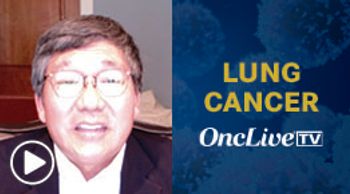
Edward Chu, MD, MMS, discusses ongoing efforts to address disparities in lung cancer at Montefiore and Albert Einstein College of Medicine.
Montefiore Einstein Cancer Center has once again earned national recognition for its quality of care studies leading to enhanced patient care, its strong cancer screening and early detection initiatives, and its exceptional support services.
Balazs Halmos, MD, MS, discusses a study examining the effectiveness of COVID-19 vaccination in patients with cancer and identified important areas for future research.
The field of targeted therapy for patients with non–small cell lung cancer has grown exponentially in recent years, with inhibitors for RET, MET exon 14 skipping, and KRAS G12C mutations transforming the paradigm.

Albert Einstein Cancer Center, Albert Einstein College of Medicine, and Montefiore Health System announced that Lauren Hackett, MPA, has been appointed the deputy director of administration of AECC and associate vice president of cancer medicine at Montefiore Medicine.

Dr. Halmos discusses the data from a study examining seroconversion rates following COVID-19 vaccination among patients with cancer and underscores the need for novel vaccination or passive immunization strategies for immunosuppressed cohorts.

Leading cancer biologist Julio Aguirre-Ghiso, PhD, has been named founding director of the Cancer Dormancy and Tumor Microenvironment Institute, director of the Gruss-Lipper Biophotonics Center, and co-leader of the AECC Tumor Microenvironment and Metastasis Program.

Nitin Ohri, MD, discusses the role of chemoradiation therapy in locally advanced non–small cell lung cancer.
Balazs Halmos, MD, MS, discusses the emergence of KRAS-targeted therapies in lung cancer.

Although the ability to treat head and neck cancer has certainly improved over the years, a significant percentage of patients experience recurrent disease after initial treatment.
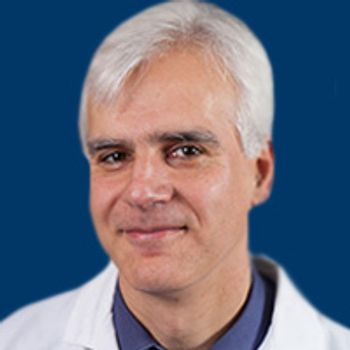
Balazs Halmos, MD discusses the year 2021 and how it will encompass a bigger focus on neoadjuvant and adjuvant trials, more novel molecular compounds for more select subgroups, and a migration of circulating tumor DNA into a more minimal residual disease–based setting.
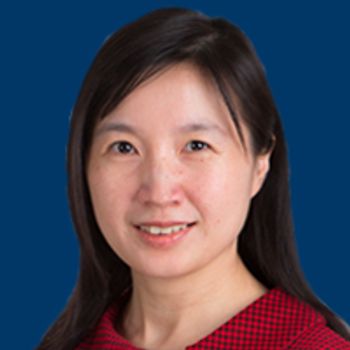
Haiying Cheng, MD, PhD highlights new data from key clinical trials in extensive-stage small cell lung cancer.

Ira Braunschweig, MD, discusses mitigating the toxicities that are associated with CAR T-cell therapy in lymphoma.
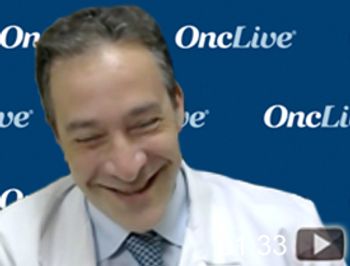
Ira Braunschweig, MD, discusses factors to consider when selecting between autologous stem cell transplant, allogeneic stem cell transplant, and CAR T-cell therapy in diffuse large B-cell lymphoma.

Balazs Halmos, MD, MS, highlights the significance of the ADAURA trial in EGFR-positive NSCLC, questions raised by these data, and other efforts being made in the adjuvant setting.

Edward Chu, MD, MMS, discusses the role of pembrolizumab in patients with mismatch repair deficient or microsatellite instability–high metastatic colorectal cancer.

Edward Chu, MD, MMS, discusses the impact of the phase 3 MK-3475-177/KEYNOTE-177 trial in metastatic colorectal cancer.
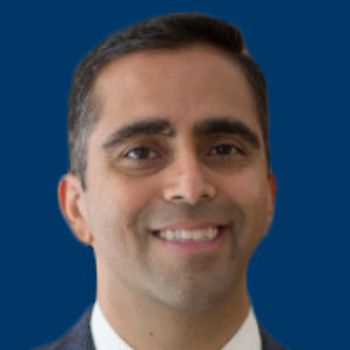
Early in the pandemic, the Montefiore hospital leadership had the forethought and insight to create a reliable and robust outcomes data collection system on all patients with a diagnosis of COVID-19 being seen and treated within the system.
The prominent physician-scientist will also be appointed professor of medicine and molecular pharmacology at Einstein

Investigators at Montefiore showed that axicabtagene-ciloleucel can be used successfully in ethnically diverse patients with high-risk, relapsed/refractory diffuse large B-cell lymphoma at an inner-city hospital.
Balazs Halmos, MD, MS, provides insight on preventive measures put in place at his institution, day-to-day challenges faced in practice, and how he is staying connected with the broader community to share information.
