
Balazs Halmos, MD, MS, provides insight into how his institution continues to adapt in response to the COVID-19 crisis.
Balazs Halmos, MD, MS, provides insight into how his institution continues to adapt in response to the COVID-19 crisis.
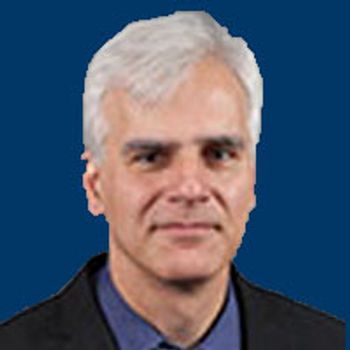
Balazs Halmos, MD, MA, discusses the advances that have been made in the treatment of patients with metastatic non–small cell lung cancer, ongoing biomarker research, and the importance of molecular testing.
Balazs Halmos, MD, discusses the implications of the emergence of osimertinib in the frontline treatment of patients with EGFR-mutated non–small cell lung cancer, the efforts being made to address resistance to the third-generation EGFR TKI, and the promise of circulating tumor DNA in the space.
Joseph A. Sparano, MD, associate director for clinical research, Albert Einstein Cancer Center, professor of Medicine & Obstetrics, Gynecology, and Women’s Health at the Albert Einstein College of Medicine, and associate chairman for Clinical Research in the Department of Oncology at Montefiore Medical Center, discusses the utility of liquid biopsies in breast cancer.
Roman Perez-Soler, MD, discusses the utility of liquid biopsy in lung cancer.
Lakshmi N. Rajdev, MD, discusses the use of somatostatin analogs in patients with neuroendocrine tumors.
Andreas Kaubisch, MD, discusses the phase III REACH and REACH-2 trials in advanced hepatocellular carcinoma.

Joseph A. Sparano, MD, discusses using gene expression profiles as a means to guide therapy in breast cancer.
Lakshmi N. Rajdev, MD, an associate professor, Department of Medicine (Oncology), at Albert Einstein College of Medicine, Montefiore Medical Center, discusses the difference between cancers and carcinomas in neuroendocrine tumors (NETs).
Andreas Kaubisch, MD, discusses available treatment options for hepatocellular carcinoma.
Lakshmi N. Rajdev, MD, discusses classifying and grading neuroendocrine tumors (NETs), treating patients with NETs, and novel therapeutic strategies in the pipeline.
It is crucial to develop screening programs for stomach cancer in the United States in order to make diagnoses at earlier stages of disease, provide better care, and improve outcomes.
Ana Acuna-Villaorduna, MD, provides further insight into the study that compares age and race as factors for the incidence of early-onset colorectal cancer.

In an effort to build more sophisticated protocols that keep QoL and cost questions at the forefront, Montefiore Einstein Center for Cancer Care and Albert Einstein College of Medicine’s Institute for Onco-Physics created a mathematical model to identify the optimal candidates for proton therapy, the most modern form of radiation therapy for patients with head and neck cancers.
Benjamin A. Gartrell, MD, assistant professor of urology, Albert Einstein College of Medicine, medical oncologist, Montefiore Medical Center, discusses the tolerability of SM-88 in the treatment of patients with prostate cancer.
Joseph A. Sparano, MD, associate director for clinical research, Albert Einstein Cancer Center, Montefiore Medical Center, discusses ways to improve the clinical utility of liquid biopsies in the treatment of patients with breast cancer.
Roman Perez-Soler, MD, chairman of the Department of Oncology and chief of the Division of Medical Oncology at Montefiore Medical Center, discusses recent advances in immunotherapy for the treatment of patients with small cell lung cancer.
Balazs Halmos, MD, MS, director of thoracic oncology and director of clinical cancer genomics, Montefiore Medical Center, discusses second-line treatment for patients with metastatic squamous non–small cell lung cancer (NSCLC).
Joseph A. Sparano, MD, discusses the potential for liquid biopsy and the ongoing challenge of improving survival for patients with metastatic breast cancer.
Balazs Halmos, MD, MS, director of thoracic oncology and director of clinical cancer genomics, Montefiore Medical Center, discusses the use of immunotherapy in the treatment of patients with metastatic squamous non–small cell lung cancer (NSCLC).
Joseph A. Sparano, MD, associate director for clinical research, Albert Einstein Cancer Center, Montefiore Medical Center, discusses unmet needs in metastatic breast cancer.
Joseph A. Sparano, MD, associate director for clinical research, Albert Einstein Cancer Center, Montefiore Medical Center, discusses the application of liquid biopsies in breast cancer.

Investigators from Montefiore developed a novel combination that has now demonstrated early-stage efficacy in metastatic lung cancer.

Everolimus demonstrated strong potential as an effective tool for overcoming endocrine resistance in postmenopausal women with ER-positive, HER2-negative metastatic breast cancer resistant to AI therapy.

Investigators to present findings on Spine, Lung, Liver and Head and Neck Cancer Research at the 59th Annual ASTRO Meeting.
For the past 5 years, Montefiore has been a leading Pioneer Accountable Care Organization (ACO) in CMS’ ACO program, which aims to improve the quality of care for Medicare beneficiaries while identifying ways to save healthcare dollars.
Breast cancer related lymphedema, a common and painful, yet underreported side effect of surgery and radiation, is getting fresh attention, courtesy of new guidelines from internationally recognized breast surgeons.