

The top 5 OncLive TV videos of the week cover pancreatic cancer, gastric cancer, GIST, renal cell carcinoma, and chronic lymphocytic leukemia.
The top 5 OncLive TV videos of the week cover pancreatic cancer, gastric cancer, GIST, renal cell carcinoma, and chronic lymphocytic leukemia.
Alberto Martini, MD, discusses the safety of intravesical therapies in NMIBC, the efficacy of EG-70, and future trial needs in this population.

Press Release
A new clinical trial is testing the effectiveness of chemotherapy treatment following surgery for a subset of pancreatic cancer patients.
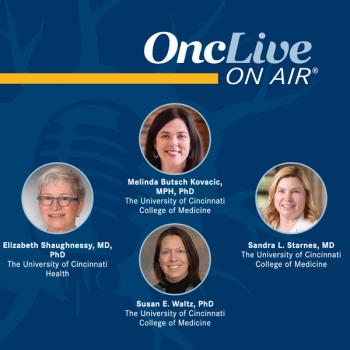
Drs Kovacic, Shaughnessy, Starnes, and Waltz highlight the differences in work culture from their early careers to now, gender-related challenges that persist in medicine today, and advice to incoming medical professionals.

Melinda Butsch Kovacic, MPH, PhD; Elizabeth Shaughnessy, MD, PhD; Sandra L. Starnes, MD; and Susan E. Waltz, PhD, discuss the advice they would give to their younger selves and future female oncology professionals, knowing what they know now about the oncology field and their own career growth.

Melinda Butsch Kovacic, MPH, PhD; Elizabeth Shaughnessy, MD, PhD; Sandra L. Starnes, MD; and Susan E. Waltz, PhD, discuss challenges they faced throughout their early careers and how some of those challenges continue to affect the professional lives of female physicians.

Press Release
University of Cincinnati Cancer Center researchers presented more than a dozen abstracts at the 2023 American Association for Cancer Research Annual Meeting, including findings that could advance treatments for head and neck and breast cancers.

Melinda Butsch Kovacic, MPH, PhD; Elizabeth Shaughnessy, MD, PhD; Sandra L. Starnes, MD; and Susan E. Waltz, PhD, discuss the differences that can arise between the mentorship strategies of men and women and the importance of finding mentors that help with individual career growth and personal goal accomplishment.
Melinda Butsch Kovacic, MPH, PhD; Elizabeth Shaughnessy, MD, PhD; Sandra L. Starnes, MD; and Susan E. Waltz, PhD, discuss their early career experiences as women in the oncology field.
Press Release
Pancreatic cancer diagnoses are increasing more rapidly than any other cancer type while remaining one of the most deadly cancers.

Thomas Herzog, MD, discusses how the recent FDA approval of the novel antibody-drug conjugate mirvetuximab soravtansine-gynx ameliorates unmet need in platinum-resistant, folate receptor alpha–positive gynecological cancers.
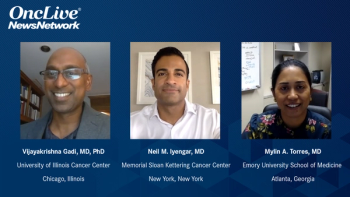
A panel of breast oncologists highlight their therapy preferences for a woman with HER2-positive metastatic breast cancer previously treated with docetaxel-trastuzumab-pertuzumab followed by paclitaxel and cisplatin.
During the XIX International Workshop on Chronic Lymphocytic Leukemia, which occurred virtually 17-20 September, Dr. John Byrd was presented the Binet-Rai Medal Award for his outstanding findings, which led to the use of BTK Inhibitors in almost every phase of CLL therapy.

Elyse Lower, MD, discusses the importance of tucatinib in the treatment of patients with HER2-positive breast cancer.

Elyse Lower, MD, discusses the impact of tucatinib on the treatment of patients with HER2-positive breast cancer.
January 27, 2021 - Perioperative chemotherapy did not improve overall survival in patients with resectable pancreatic ductal adenocarcinoma when compared with historical data from adjuvant trials.

Amanda L. Jackson, MD, discusses choosing between VEGF inhibitors and PARP inhibitors in the treatment of patients with recurrent platinum-sensitive ovarian cancer.

Caroline Billingsley, MD, spoke to established and emerging treatment modalities in ovarian cancer and the successes and pitfalls of key clinical trials of antibody-drug conjugates and immunotherapy in this space.
Amanda L. Jackson, MD, , discusses the role of PARP inhibitors in the maintenance treatment of patients with recurrent platinum-sensitive ovarian cancer.
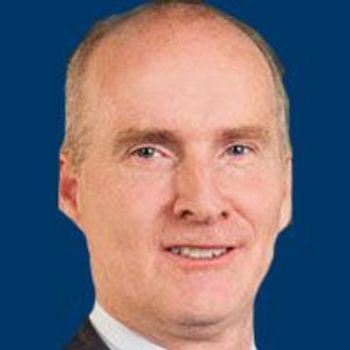
Thomas Herzog, MD, discusses the data that have cast PARP inhibitors into the forefront of treatment in the up-front management of patients with advanced ovarian cancer.

In our exclusive interview, Thomas Herzog, MD, and Kathleen Moore, MD, reviewed the topline results of the 4 positive PARP inhibitor trials in the frontline maintenance setting and provided perspective on the potential applications of these data to clinical practice.

In our exclusive interview, Thomas Herzog, MD, discusses the FDA approval of the combination of olaparib (Lynparza) and bevacizumab (Avastin) as frontline maintenance therapy in HRD-positive advanced ovarian cancer.
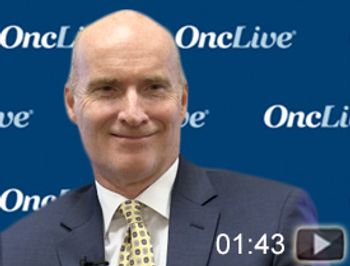
Thomas Herzog, MD, professor of obstetrics and gynecology, deputy director, University of Cincinnati Cancer Institute, discusses the use of hyperthermic intraperitoneal chemotherapy (HIPEC) in ovarian cancer.
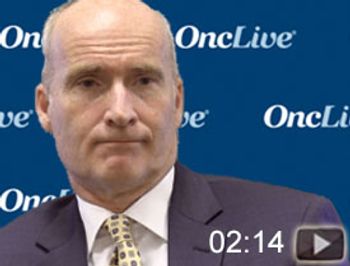
Thomas Herzog, MD, professor of obstetrics and gynecology, deputy director, University of Cincinnati Cancer Institute, discusses the impact of recent clinical trials in ovarian cancer.
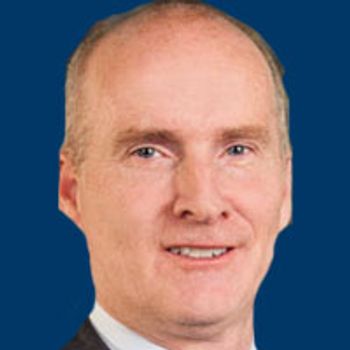
Thomas Herzog, MD, traces the therapeutic evolution of frontline treatment for patients with ovarian cancer.
Thomas Herzog, MD, professor of obstetrics and gynecology, deputy director, University of Cincinnati Cancer Institute, discusses novel therapies in ovarian cancer.
Thomas Herzog, MD, professor of obstetrics and gynecology, deputy director, University of Cincinnati Cancer Institute, discusses the optimal use of bevacizumab (Avastin) in patients with ovarian cancer.
Maintenance therapy with niraparib improved progression-free survival compared with placebo for patients with recurrent ovarian cancer harboring a germline BRCA mutation or homologous recombination deficiency.
John Morris, MD, professor of Medicine, co-director, Comprehensive Lung Cancer Center, associate director, UCCI Translational Research and Director, Experimental Therapeutics, University of Cincinnatti, discusses lymphopenia as a predictor of survival in chemoradiation-treated non–small cell lung cancer.
Tahir Latif, MD, associate professor of Medicine, interim chief, Division of Hematology Oncology, director, Infusion Services University of Cincinnati Cancer Institute, discusses differences in male survival rates versus female among patients with diffuse large B-cell lymphoma (DLBCL).