

Marla D. Lipsyc-Sharf, MD, highlights the clinical evolution of the Signatera Genome test for residual disease surveillance in patients with breast cancer.
Marla D. Lipsyc-Sharf, MD, highlights the clinical evolution of the Signatera Genome test for residual disease surveillance in patients with breast cancer.

Marla D. Lipsyc-Sharf, MD, discusses the evolving role of MRD ctDNA testing in breast cancer management and aiding in early detection of disease recurrence.

Dr Bardia discusses key findings from the phase 3 lidERA Breast Cancer study of giredestrant in estrogen receptor–positive, HER2-negative breast cancer.

Aditya Bardia, MD, MPH, FASCO, discusses the design of the ELEGANT study of elacestrant vs endocrine therapy in high-risk, ER-positive early breast cancer.

Deborah J. Wong, MD, PhD, discusses data with ficerafusp alfa plus pembrolizumab in HPV-negative HNSCC.

The top 5 OncLive TV videos of the week cover insights in multiple myeloma, myelodysplastic syndrome, breast cancer, colorectal cancer, and cervical cancer.
Dr Bardia discusses the ELEGANT study of elacestrant in estrogen receptor–positive, HER2-negative early breast cancer at high risk of disease recurrence.

Aditya Bardia, MD, MPH, FASCO, discussed data from the lidERA trial of giredestrant vs SOC endocrine therapy in ER-positive, HER2-negative breast cancer.
The top 5 OncLive TV videos of the week cover insights in ALL, breast cancer, lung cancer, and pancreatic cancer.

Zev A. Wainberg, MD, discusses different palliative chemotherapy regimens, their use cases, and other recent developments in pancreatic cancer.

Breast oncology experts discuss SABCS 2025 data from HER2CLIMB-05 and lidERA that may influence maintenance therapy and adjuvant endocrine care.
Here is your cheat sheet to all therapeutic options that were cleared by the FDA in November 2025 spanning tumor types.
The top 5 OncLive TV videos of the week cover insights in breast cancer, uveal melanoma, prostate cancer, and multiple myeloma.

Long-term follow-up results show vorasidenib prolongs PFS and reduces tumor progression vs placebo in IDH-mutant grade 2 glioma.

Kelly E. McCann, MD, PhD, discusses findings from the VIKTORIA-1 trial of gedatolisib-based regimens in hormone receptor–positive advanced breast cancer.

The SKYSCRAPER-14 trial did not show a PFS benefit with tiragolumab plus atezolizumab and bevacizumab in untreated HCC, missing its coprimary end point.

Leading experts across oncology specialties preview the key studies and data they are most anticipating ahead of the 2025 ESMO Congress.
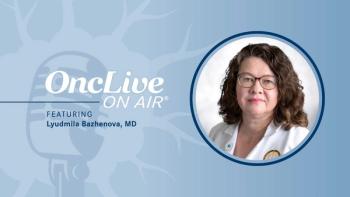
Dr Bazhenova discusses the FDA approval of sunvozertinib for patients with EGFR-mutated metastatic non–small cell lung cancer.
Here is your guide to all therapeutic options that were cleared by the FDA in August 2025 spanning tumor types.

Connie Lai, MD, discusses an analysis of post-induction maintenance vs treatment break in metastatic colorectal cancer.

Zev A. Wainberg, MD, MSc, highlighted notable research in gastric cancer and cholangiocarcinoma presented during the 2025 ESMO GI Congress.

The top 5 OncLive videos of the week cover insights in renal cell carcinoma, glioma, multiple myeloma, and ovarian cancer.

Timothy F. Cloughesy, MD, discusses the FDA approval of dordaviprone for the treatment of patients with H3K27M-mutated diffuse midline glioma.

Aditya Bardia, MD, MPH, discusses how Dato‑DXd serves as a new treatment option with a distinct safety profile in HR-positive, HER2‑negative breast cancer.
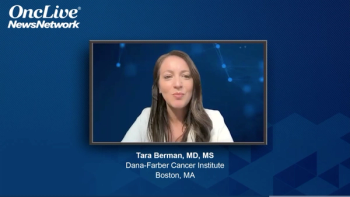
Tara Berman, MD, MS, and Gottfried E. Konecny, MD, discuss ongoing research to watch in ovarian cancer.
Tara Berman, MD, MS, and Gottfried E. Konecny, MD, discuss data for neoadjuvant IMNN-001 plus chemotherapy in advanced epithelial ovarian cancer.
Tara Berman, MD, MS, and Gottfried E. Konecny, MD, discuss data for relacorilant plus nab-paclitaxel in platinum-resistant ovarian cancer.
Tara Berman, MD, MS, and Gottfried E. Konecny, MD, discuss data for radical up-front surgery in advanced ovarian cancer from the TRUST trial.

Bria-IMT plus checkpoint inhibition displayed a potential overall survival benefit in heavily pretreated, hormone receptor–positive breast cancer.
Zev A. Wainberg, MD, MSc, discusses data from the EDGE-Gastric trial of domvanalimab plus zimberelimab and FOLFOX in first-line, metastatic gastric cancer.