
Tara Berman, MD, MS, and Gottfried E. Konecny, MD, discuss data for dostarlimab plus niraparib in advanced ovarian cancer.
Tara Berman, MD, MS, and Gottfried E. Konecny, MD, discuss data for dostarlimab plus niraparib in advanced ovarian cancer.
Tara Berman, MD, MS, and Gottfried E. Konecny, MD, discuss how ADCs could continue to reshape ovarian cancer management.
Here is your snapshot of all therapeutic options that were approved by the FDA in May 2025 spanning tumor types.

Aditya Bardia, MD, MPH, FASCO, discusses the efficacy of T-DXd in patients with HER2-low and -ultralow unresectable or metastatic breast cancer.
Kanwarpal S. Kahlon, MD, discusses the benefits of the availability of generic eltrombopag formulations for aplastic anemia and immune thrombocytopenia.
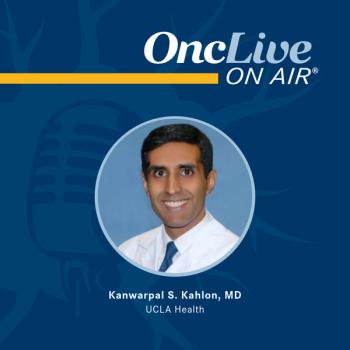
Dr Kahlon discusses the availability of the generic formulations of eltrombopag for patients with aplastic anemia and immune thrombocytopenia.
Stergios J. Moschos, MD, discusses how the use of bridging therapy can enhance the efficacy of adoptive T-cell therapies for patients with melanoma.

The University of California Lung Cancer Consortium and AstraZeneca announced a five-year partnership to expand the Healthy Lungs California initiative.

Kelly E. McCann, MD, PhD, discusses the benefit of using TKI combinations for patients with HER2-positive breast cancer and brain metastases.
Experts from across oncology specialties discuss the long-term effects of the COVID-19 pandemic on patient care.

Kelly E. McCann, MD, discusses mentorship, sponsorship, and work-life balance in oncology, highlighting strategies for supporting women in the field.
Kelly E. McCann, MD, PhD, discusses several targeted approaches under investigation in HER2-positive breast cancer.
Aditya Bardia, MD, MPH, FASCO, discusses how the FDA approval of T-DXd for HER2-low/-ultralow metastatic breast cancer has affected the treatment paradigm.
Dr Bardia discusses the FDA approval of T-DXd for patients with unresectable or metastatic, hormone receptor–positive, HER2-low/-ultralow breast cancer.
Ritu Salani, MD, MBA, details the significance of trials examining avutometinib plus defactinib and enthusiasm for ADCs in ovarian cancer.
Ritu Salani, MD, MBA, details considerations for cervical cancer treatment as new approvals, research, and modalities affect several settings.
Aditya Bardia, MD, MPH, FASCO, discusses the FDA approval of T-DXd for patients with pretreated HER2-low and -ultralow metastatic breast cancer.
The FDA approved T-DXd for unresectable/metastatic HR+, HER2-low/-ultralow breast cancer that progressed on endocrine therapy in the metastatic setting.
Adam E. Singer, MD, PhD, discusses factors that inform the choice between IO/IO and IO/TKI regimens for patients with renal cell carcinoma.
John K. Lee, MD, PhD, discusses the EV-302 trial of frontline enfortumab vedotin plus pembrolizumab in locally advanced or metastatic urothelial cancer.

Bartosz Chmielowski, MD, PhD, discusses the rationale for investigating oncolytic viruses in melanoma.
Ritu Salani, MD, MBA, discusses the management of ocular toxicities associated with mirvetuximab soravtansine in ovarian cancer.
Orca-T was retrospectively associated with improved OS in patients with high-risk hematologic malignancies.
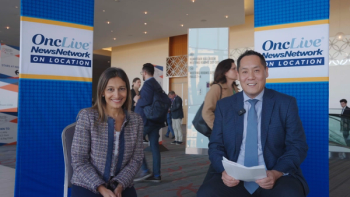
Jame Abraham, MD, of Cleveland Clinic, and Rena D. Callahan, MD, of UCLA, sit down with Chandler Park, MD, FACP, to discuss the latest abstracts in breast cancer presented during the 2024 San Antonio Breast Cancer Symposium.
Aditya Bardia, MD, MPH, FASCO, discusses the efficacy of T-DXd in HER2-low/ultralow metastatic breast cancer by disease progression on prior therapy.

Perioperative vorasidenib or ivosidenib demonstrated sustained clinical benefit in patients with predominantly non-enhancing IDH1-mutant diffuse glioma.
Adam E. Singer, MD, PhD, discusses the safety profiles of immuno-oncology/TKI regimens in first-line renal cell carcinoma.
Adam E. Singer, MD, PhD, discusses currently available combination treatment regimens for the first-line treatment of patients with renal cell carcinoma.

Ian Krop, MD, PhD, and Aditya Bardia, MD, MPH, FASCO, detail how TROP2-directed ADCs have generated excitement in breast cancer and other solid tumors.
Nicholas P. McAndrew, MD, MSCE, discusses a subgroup analysis of the NATALEE trial in HR+/HER2– early breast cancer by prior systemic treatment.