

Edward B. Garon, MD, MS, discusses key considerations when selecting an optimal perioperative treatment approach for patients with lung cancer.
Edward B. Garon, MD, MS, discusses key considerations when selecting an optimal perioperative treatment approach for patients with lung cancer.

Breast cancer specialists outline their institution’s practices regarding the choice between subcutaneous fixed-dose pertuzumab – trastuzumab-hyaluronidase and intravenous pertuzumab and trastuzumab.
Kandace P. McGuire, MD, provides clinical insights on how patient monitoring practices inform discussions around surgical options, providing the potential for deescalating surgical management.
Ian Krop, MD, PhD, outlines his institution’s approach to utilizing neoadjuvant therapy in patients with HER2+ early breast cancer, and Melinda Telli, MD, discusses the role of surgery.
A panel of experts on breast cancer provide insights on challenges encountered during the diagnosis of HER2+ early breast cancer and discuss the role of immunohistochemistry and FISH testing.

Edward B. Garon, MD, MS, takes stock of the non–small cell lung cancer field in light of recent updates from clinical trials.

Aditya Bardia, MD, MPH, FASCO, discusses standard first-, second-, and third-line HER2-positive metastatic breast cancer management approaches.

Ritu Salani, MD, MBA, discusses pathways implicated in low-grade serous ovarian cancer that may be viable for targeted therapy development.

Carol M. Mangione, MD, discusses the ramifications of the US Preventative Task Force’s April decision to update the breast cancer screening guidelines.
Karim Chamie, MD, discusses the significance of the FDA approval of N-803 plus BCG in BCG-unresponsive non–muscle invasive bladder cancer.

Gottfried Konecny, MD, discusses the importance of evaluating PROs in patients with platinum-resistant ovarian cancer receiving mirvetuximab soravtansine.
Gottfried E. Konecny, MD, discusses PRO data for mirvetuximab soravtansine derived from the phase 3 MIRASOL trial.

Gottfried Konecny, MD, discusses patient-reported outcomes from the phase 3 MIRASOL trial in platinum-resistant ovarian cancer.
Karim Chamie, MD, discusses the FDA approval of nogapendekin alfa plus BCG for patients with BCG-unresponsive non–muscle invasive bladder cancer.

Medical experts discuss the LAUNCH study, EMERALD-1, and LEAP-012 trials, providing updates on the progress and findings that influence the treatment paradigm for hepatocellular carcinoma.
Richard Finn, MD, and David James Pinato, MD, MRCP, PhD, review locoregional therapies for hepatocellular carcinoma, including transarterial chemoembolization (TACE) and radioembolization.
The key opinion leaders discuss staging systems they use in clinical practice and their effectiveness in creating treatment algorithms, particularly with respect to Child-Pugh scores.
Richard Finn, MD, and David James Pinato, MD, MRCP, PhD, discuss driving forces for the development of hepatocellular carcinoma, including different types of viral hepatitis and non-alcoholic steatohepatitis.
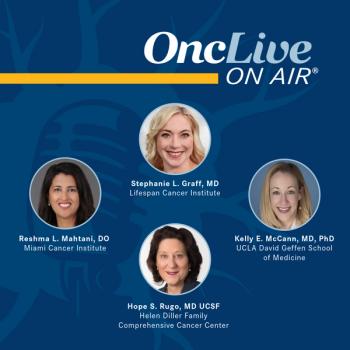
Drs Graff, Mahtani, McCann, and Rugo share moments that sparked their interest in oncology and setbacks they overcame when building their careers.
Deborah J. Wong, MD, PhD, discusses the evaluation of atezolizumab vs placebo after definitive local therapy in high-risk, locally advanced HNSCC.
Michael Richardson, MD, discusses escalating uterine cancer rates among Asian Americans.

Gottfried E. Konecny, MD, discusses the FDA approval of mirvetuximab soravtansine for patients with FRα-positive, platinum-resistant ovarian cancer.
Kelly E. McCann, MD, PhD, discusses her career journey and evolving career aspirations as a woman in oncology.

Kelly E. McCann, MD, PhD, discusses her experiences with mentorship and work-life balance as a woman in oncology.
Dr Wainberg discusses the FDA approval of first-line NALIRIFOX for patients with metastatic pancreatic adenocarcinoma.

PARP inhibitors have shown promise in ovarian cancer treatment, but certain subgroups of patients have few effective options following disease progression.

Nicholas P. McAndrew, MD, MSCE, discusses the phase 3 HER2CLIMB-02 trial of tucatinib plus trastuzumab emtansine in HER2-positive early breast cancer.
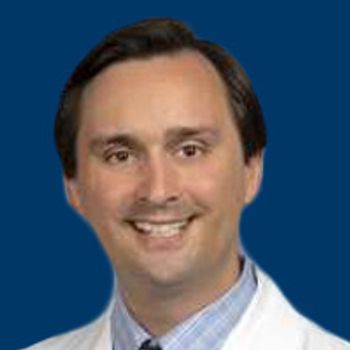
Nicholas P. McAndrew, MD, MSCE, discusses how updated clinical trial findings are shifting the treatment paradigm in HER2-positive metastatic breast cancer.
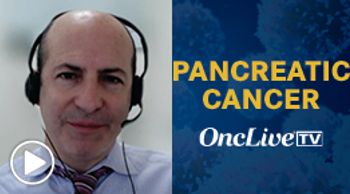
Zev A. Wainberg, MD, discusses the FDA approval of NALIRIFOX for patients with metastatic pancreatic ductal adenocarcinoma.
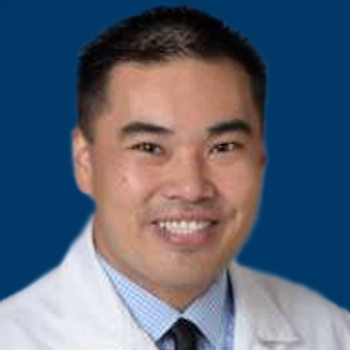
John Shen, MD, discusses the phase 1/2 APEX-01 trial of ARX517 in metastatic castration-resistant prostate cancer.