
Opinion|Videos|April 7, 2026
Best Practices and Future Directions for Bispecific Antibody Therapy
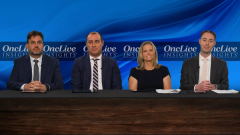
This final segment highlights practical lessons learned from implementing bispecific antibody therapies and explores how the field may evolve in the coming years. Panelists emphasize that optimizing outcomes requires multidisciplinary collaboration, standardized protocols, and continuous education across clinical teams.
Advertisement
Episodes in this series
This final segment highlights practical lessons learned from implementing bispecific antibody therapies and explores how the field may evolve in the coming years. Panelists emphasize that optimizing outcomes requires multidisciplinary collaboration, standardized protocols, and continuous education across clinical teams. Dedicated infectious disease support, particularly for patients receiving cellular or T-cell–redirecting therapies, can improve management of infection risks and other delayed complications.
Operational success also depends on well-coordinated transitions of care between infusion centers, inpatient teams, and community oncologists. Establishing treatment pathways in advance, including scheduled laboratory testing, infusion appointments, observation periods, and follow-up visits, helps ensure seamless care delivery and improves patient confidence in the treatment process. Practical tools such as patient calendars outlining medications and monitoring schedules can also reduce confusion and improve adherence.
Looking ahead, panelists anticipate that bispecific antibodies will continue to expand beyond their current use in later-line therapy for relapsed/refractory diffuse large B-cell lymphoma. Ongoing clinical trials are evaluating combination strategies with chemotherapy, antibody-drug conjugates, and other immunotherapies, as well as their potential use in earlier lines of treatment, including the frontline setting. As evidence accumulates, these therapies are expected to play an increasingly central role in lymphoma management.
Advertisement
Related to this article
Here is your cheat sheet to all therapeutic options that were cleared by the FDA in September 2026 spanning tumor types.

The FDA approved tucatinib plus trastuzumab and pertuzumab as maintenance for advanced HER2-positive breast cancer after induction.
The c-Met–directed ADC was designated for EGFR wild-type nonsquamous NSCLC after platinum chemotherapy and anti–PD-(L)1 therapy.

Dana-Farber’s Xin Gu, PhD, and Nicholas Polizzi, PhD, received NIH New Innovator Awards for high-risk, high-reward research.
The c-Met–directed ADC-based combination was designated for mCRC previously treated with fluoropyrimidine, irinotecan, oxaliplatin, and anti-VEGF therapy.

Pooled data from 3 randomized trials showed ropeginterferon alfa-2b improved responses vs phlebotomy alone but not vs hydroxyurea in polycythemia vera.

Experts break down key multiple myeloma data and trends from the 23rd Annual IMS Meeting.

Firmonertinib did not significantly improve BICR-assessed PFS vs platinum/pemetrexed chemotherapy in first-line EGFR exon 20–mutant NSCLC in FURVENT trial.
Advertisement
Advertisement
Trending on OncLive
1
FDA Approves Tucatinib Plus Trastuzumab/Pertuzumab as First-Line Maintenance in Advanced HER2+ Breast Cancer
2
FDA Grants Breakthrough Therapy Designation to Telisotuzumab Adizutecan Plus Bevacizumab in Refractory mCRC
3
Firmonertinib Fails to Meet PFS End Point in First-Line EGFR Exon 20 Insertion–Mutant NSCLC
4
FDA Grants Breakthrough Therapy Designation to Temab-A in Previously Treated c-Met–Expressing Nonsquamous NSCLC
5