Now Playing
Experts outline how to start bispecific therapy for relapsed DLBCL, manage CRS/ICANS, and coordinate community–academic lymphoma care.
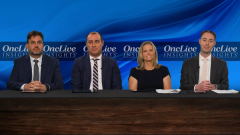
In this opening segment, moderator Dr. Juan Luciano (University of Miami) points out that the program is focused on operationalizing bispecific antibody therapy for lymphoma across academic and community settings. He is joined by a multidisciplinary panel that includes a community hematologist–oncologist, a clinical pharmacist specializing in malignant hematology, and an oncology nurse practitioner. The discussion is framed around the practical challenges and opportunities associated with integrating emerging immunotherapies, particularly CD20×CD3 bispecific antibodies, into routine clinical practice. The program emphasizes the importance of collaboration across care settings and disciplines to ensure safe and effective implementation of these therapies.
The panel begins with a clinical scenario involving a 65-year-old patient with relapsed/refractory diffuse large B-cell lymphoma (DLBCL) who has progressed after prior anthracycline-based chemotherapy and platinum-based salvage therapy and is not eligible for transplant or CAR T-cell therapy. The patient lives locally, prefers outpatient care, and is motivated to pursue additional treatment but is concerned about toxicity and clinic time. This case sets the stage for discussing when bispecific antibodies may represent an appropriate treatment option in the third-line setting or beyond.
Dr. Perez highlights several clinical and operational considerations when initiating bispecific antibody therapy in a community setting. From a clinical perspective, prior treatment exposure and disease characteristics support the use of CD20×CD3 bispecific agents in this patient population. Operationally, however, implementing these therapies requires careful preparation, including staff education on managing immune-related toxicities such as cytokine release syndrome (CRS) and immune effector cell–associated neurotoxicity syndrome (ICANS), as well as coordination with hospital services for potential observation or admission during early dosing cycles.
The segment also explores patient-selection factors, including CD20 expression status, prior responses to therapy (particularly after CAR T-cell therapy), performance status, and the logistical demands of treatment schedules. Overall, the discussion underscores the need for careful planning and multidisciplinary coordination to safely deliver bispecific antibody therapy in both community and academic practice environments.