
Opinion|Videos|March 31, 2026
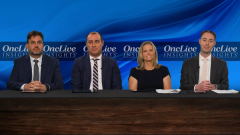
Bridging Academic and Community Care for Bispecific Therapy
This segment centers on how to maintain continuity of care when patients start bispecific antibodies at an academic center and then transition to community-based treatment, with an emphasis on communication, logistics, and patient engagement.
Advertisement
Episodes in this series
This segment centers on how to maintain continuity of care when patients start bispecific antibodies at an academic center and then transition to community-based treatment, with an emphasis on communication, logistics, and patient engagement. The panel describes several practical “shared-care” approaches, including alternating visits between academic and community sites, using milestone-based follow-up similar to cellular therapy programs (eg, academic review after the initial cycle, then every 3–6 months), and leveraging telemedicine to keep specialists involved without requiring long-distance travel for routine check-ins.
A key theme is expanding access by moving treatment closer to home. One academic program involves gradually extending bispecific continuation dosing to satellite clinics within the same health system, which simplifies staffing, protocols, and documentation. However, there are real-world barriers when the academic hub is geographically isolated; patients may need to travel long distances for weekly dosing during early cycles, requiring hotel support, foundation resources, and intensive scheduling coordination. Where possible, the team explores introducing stable patients to local oncology practices for later cycles, but many outpatient programs still require patients to remain within a defined radius (eg, ~30 minutes) during higher-risk periods for CRS monitoring.
The segment also addresses what community oncologists most commonly worry about: cost/insurance authorization and, more importantly, “what happens if my patient gets CRS or other toxicity after hours?” Experts stress the need for predefined escalation pathways, a designated receiving hospital/emergency department, and education beyond oncology (including emergency clinicians). Practical tools include giving patients therapy identification cards (and photos of them on phones), considering bracelets, and building electronic medical record flags that label patients as bispecific recipients with a clear contact number, recognizing that electronic medical record interoperability across satellites remains inconsistent.
Advertisement
Related to this article
Here is your cheat sheet to all therapeutic options that were cleared by the FDA in September 2026 spanning tumor types.

The FDA approved tucatinib plus trastuzumab and pertuzumab as maintenance for advanced HER2-positive breast cancer after induction.

The c-Met–directed ADC was designated for EGFR wild-type nonsquamous NSCLC after platinum chemotherapy and anti–PD-(L)1 therapy.
Dana-Farber’s Xin Gu, PhD, and Nicholas Polizzi, PhD, received NIH New Innovator Awards for high-risk, high-reward research.
The c-Met–directed ADC-based combination was designated for mCRC previously treated with fluoropyrimidine, irinotecan, oxaliplatin, and anti-VEGF therapy.
Pooled data from 3 randomized trials showed ropeginterferon alfa-2b improved responses vs phlebotomy alone but not vs hydroxyurea in polycythemia vera.

Experts break down key multiple myeloma data and trends from the 23rd Annual IMS Meeting.
Firmonertinib did not significantly improve BICR-assessed PFS vs platinum/pemetrexed chemotherapy in first-line EGFR exon 20–mutant NSCLC in FURVENT trial.
Advertisement
Advertisement
Trending on OncLive
1
FDA Approves Tucatinib Plus Trastuzumab/Pertuzumab as First-Line Maintenance in Advanced HER2+ Breast Cancer
2
FDA Grants Breakthrough Therapy Designation to Telisotuzumab Adizutecan Plus Bevacizumab in Refractory mCRC
3
Firmonertinib Fails to Meet PFS End Point in First-Line EGFR Exon 20 Insertion–Mutant NSCLC
4
FDA Grants Breakthrough Therapy Designation to Temab-A in Previously Treated c-Met–Expressing Nonsquamous NSCLC
5