
Opinion|Videos|April 17, 2026
Emerging Research in ADC Ocular Toxicity: Targeting the Underlying Pathophysiology
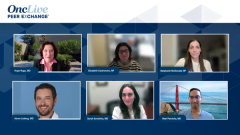
The experts conclude their discussion on ocular toxicity by exploring emerging research aimed at addressing the underlying mechanisms of ADC-associated corneal changes.
Advertisement
The experts conclude their discussion on ocular toxicity by exploring emerging research aimed at addressing the underlying mechanisms of ADC-associated corneal changes.
A discussion of current treatment limitations highlights that existing therapies, including preservative-free artificial tears and topical steroids, provide symptomatic relief but do not address the underlying pathophysiology. Dr. Pasricha explains that while these treatments may reduce dryness and improve patient comfort, corneal pseudomicrocysts remain visible on examination despite symptomatic improvement.
Key considerations include understanding the mechanism by which ADCs enter corneal epithelial cells. Dr. Pasricha describes ongoing laboratory research investigating macropinocytosis—a nonspecific cellular "drinking" process through which corneal epithelial cells take up substances from the extracellular space. This pathway may explain how ADCs accumulate in corneal tissue independent of antibody-target binding. The research aims to develop an eye drop capable of blocking this process, potentially preventing corneal pseudomicrocyst formation rather than merely treating symptoms.
This segment underscores that although current management strategies, such as patient education, early detection, and multidisciplinary collaboration, effectively mitigate risk for agents such as datopotamab deruxtecan and telisotuzumab vedotin, a mechanistic solution remains an unmet need. Dr. Rugo notes that trials using ADCs with more predictable ocular toxicity profiles may help evaluate preventive interventions. The panel emphasizes that for currently available agents, risks remain relatively low when clinicians know what to look for, educate patients appropriately, and implement the collaborative approaches discussed throughout the session.
Advertisement
Related to this article

Roswell Park Comprehensive Cancer Center received a greant to advance CAR T-cell therapy research in pediatric AML.

The FDA approved SimpleScreen CRC as a screening option for colorectal cancer in adults 45 years of age and older at average risk for the disease.

Sonesitatug vedotin improved overall survival in pretreated CLDN18.2-positive advanced gastric/GEJ cancers in the phase 3 CLARITY-Gastric01 trial.

Safusidenib produced a 51.9% confirmed ORR and a 79.1% 36-month PFS rate in chemotherapy- and radiotherapy-naive grade 2 IDH1-mutant glioma.

Faculty convened at an OncLive Scientific Interchange and Workshop to discuss individualizing ARPI-based therapy in advanced prostate cancer.

The top 5 OncLive TV videos of the week cover insights in pancreatic cancer, non–small cell lung cancer, the cost and value of immunotherapy, and bladder cancer.

The FDA accepted an NDA for daraxonrasib in metastatic pancreatic cancer, approved zidesamtinib in pretreated ROS1-positive NSCLC, and more.

New data on multiple targeted agents and evolving diagnostic frameworks highlight progress in classifying and treating EGFR PACC–mutated NSCLC.
Advertisement
Advertisement
Trending on OncLive
1
The OncFive: Top Oncology Articles for the Week of 7/19
2
Epcoritamab Misses Sole US Primary End Point of Overall Survival in R/R DLBCL
3
EGFR PACC Mutations Define a Distinct NSCLC Subclass With Growing Treatment Options
4
Frontline Choice Anchors Sequencing Decisions in EGFR-Mutated NSCLC
5