
Opinion|Videos|April 10, 2026
Ocular Toxicity Management for ADC Therapy in Breast and Lung Cancer: Mechanisms, Prevention, and Ophthalmology-Oncology Collaboration
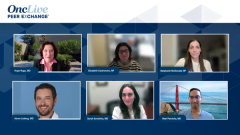
In this expert discussion, Hope Rugo, MD; Neel Pasricha, MD; and Sarah Sunshine, MD explore ocular adverse events associated with antibody-drug conjugates (ADCs), examining pathophysiology, prevention, and multidisciplinary management.
Advertisement
In this expert discussion, Hope Rugo, MD; Neel Pasricha, MD; and Sarah Sunshine, MD explore ocular adverse events associated with antibody-drug conjugates (ADCs), examining pathophysiology, prevention, and multidisciplinary management. Dr. Pasricha explains that ocular toxicity appears to be an off-target effect rather than antibody-mediated binding to corneal cells, with severity varying by agent. For example, telisotuzumab vedotin and datopotamab deruxtecan (Dato-DXd) exhibit high incidence but typically low-grade events, whereas belantamab mafodotin shows both high incidence and greater severity. The characteristic pattern begins peripherally where blood vessels meet the cornea and migrates centrally, suggesting a primarily blood-based mechanism, although ADC payload is also detected in tears.
Key considerations include establishing ophthalmology-oncology collaboration before initiating therapy, baseline ophthalmologic assessments for certain ADCs, and educating patients on early warning signs and when to seek urgent evaluation. Dr. Sunshine emphasizes that early identification enables timely intervention through treatment holds or dose modifications.
The panel notes that current supportive therapies, such as preservative-free artificial tears and topical agents, do not address the underlying pathophysiology, highlighting the need for ongoing research into prevention strategies. Throughout, the speakers stress multidisciplinary coordination and clear patient communication to balance ocular safety with the clinical benefits of ADC therapy.
Advertisement
Related to this article

In TASKIN, the 12-month OS rate was 61.3% with vilamakitug vs 55.7% with placebo plus trifluridine/tipiracil.
The 510(k) clearance covers an MRI-derived AI risk score for stage I to IIIA disease; the high-risk category carried an HR of 2.81 for recurrence.
The FDA has approved dostarlimab for MSI-H or dMMR locally advanced rectal cancer.

The FDA accepted an NDA for UGN-103 for recurrent low-grade intermediate-risk NMIBC, with a target action date of June 14, 2027.

Ulrich Steidl, MD, PhD, has finalized his Montefiore Einstein Comprehensive Cancer Center senior leadership team.

The CirCLIQ Injector approval for subcutaneous isatuximab in multiple myeloma is the first anticancer treatment delivered via an on-body injector in Japan.

The top 5 OncLive TV videos of the week cover insights in multiple myeloma, HR+ breast cancer, CAR T-cell therapy, CLL, and oral SERDs.

Moh’d Khushman, MD, discusses INCA33890’s mechanism of action, phase 1 safety and efficacy data, and the design of NEXERA-303 in MSS colorectal cancer.
Advertisement
Advertisement
Trending on OncLive
1
FDA Approves Dostarlimab for dMMR/MSI-H Locally Advanced Rectal Cancer
2
VOLGA, DASL-HiCaP Data Highlight Key Genitourinary Cancer Presentations Arriving at ESMO 2026
3
Five Under 5: Top Oncology Videos for the Week of 10/12
4
Early-Phase INCA33890 Data Lay the Foundation for Phase 3 Combination Research in MSS CRC
5