
Opinion|Videos|May 1, 2026
Thrombocytopenia Management in ADC Therapy: Platelet Thresholds, Anticoagulation Safety, and Supportive Care
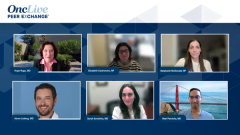
Hope Rugo, MD; Liz Castronovo, NP; and Stephanie McDonald, NP, discuss practical approaches to thrombocytopenia management during antibody-drug conjugate (ADC) therapy, emphasizing that platelet thresholds should be individualized rather than applied as rigid cutoffs.
Advertisement
Hope Rugo, MD; Liz Castronovo, NP; and Stephanie McDonald, NP, discuss practical approaches to thrombocytopenia management during antibody-drug conjugate (ADC) therapy, emphasizing that platelet thresholds should be individualized rather than applied as rigid cutoffs.
The panel generally holds treatment at platelet counts below 100,000/microL, although both Castronovo and McDonald note that younger, otherwise healthy patients may safely receive treatment at lower thresholds—McDonald describes occasionally treating near 75,000/microL while underscoring that once a dose is administered, it cannot be reversed, making cautious delays the safer long-term strategy. Castronovo raises the use of thrombopoietin receptor agonists such as romiplostim to maintain platelet counts and avoid treatment interruptions, particularly for patients receiving concurrent antiplatelet agents such as clopidogrel. Dr. Rugo acknowledges growing comfort with platelet growth factors broadly, although she has not personally used them with ADCs, and observes that platelet recovery with ADCs tends to be more rapid than with platinum-based agents.
Anticoagulation management emerges as a critical consideration, given that many patients with advanced cancer present with a history of venous thromboembolism. McDonald stresses the importance of medication reconciliation, holding anticoagulation when platelets fall below 50,000/microL, discontinuing nonsteroidal anti-inflammatory drugs and aspirin, and educating patients to report bruising, abnormal bleeding, or hematuria. Dr. Rugo reinforces aspirin avoidance given its irreversible platelet effect.
The panel highlights nadir visits as opportunities to assess both laboratory values and overall patient well-being, with Dr. Rugo noting that electronic health record–based check-ins can sometimes substitute for in-person evaluation, supporting ongoing monitoring without unnecessary patient burden.
Advertisement
Related to this article

In TASKIN, the 12-month OS rate was 61.3% with vilamakitug vs 55.7% with placebo plus trifluridine/tipiracil.

The 510(k) clearance covers an MRI-derived AI risk score for stage I to IIIA disease; the high-risk category carried an HR of 2.81 for recurrence.

The FDA has approved dostarlimab for MSI-H or dMMR locally advanced rectal cancer.

The FDA accepted an NDA for UGN-103 for recurrent low-grade intermediate-risk NMIBC, with a target action date of June 14, 2027.

Ulrich Steidl, MD, PhD, has finalized his Montefiore Einstein Comprehensive Cancer Center senior leadership team.

The CirCLIQ Injector approval for subcutaneous isatuximab in multiple myeloma is the first anticancer treatment delivered via an on-body injector in Japan.

The top 5 OncLive TV videos of the week cover insights in multiple myeloma, HR+ breast cancer, CAR T-cell therapy, CLL, and oral SERDs.

Moh’d Khushman, MD, discusses INCA33890’s mechanism of action, phase 1 safety and efficacy data, and the design of NEXERA-303 in MSS colorectal cancer.
Advertisement
Advertisement
Trending on OncLive
1
FDA Approves Dostarlimab for dMMR/MSI-H Locally Advanced Rectal Cancer
2
VOLGA, DASL-HiCaP Data Highlight Key Genitourinary Cancer Presentations Arriving at ESMO 2026
3
Five Under 5: Top Oncology Videos for the Week of 10/12
4
Early-Phase INCA33890 Data Lay the Foundation for Phase 3 Combination Research in MSS CRC
5