
Opinion|Videos|April 17, 2026
Managing ADC-Associated Ocular Toxicity: Practical Strategies for Ophthalmology-Oncology Collaboration in Breast and Lung Cancer
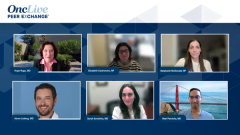
The experts continue their discussion on ocular toxicity, addressing the practical challenges of distinguishing antibody-drug conjugate (ADC)-related changes from baseline dry eye disease and establishing effective referral pathways.
Advertisement
The experts continue their discussion on ocular toxicity, addressing the practical challenges of distinguishing antibody-drug conjugate (ADC)-related changes from baseline dry eye disease and establishing effective referral pathways.
A discussion of diagnostic challenges highlights that dry eye affects approximately 50% of the global population, making baseline eye examinations critical for differentiating preexisting conditions from treatment-related changes. Dr. Pasricha notes that for agents like datopotamab deruxtecan and telisotuzumab vedotin, ocular toxicity may represent more of a dry eye phenotype rather than the corneal pseudomicrocyst pathology seen with belantamab mafodotin. Dr. Sunshine emphasizes that slit-lamp examination remains essential—symptoms alone cannot reliably differentiate routine dry eye from more severe, vision-threatening changes.
Key considerations include building ophthalmology-oncology relationships before patients develop symptoms, with Dr. Sunshine anticipating that oncologists will increasingly have dedicated eye care providers as ADC use expands. The panel agrees that baseline eye examinations should not delay treatment initiation, particularly for patients with recent routine eye exams and no concerning baseline symptoms. For higher-risk ADCs, initial ophthalmology referral may be preferable, while lower-risk agents may be appropriately managed with optometry and escalation as needed.
This segment underscores practical management strategies: liberal use of preservative-free artificial tears from cycle 1, day 1; ensuring patient compliance (noting some patients hoard drops due to cost); and prompt ophthalmology referral when symptoms become progressive or bothersome. Dr. Lisberg describes ocular toxicity with datopotamab deruxtecan as cumulative, sometimes requiring dose holds and modifications in patients receiving prolonged therapy.
Advertisement
Related to this article

Roswell Park Comprehensive Cancer Center received a greant to advance CAR T-cell therapy research in pediatric AML.

The FDA approved SimpleScreen CRC as a screening option for colorectal cancer in adults 45 years of age and older at average risk for the disease.

Sonesitatug vedotin improved overall survival in pretreated CLDN18.2-positive advanced gastric/GEJ cancers in the phase 3 CLARITY-Gastric01 trial.

Safusidenib produced a 51.9% confirmed ORR and a 79.1% 36-month PFS rate in chemotherapy- and radiotherapy-naive grade 2 IDH1-mutant glioma.

Faculty convened at an OncLive Scientific Interchange and Workshop to discuss individualizing ARPI-based therapy in advanced prostate cancer.

The top 5 OncLive TV videos of the week cover insights in pancreatic cancer, non–small cell lung cancer, the cost and value of immunotherapy, and bladder cancer.

The FDA accepted an NDA for daraxonrasib in metastatic pancreatic cancer, approved zidesamtinib in pretreated ROS1-positive NSCLC, and more.

New data on multiple targeted agents and evolving diagnostic frameworks highlight progress in classifying and treating EGFR PACC–mutated NSCLC.
Advertisement
Advertisement
Trending on OncLive
1
The OncFive: Top Oncology Articles for the Week of 7/19
2
Epcoritamab Misses Sole US Primary End Point of Overall Survival in R/R DLBCL
3
EGFR PACC Mutations Define a Distinct NSCLC Subclass With Growing Treatment Options
4
Frontline Choice Anchors Sequencing Decisions in EGFR-Mutated NSCLC
5