
Opinion|Videos|May 8, 2026
Cumulative ADC Toxicities and Closing Reflections: Managing Edema, Fatigue, and Optimizing Long-Term Tolerability
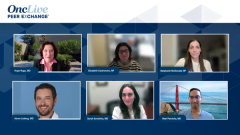
This concluding segment addresses cumulative toxicities affecting long-term antibody-drug conjugate tolerability, with Hope Rugo, MD and Aaron Lisberg, MD discussing edema, fatigue, and strategies for sustained therapy in breast and lung cancer.
Advertisement
This concluding segment addresses cumulative toxicities affecting long-term antibody-drug conjugate tolerability, with Hope Rugo, MD and Aaron Lisberg, MD discussing edema, fatigue, and strategies for sustained therapy in breast and lung cancer.
A discussion of edema management features Dr. Lisberg describing this as particularly relevant with cMET-targeting ADCs such as telisotuzumab vedotin, noting edema as a class effect also seen with MET exon 14 skipping mutation therapies. He emphasizes aggressive management following label recommendations for holding and dose reduction, while evaluating for confounding factors including cardiac disease, kidney dysfunction, elevated BNP, and other signs of heart failure. Multidisciplinary involvement with cardiology and nephrology specialists is essential, particularly since many patients already have established relationships with these teams.
Dr. Rugo notes that while edema is less common with HER2-directed ADCs, profound fatigue significantly impacts older patients receiving trastuzumab deruxtecan. She describes a patient in her early 80s with excellent tumor response but debilitating fatigue who initially refused dose reduction, stopped treatment, then successfully resumed a year later at reduced dose. This illustrates the importance of taking fatigue seriously as a treatment-limiting toxicity and considering dose modifications proactively.
Key considerations include evaluating alternative etiologies such as endocrinopathies—particularly thyroid disorders and adrenal insufficiency in patients with prior immunotherapy exposure—and individualizing treatment schedules. Both speakers emphasize that dose reduction and schedule modifications can preserve quality of life while maintaining therapeutic benefit.
The discussion closed with panel reflections on practice changes that have improved patient outcomes.
Advertisement
Related to this article

In TASKIN, the 12-month OS rate was 61.3% with vilamakitug vs 55.7% with placebo plus trifluridine/tipiracil.

The 510(k) clearance covers an MRI-derived AI risk score for stage I to IIIA disease; the high-risk category carried an HR of 2.81 for recurrence.

The FDA has approved dostarlimab for MSI-H or dMMR locally advanced rectal cancer.

The FDA accepted an NDA for UGN-103 for recurrent low-grade intermediate-risk NMIBC, with a target action date of June 14, 2027.

Ulrich Steidl, MD, PhD, has finalized his Montefiore Einstein Comprehensive Cancer Center senior leadership team.

The CirCLIQ Injector approval for subcutaneous isatuximab in multiple myeloma is the first anticancer treatment delivered via an on-body injector in Japan.

The top 5 OncLive TV videos of the week cover insights in multiple myeloma, HR+ breast cancer, CAR T-cell therapy, CLL, and oral SERDs.

Moh’d Khushman, MD, discusses INCA33890’s mechanism of action, phase 1 safety and efficacy data, and the design of NEXERA-303 in MSS colorectal cancer.
Advertisement
Advertisement
Trending on OncLive
1
FDA Approves Dostarlimab for dMMR/MSI-H Locally Advanced Rectal Cancer
2
VOLGA, DASL-HiCaP Data Highlight Key Genitourinary Cancer Presentations Arriving at ESMO 2026
3
Five Under 5: Top Oncology Videos for the Week of 10/12
4
Early-Phase INCA33890 Data Lay the Foundation for Phase 3 Combination Research in MSS CRC
5