Now Playing
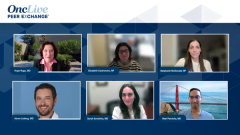
Panelists discuss proactive ILD risk assessment, vigilant monitoring, and multidisciplinary management to balance safety and efficacy of ADC therapies in breast and lung cancer.
In this segment, Dr. Hope Rugo and Dr. Aaron Lisberg discuss baseline ILD risk assessment and proactive interstitial lung disease (ILD) monitoring in patients receiving antibody-drug conjugate (ADC) therapies, including trastuzumab deruxtecan (T-DXd) and datopotamab deruxtecan, for breast and lung cancer. They emphasize a comprehensive approach: evaluate prior pneumonitis or ILD signals on imaging, identify risk factors such as age, prior therapies, and smoking, and implement vigilant, multidisciplinary surveillance with an emphasis on timely CT imaging. They note that many ILD cases are asymptomatic and detected radiographically, underscoring a low threshold to halt therapy when ILD is suspected and to involve pulmonary specialists early. Real-world challenges include distinguishing cancer-related symptoms from ILD and ensuring consistent imaging to catch early changes.
The panel discusses management strategies for grade 1 ILD, including steroid intervention and the potential for safe rechallenge after resolution, while highlighting the importance of balancing efficacy with safety. They stress the need for clear communication with patients about monitoring, the role of imaging in guiding decisions, and the value of a coordinated, multidisciplinary framework to maximize ADC benefits while minimizing lung safety risks in both breast and lung cancer settings.