
Opinion|Videos|February 5, 2025
Genetic Testing and Molecular Profiling in AML
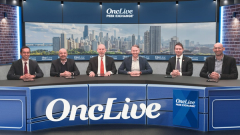
Panelists discuss the importance of genetic testing, particularly for KMT2A and NPM1 mutations, in identifying patients who would benefit from revumenib, the role of molecular profiling in identifying high-risk acute monocytic leukemia (AML) patients, approaches to KMT2A testing, and when to recommend RNA over DNA testing, along with guidance for institutions lacking standardized diagnostic testing protocols.
Advertisement
Episodes in this series
Video content above is prompted by the following:
- Dr. LeBlanc to ask Dr. Goldberg: Highlight the importance of genetic testing, specifically KMT2A and NPM1, in identifying patients who would benefit from revumenib.
- Dr. LeBlanc to ask Dr. Blachly: Briefly comment on the role of molecular profiling in identifying high-risk patients with AML.
- Dr. LeBlanc to ask Dr. 4: How do you approach KMT2A testing and when would you recommend RNA over DNA testing? And why?
- What guidance would you offer to institutions that do not yet have standardized diagnostic testing protocols?
- Dr. LeBlanc to ask Dr. 4: How do you approach KMT2A testing and when would you recommend RNA over DNA testing? And why?
Advertisement
Related to this article

In TASKIN, the 12-month OS rate was 61.3% with vilamakitug vs 55.7% with placebo plus trifluridine/tipiracil.
The 510(k) clearance covers an MRI-derived AI risk score for stage I to IIIA disease; the high-risk category carried an HR of 2.81 for recurrence.
The FDA has approved dostarlimab for MSI-H or dMMR locally advanced rectal cancer.

The FDA accepted an NDA for UGN-103 for recurrent low-grade intermediate-risk NMIBC, with a target action date of June 14, 2027.

Ulrich Steidl, MD, PhD, has finalized his Montefiore Einstein Comprehensive Cancer Center senior leadership team.

The CirCLIQ Injector approval for subcutaneous isatuximab in multiple myeloma is the first anticancer treatment delivered via an on-body injector in Japan.

The top 5 OncLive TV videos of the week cover insights in multiple myeloma, HR+ breast cancer, CAR T-cell therapy, CLL, and oral SERDs.

Moh’d Khushman, MD, discusses INCA33890’s mechanism of action, phase 1 safety and efficacy data, and the design of NEXERA-303 in MSS colorectal cancer.
Advertisement
Advertisement
Trending on OncLive
1
FDA Approves Dostarlimab for dMMR/MSI-H Locally Advanced Rectal Cancer
2
FDA Clears TumorSight Risk, an MRI-Derived AI Recurrence Tool for HR+, HER2– Breast Cancer
3
Dr Cercek on the FDA Approval of Dostarlimab for dMMR/MSI-H Locally Advanced Rectal Cancer
4
Vilamakitug Meets OS Threshold in Phase 1/2 Refractory mCRC Trial
5