
Opinion|Videos|May 8, 2025
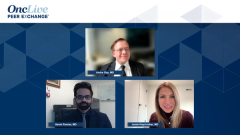
Insights From Liso-cel Combined With Ibr for R/RCLL/SLL: Primary Results From the Open-Label, Phase 1/2 Transcend CLL 004 Study
Panelists discuss how insights from the Liso-cel combined with ibrutinib (ibr) for relapsed/refractory chronic lymphocytic leukemia (R/R CLL) and small lymphocytic lymphoma (SLL) are highlighted through the primary results of the open-label, phase 1/2 Transcend CLL 004 study.
Advertisement
Episodes in this series
Video content above is prompted by the following:
Open-Label, Phase 1/2 Transcend CLL 004 Study
The Transcend CLL 004 Study is an open-label, phase 1/2 trial that evaluated the combination of lisocabtagene maraleucel (liso-cel), a CD19-directed chimeric antigen receptor (CAR) T-cell therapy, with ibrutinib, a Bruton tyrosine kinase inhibitor, in patients with R/R CLL or R/R SLL.
Primary Findings:
- The combination of liso-cel and ibrutinib demonstrated promising efficacy in patients with R/R CLL/SLL.
- The treatment regimen showed a high overall response rate, with many patients achieving complete response or partial response.
- Liso-cel was administered after a bridging therapy of ibrutinib, with the combination showing manageable safety profiles.
- The addition of ibrutinib to liso-cel may enhance the expansion and persistence of CAR T cells, potentially improving clinical outcomes compared with standard CAR T-cell therapy alone.
Safety Profile:
- The safety of the liso-cel and ibrutinib combination was in line with expectations based on prior studies of these agents.
- Common adverse events included cytokine release syndrome and neutropenia, both of which were manageable with appropriate intervention.
- There was no increase in the incidence of immune effector cell–associated neurotoxicity syndrome when compared with previous CAR T-cell therapy studies.
Conclusion:
The Transcend CLL 004 study suggests that combining liso-cel with ibrutinib may offer an effective therapeutic approach for patients with R/R CLL/SLL, with manageable safety and significant clinical benefit. Further clinical trials will be needed to confirm these findings and optimize treatment regimens for this patient population.
Advertisement
Related to this article

Experts spotlight the gastrointestinal cancer presentations they’re most excited to see at the 2026 ESMO Congress.

Experts break down key lung cancer data and trends from the IASLC 2026 World Conference on Lung Cancer.

Experts break down key multiple myeloma data and trends from the 23rd Annual IMS Meeting.
Experts spotlight the variety of breast cancer research being presented at the 2026 ESMO Congress.

The first MRD data from the phase 3 EXCALIBER-RRMM trial support iberdomide-based triplet therapy as early as first relapse, with PFS follow-up ongoing.
After nearly 7 years of follow-up, daratumumab added to VRd continued to improve PFS, PFS2, and sustained MRD negativity in transplant-eligible myeloma.
Advertisement
Advertisement
Trending on OncLive
1
FDA Approves Tucatinib Plus Trastuzumab/Pertuzumab as First-Line Maintenance in Advanced HER2+ Breast Cancer
2
GI Cancer Monthly Rewind: Key News and Expert Insights You May Have Missed in September 2026
3
FDA Grants Breakthrough Device Designation to Natera’s Multi-Cancer Early Detection Assay
4
Five Under 5: Top Oncology Videos for the Week of 10/5/2026
5