
Opinion|Videos|April 17, 2025
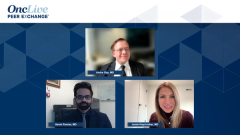
Overview of iMMagine-1 Trial: Phase 2 Registrational Study of Anitocabtagene Autoleucel for the Treatment of R/R MM
Panelists discuss how the preliminary results from the iMMagine-1 trial of anitocabtagene autoleucel in relapsed/refractory multiple myeloma (R/R MM) highlight promising efficacy in triple-class and penta-class refractory patients, potentially reshaping treatment strategies and challenging existing paradigms in managing heavily pretreated myeloma.
Advertisement
Episodes in this series
Video content above is prompted by the following:
IMMagine-1 Phase 2 Study of Anitocabtagene Autoleucel in R/R MM
Background & Objective:
The iMMagine-1 trial evaluates anitocabtagene autoleucel (anti-BCMA chimeric antigen receptor [CAR] T-cell therapy) in patients with R/R MM. Preliminary results focus on efficacy and safety in heavily pretreated patients, including those refractory to triple-class (proteasome inhibitors, immunomodulatory agents, and anti-CD38 monoclonal antibodies) and penta-class therapies.
Preliminary Efficacy:
- High response rates were observed, even in penta-refractory patients, suggesting durable disease control in a population with limited treatment options.
- Depth of response correlated with improved progression-free survival, reinforcing the potential of BCMA-targeted CAR T therapy in later-line settings.
Safety Profile:
- Toxicities were consistent with prior CAR T therapies, including cytokine release syndrome and neurotoxicity, but were generally manageable.
- Further follow-up is needed to assess long-term safety and durability of responses.
Clinical Implications:
- Impact on Treatment Strategies:
- The efficacy in triple- and penta-refractory patients may shift treatment paradigms, positioning BCMA-targeted CAR T therapy earlier in the disease course.
- Potential integration into sequencing strategies for R/R MM, especially in those failing standard regimens
- Challenging Existing Paradigms:
- These results reinforce the role of CAR T therapies in overcoming resistance mechanisms in heavily pretreated myeloma.
- The durability of response may challenge the reliance on continuous therapy models, offering the possibility of fixed-duration treatment with sustained benefit.
- Future Directions:
- Optimization of patient selection and bridging strategies
- Comparative studies with bispecific antibodies and other emerging BCMA-directed therapies
These findings highlight anitocabtagene autoleucel as a promising therapeutic option in the evolving R/R MM landscape, warranting continued investigation in larger cohorts.
Advertisement
Related to this article
Experts spotlight the gastrointestinal cancer presentations they’re most excited to see at the 2026 ESMO Congress.

Experts break down key lung cancer data and trends from the IASLC 2026 World Conference on Lung Cancer.
Experts break down key multiple myeloma data and trends from the 23rd Annual IMS Meeting.
Experts spotlight the variety of breast cancer research being presented at the 2026 ESMO Congress.
The first MRD data from the phase 3 EXCALIBER-RRMM trial support iberdomide-based triplet therapy as early as first relapse, with PFS follow-up ongoing.
After nearly 7 years of follow-up, daratumumab added to VRd continued to improve PFS, PFS2, and sustained MRD negativity in transplant-eligible myeloma.
Advertisement
Advertisement
Trending on OncLive
1
FDA Approves Tucatinib Plus Trastuzumab/Pertuzumab as First-Line Maintenance in Advanced HER2+ Breast Cancer
2
GI Cancer Monthly Rewind: Key News and Expert Insights You May Have Missed in September 2026
3
FDA Grants Breakthrough Device Designation to Natera’s Multi-Cancer Early Detection Assay
4
Five Under 5: Top Oncology Videos for the Week of 10/5/2026
5