
Opinion|Videos|May 2, 2025
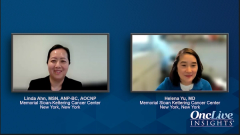
Looking Ahead: Unmet Needs and Future Directions in the Treatment of Advanced EGFR-Mutant NSCLC
Panelists discuss how despite recent advances in first-line treatments, unmet needs remain. These include better personalized care, community education, understanding resistance mechanisms, central nervous system (CNS) metastases management, and development of novel therapies such as antibody-drug conjugates.
Advertisement
Episodes in this series
Future Perspectives and Unmet Needs
Main Discussion Topics:
- Remaining gaps in knowledge and unmet needs in EGFR-mutant non–small cell lung cancer (NSCLC)
- Novel therapies and treatment strategies on the horizon
- Challenges in treatment beyond first-line settings
Key Points for Physicians:
- Continued need for education and personalized care approaches
- Mechanisms of resistance to combination therapies remain an important area of investigation
- Management of refractory CNS metastatic disease remains challenging
Notable Insights:
Emerging therapeutic approaches of interest include antibody-drug conjugates, protein degraders (proteolysis-targeting chimeras), radioconjugates, and strategies to enhance immunotherapy responses.
Clinical Significance:
Although significant advances have been made in first-line therapy for EGFR-mutant NSCLC, ongoing research is needed to address resistance mechanisms and improve outcomes in subsequent treatment lines.
Advertisement
Related to this article

Researchers at Wake Forest University School of Medicine identified a protein that may help breast cancer spread to the brain and evade immune defenses.

Benjamin Weinberg, MD, discusses the FDA approval of daraxonrasib, RASolute 302 survival data, safety considerations, and future RAS-targeted therapies in pancreatic cancer.
Half of lenalidomide-refractory patients with 1 to 3 prior lines remained alive and progression free at least 5 years after a single cilta-cel infusion.

Andrew Kuykendall, MD, discusses the FDA approval of rusfertide and how to apply it in clinical practice for polycythemia vera management.

An NDA seeks FDA approval of savolitinib plus osimertinib for EGFR-mutated NSCLC with MET overexpression or amplification after EGFR TKI therapy.
Jason Hafron, MD, discusses the emotional, clinical, and financial burden of false positive cancer screening results and improved risk stratification.

Raajit K. Rampal, MD, PhD, discusses JAK inhibitor choice in cytopenic myelofibrosis, emerging combinations, and anemia-directed agents.
The sNDA for elinzanetant seeks FDA approval for moderate-to-severe vasomotor symptoms in women receiving endocrine therapy for HR-positive breast cancer.
Advertisement
Advertisement
Trending on OncLive
1
Ifinatamab Deruxtecan BLA Voluntarily Withdrawn in Previously Treated Extensive-Stage SCLC
2
China's NMPA Approves Pirtobrutinib Across CLL
3
FDA Grants Priority Review to Elinzanetant for Endocrine Therapy–Associated Vasomotor Symptoms in HR+ Breast Cancer
4
Long-Term PERSEUS Data Confirm Durable PFS Benefit With D-VRd in Transplant-Eligible Newly Diagnosed Myeloma
5