Opinion|Videos|April 25, 2025
EGFR-Mutant NSCLC: Navigating an Increasingly Complex Treatment Landscape
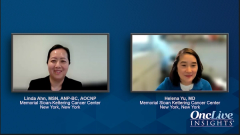
Panelists discuss the increasing complexity in treatment decision-making for EGFR-mutant non–small cell lung cancer (NSCLC) with multiple frontline options now available.
Advertisement
Episodes in this series

Now Playing
Introduction and Treatment Landscape Overview
Main Discussion Topics:
- Introduction of the program focusing on optimizing frontline treatment approaches for EGFR-mutant metastatic NSCLC
- Overview of the evolving treatment landscape with the emergence of new third-generation tyrosine kinase inhibitors such as lazertinib
- Discussion of current approved treatment options: osimertinib monotherapy, osimertinib plus chemotherapy, and lazertinib plus amivantamab
Key Points for Physicians:
- Treatment decision-making has become increasingly complex with multiple frontline options
- First-line treatment selection affects subsequent treatment availability
- Shared decision-making is crucial to align treatment with patient goals
Notable Insights:
The discussion highlights a paradigm shift from a single standard of care (osimertinib) to multiple options requiring individualized treatment selection.
Clinical Significance:
The availability of multiple effective frontline treatment options necessitates a more nuanced approach to therapy selection that considers both efficacy data and patient-specific factors.

Advertisement
Latest CME
Advertisement
Advertisement
Trending on OncLive
1
FDA Approval Tees Up T-DXd Plus Pertuzumab as a New SOC in HER2+ Breast Cancer
2
Iberdomide Plus Daratumumab/Dexamethasone Displays High Response Rates in NDMM
3
FDA Advises on Next Steps for Nogapendekin Alfa Inbakicept Plus BCG sBLA in BCG-Unresponsive Papillary NMIBC
4
NALIRIFOX and FOLFIRINOX Facilitate Personalized Treatment in Metastatic Pancreatic Cancer
5