
Opinion|Videos|April 7, 2026
Recommended First Line Targeted Therapy for RET and NTRK Fusion Positive Thyroid Cancer
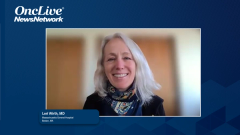
Lori Wirth, MD, reviews recent National Comprehensive Cancer Network guideline updates for patients with radioactive iodine refractory differentiated thyroid cancer.
Advertisement
Episodes in this series
Lori Wirth, MD, reviews recent National Comprehensive Cancer Network guideline updates for patients with radioactive iodine refractory differentiated thyroid cancer. For patients harboring RET or NTRK gene fusions, gene-specific targeted therapy is now recommended in the first-line setting. RET fusion–positive disease can be treated with selective inhibitors such as selpercatinib or pralsetinib, while NTRK fusion–positive tumors respond to TRK inhibitors like larotrectinib. These agents demonstrate high response rates exceeding 90% in some studies, along with durable clinical benefit and favorable tolerability compared with multikinase inhibitors. Notably, oncogenic kinase fusions are more frequently observed in younger patients, reinforcing the importance of comprehensive molecular testing in this population. The shift toward first-line use of targeted therapies reflects their superior efficacy and safety profiles, establishing them as preferred options in biomarker-driven management of advanced thyroid cancer.
Supported in part by Eisai, content independently produced by OncLive.
Advertisement
Related to this article

The top 5 OncLive TV videos of the week.

Check out this September recap of OncLive’s coverage of the top news and expert insights in gastrointestinal cancers.
The FDA approved atezolizumab plus chemo for stage III colon cancer, cleared a tucatinib-based maintenance regimen for advanced breast cancer, and more.
Read a refresh of hematologic cancer FDA and global regulatory news from September 2026.

The liquid biopsy identifies ESR1 mutations in blood to select patients with metastatic breast cancer who may be eligible for treatment with camizestrant.

The FDA granted fast track designation to PSV359 for locally advanced unresectable or metastatic FAP-positive solitary fibrous tumors.
Experts spotlight the gastrointestinal cancer presentations they’re most excited to see at the 2026 ESMO Congress.

Surgeons at the UC San Francisco have performed over 25,000 robotically assisted minimally invasive surgeries.
Advertisement
Advertisement
Trending on OncLive
1
FDA Approves Tucatinib Plus Trastuzumab/Pertuzumab as First-Line Maintenance in Advanced HER2+ Breast Cancer
2
FDA Approves Atezolizumab Plus Chemo for Stage III dMMR Colon Cancer
3
VIR-5500 Receives FDA Fast Track Designation in mCRPC
4
The OncFive: Top Oncology Articles for the Week of 10/4/2026
5